
Mumbai's Beaches & Marine Drive: A Local Guide
A local's guide to Mumbai's beaches and Marine Drive — Chowpatty, Juhu, the Queen's Necklace, sunset promenades, Konkan day trips and where not to swim.
'%3E%3Crect%20width%3D'96'%20height%3D'96'%20fill%3D'%23E65100'%2F%3E%3Ccircle%20cx%3D'30'%20cy%3D'24'%20r%3D'44'%20fill%3D'%23fff'%20opacity%3D'.12'%2F%3E%3Ccircle%20cx%3D'60'%20cy%3D'74'%20r%3D'40'%20fill%3D'%23000'%20opacity%3D'.10'%2F%3E%3C%2Fg%3E%3Cg%3E%3Ccircle%20cx%3D'48'%20cy%3D'48'%20r%3D'15'%20fill%3D'none'%20stroke%3D'%23fff'%20stroke-width%3D'3'%2F%3E%3Cpath%20fill%3D'%23fff'%20d%3D'M48%2037%20l3.5%2011%20-3.5%2011%20-3.5%20-11%20z'%2F%3E%3Ccircle%20cx%3D'48'%20cy%3D'48'%20r%3D'2.2'%20fill%3D'%23fff'%2F%3E%3C%2Fg%3E%3C%2Fsvg%3E)
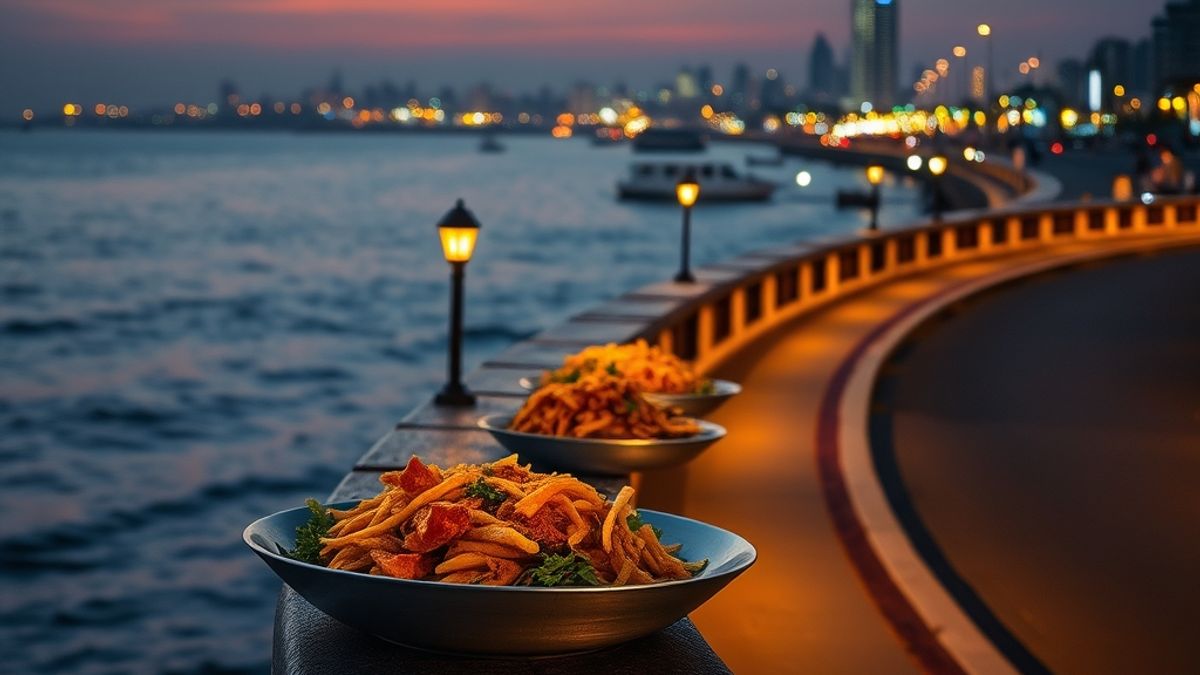
Mumbai lives with the sea on three sides, and its seafronts are where the whole city comes to breathe. Understand one thing before you set out: these are not swimming beaches in the postcard sense. The water is rough and, along most of the coast, genuinely polluted, so locals come to walk, eat and watch the light go down rather than to bathe. Taken on those terms — as free, open-air rooms where the city gathers at dusk — the coastline becomes one of Mumbai’s great pleasures. This guide is your map to it, from the Queen’s Necklace to the ferries and the day-trip sands beyond the harbour.
| Spot | Where | Best for | Cost |
|---|---|---|---|
| Marine Drive | South Mumbai (Churchgate–Nariman Point) | Sunset stroll, sea-wall sitting | Free |
| Girgaon Chowpatty | North end of Marine Drive | Street food, Ganesh immersion | Free |
| Juhu Beach | Western suburbs (Vile Parle) | Chaat, evening walk, crowds | Free |
| Worli Sea Face | Worli | Quiet jog, Sea Link views | Free |
| Bandstand / Bandra Fort | Bandra West | Sunset from the fort steps | Free |
| Carter Road | Bandra West | Cafés, benches, people-watching | Free |
| Elephanta Island | Harbour, ferry from Gateway | Cave-temple day trip | ~₹200 return + entry |
| Alibaug / Kashid | Konkan coast, ferry to Mandwa | Beach day trip | Ferry from ~₹300 |
Marine Drive: the Queen’s Necklace
The Marine Drive promenade — officially Netaji Subhash Chandra Bose Marg — is a 3.6-kilometre sweep of seafront curving along the Arabian Sea in South Mumbai, from Nariman Point up to Girgaon Chowpatty. By day it is a broad, breezy walkway; by night, its unbroken line of streetlights bends into the shape locals call the Queen’s Necklace, a string of pearls seen from any height along the bay. It is free, open around the clock, and the single most democratic spot in the city. Come in the hour before sunset, buy roasted chana or a corn cob from a vendor, and claim a stretch of the tetrapod sea wall as the whole of Mumbai strolls past — students, office crowds, courting couples, families with tired children. This is the city’s living room, and it costs nothing to sit in. If you want the sunset without the throng, walk the quieter Nariman Point end; the Chowpatty end is livelier and closer to the food.
Girgaon Chowpatty: the city’s own beach
At the northern tip of Marine Drive lies Girgaon (Girgaum) Chowpatty, the beach that Mumbai grew up on. The sand is coarse and the water is not for wading, but that is not why anyone comes. People come for the sunset, for the wall of street-food stalls turning out bhelpuri, ragda pattice, pani puri, pav bhaji and kulfi, and — once a year — for the great Ganesh Chaturthi immersion, when idols are carried into the sea amid drums and colour. Arrive in the late afternoon, eat your way along the stalls as the light turns, and stay for the blue hour when the Necklace switches on behind you. Charni Road station on the Western line is a five-to-ten-minute walk away, so you can be here without a car and leave without one. Carry small notes; nobody at a chaat cart wants to break a 500.
Juhu, Versova and the western sands
Juhu Beach, in the western suburbs off Vile Parle, is the big, boisterous cousin of Chowpatty — a long ribbon of sand backed by the bungalows of film stars and fronted by an unbroken line of sizzling griddles. It is at its best in the evening, when families spread out on the sand and the beachfront chaat trade hits full swing. It is also, honestly, at its most crowded then, especially on weekends and holidays, which is either the appeal or the problem depending on your mood. Swimming here is dangerous and openly discouraged: strong undercurrents and poor water quality make the sea unsafe, so keep your feet dry and your eyes on the sunset.
A little further north in Andheri West, Versova Beach is the calmer, more local counterpart, with a strong Koli fishing-community presence and a well-known history of citizen-led clean-ups that once cleared tonnes of plastic from the sand. It is pleasant for a quiet walk and a look at the boats, though again not a place to swim. For a fuller sense of that working fishing-city rhythm, the early-morning auction at Sassoon Docks down south is the classic companion outing.
The far northern beaches: room to roam, not to swim
Push north past the suburbs and the coast opens up. Aksa, Marve and Gorai offer wider, more scenic sands with far fewer people and a real sense of escape. They come with a serious caveat: the city authorities classify several of these stretches as unsafe for swimming because of strong rip currents, and drownings do occur here every year, particularly during and just after the monsoon. Treat them as places for the space, the sea air and the long horizon — walk the sand, watch the sky, and stay firmly out of the water. Gorai has more to build a day around, with the Global Vipassana Pagoda and the Water Kingdom water park nearby (the adjoining EsselWorld amusement park has been closed since 2022). These beaches need a longer drive or a creek ferry, so leave early and check your return timings.
Where Mumbai watches the sun go down
The city faces west, which means the whole coast gets a front-row seat to the sunset — and most of the best perches are free. Beyond Marine Drive, a handful of promenades are where locals actually head when the light turns gold. For a wider sweep of options, the guide to Mumbai’s best sunset viewpoints is a good companion.
Worli Sea Face
A curving three-and-a-half-kilometre promenade facing straight into the Arabian Sea, quieter and less show-offy than Marine Drive. The Bandra–Worli Sea Link sits on the horizon and begins to glimmer as the sun drops — this is a walking, jogging, sea-breeze crowd rather than a selfie scrum, which is exactly why locals keep coming back. Come in the hour before sunset, roughly 5.30 to 7 pm, and note that weekday evenings are noticeably calmer than weekends. It is a short auto from Lower Parel or Mahalaxmi stations, open round the clock and free (pay-and-park if you drive). Walk toward the Worli end for the cleanest line of sight to the Sea Link, and carry water — there is very little shade.
Bandstand and Bandra Fort
A 1.2-kilometre seaside walkway in Bandra West that ends at Bandra Fort, a small Portuguese watchtower from 1640 looking out over Mahim Bay. The fort’s stepped amphitheatre is the ledge locals claim for sunset, with the Sea Link stretched across the water in front of you; for the full run of Sea Link viewpoints, this is the marquee one. There is no gate and no ticket. On weekends, arrive 30 to 40 minutes early to secure a good step, and head for the upper tiers, which face the Sea Link square-on. An auto from Bandra station takes about 10 to 15 minutes to Bandstand or Land’s End; walk the promenade from there to the fort.
Carter Road
A 1.25-kilometre seafront walk (officially Sangeet Samrat Naushad Ali Marg) lined with benches, palms and a steady run of chaat and coffee carts. It is the more social, lived-in cousin of Bandstand — joggers at dawn, families and couples at dusk — with the sun going down over the sea and the Sea Link off to the south. Come by auto from Bandra station (roughly 10 minutes); parking here is a genuine headache. Pick up bhel or a filter coffee from the carts, take a bench near the amphitheatre end, and settle in as the blue hour comes on. It gets very crowded on weekends, so a weekday evening is the calmer bet.
Two wilder seafronts
Not every waterside spot is a landscaped promenade. Two of the city’s most rewarding are raw, working edges — go for the atmosphere as much as the view.
Sewri Jetty and the flamingos
A working jetty on Thane Creek that, from about November to March, fills with thousands of migratory flamingos feeding on the mudflats. It is industrial rather than pretty, but the light over the creek at golden hour is genuinely special and the spectacle is unlike anything else in the city — the full ritual is covered in the guide to flamingo watching at Sewri. Time your visit to a low tide near sunrise or in the hour before sunset, and check the tide table before you set off, as the birds gather well out on the flats. Sewri station on the Harbour line, then a short auto to the jetty; carry binoculars, and it is free.
Sagar Upvan
A 12-acre Port Trust garden at the southern tip of the city, quiet and green, with sea-facing benches and long shaded walking tracks — a gentler, gated alternative to the open promenades, and one of the calmer gardens in the south. You sit with the water ahead and the city behind. The catch is the hours: it is open roughly 6 to 11 am and 4.30 to 8.30 pm and closed through the middle of the day, so go for the evening slot to catch golden hour rather than arriving to a locked gate. Entry is nominal (around ₹2, a little extra to carry a camera); it is near Colaba bus station, an auto or taxi from CSMT. Pets and outside food are not allowed.
Onto the water: ferries and islands
Mumbai turns its back on the sea less than you would think — step onto a jetty and the whole city reopens from the harbour side. These are the crossings worth the salt spray, from the grand Elephanta run to the ten-rupee hop across a creek mouth.
Gateway of India to Elephanta
The classic harbour crossing, and still the best. Motor launches leave the Gateway of India steps in Colaba roughly every half hour for the hour-long ride out to Gharapuri, where sixth-century rock-cut caves sit up a long hill of steps (there is a little toy train from the jetty if the climb is too much). Boats and caves both run every day except Monday, when the island closes entirely — the single most common way to waste a trip. Go November to February on the first 9 am boat to beat the heat and the crowds, budget around ₹200 return (deluxe ~₹260, island entry and toy train extra), and remember the last boat back leaves by about 5.30 pm. The full logistics are in the Elephanta Caves day-trip guide.
Gateway to Mandwa, and the harbour joyride
The quickest way to the Konkan coast without the long road around the creek: passenger catamarans cross from the Gateway to Mandwa jetty in under an hour, with a shuttle onward to Alibaug. Reckon on roughly ₹390–460 for a foot passenger; if you are taking a car or bike, the M2M RoPax runs the vehicle crossing from Bhaucha Dhakka (Ferry Wharf) instead, from about ₹1,020 for a car. Sailings thin out and can stop altogether in the rough monsoon, so check the operator’s live timetable before you leave. If you have not a whole day to spare, the short harbour joyride launches that loop out from the Gateway steps are the cheapest time you can spend on the water — twenty-odd minutes for around ₹70–90, giving you the Taj and the arch from the sea. Agree the length and price before you board.
The little working ferries
Two tiny crossings barely known to visitors are pure local Mumbai. The Versova–Madh ferry hops a creek mouth in a few minutes for about ₹10, carrying Koli fisherfolk and scooters to Madh’s quiet beaches, old Portuguese fort and seafood shacks — a world away from Andheri. Further north, the Marve–Manori ferry crosses in roughly five minutes to Manori, the back door to Gorai’s sands and the Global Pagoda, with autos waiting on the far side. Both run through the day in fair weather but can be suspended in heavy monsoon, and the last ferries leave in the early evening — carry small change and check the return timing before you settle in for a sunset, because going round by road takes well over an hour.
Beaches worth the day: down the Konkan coast
Marine Drive is for an evening; these are for a day. Cross the harbour and you land on a coast that feels a long way from Colaba — sea-forts, watersports and quiet, tree-backed sand, most of it reachable and back within a day. For the wider set of options, the roundup of beaches near Mumbai and the general day-trips guide cover more ground.
Alibaug and Kolaba Fort
The standard first stop — a low-key town with a wide beach and, at low tide, a walkable stretch of sand out to the sea-fort of Kolaba. The sand is more grey than golden and the water calm rather than clear, but it is the easiest coast to reach and a natural base for Nagaon, Kihim and Kashid. Fastest is the ferry to Mandwa (from ~₹300 one way) then a shuttle the last ~20 km; by road it is about 95–110 km via NH66, 2.5 to 3.5 hours. Fort entry is a nominal ~₹25 — but time the walk to low tide or you will be wading out to it. Go November to February; the full itinerary is in the Alibaug beach day-trip guide.
Kashid
The postcard one — a long sweep of pale, soft sand backed by casuarina trees and low hills, cleaner and far less built-up than Alibaug’s town beach. The northern end has banana-boat and jet-ski operators (from ~₹200, up to ~₹2,000 for parasailing), but walk a few hundred metres south and it empties out. It is about 30 km south of Alibaug on the Revdanda–Murud road, roughly 45 minutes by car, with no direct rail, so most people come via the Mandwa ferry and drive on. It is only shacks and small stalls here — carry water and cash, and do not count on lifeguards for swimming. Weekday mornings, October to February, beat the day-tripper crowd.
Murud and Janjira
Janjira is an island fortress standing offshore in the bay, never taken in centuries of sieges, reached by small sail-and-motor boats from Rajapuri jetty. The ramparts, old cannons and inner cisterns genuinely reward the crossing, and Murud’s own town beach is a quiet, working stretch of coast. It is the furthest of these trips — about 160 km and 4 to 4.5 hours by road, though the Mandwa ferry shortens the drive — so many people give it an overnight rather than a same-day dash. Fort entry is free and the shared boat is ~₹50–100 a head, but boats only sail once they have enough passengers and calm water, so go early and keep the afternoon loose. Details are in the Murud–Janjira Fort day-trip guide.
Nagaon and Kihim
These two neighbouring beaches, a short hop south of Alibaug, are the coast’s split personality. Nagaon is the watersports beach — jet-skis, banana boats and parasailing cluster along a broad, casuarina-lined shore, busier and more commercial, with good seafood shacks behind the treeline (rides from ~₹200, parasailing up to ~₹2,000). Kihim is its quiet counterpart: fine sand shaded by thick trees, long known as a birdwatching and weekend-cottage spot, with little in the way of stalls and rides — which is precisely the appeal. Both sit roughly 10–12 km from Alibaug or the Mandwa jetty, a short auto either way. On any boat, fix the price and the ride length before you get on, and insist on a life jacket.
Eating with the tide in earshot
Mumbai does its best casual eating with the sea in earshot — a paper plate of bhel at dusk, a kulfi eaten standing on the pavement, a plate of koliwada prawns after the boats come in.
Chowpatty chaat and kulfi
The cluster of chaat stalls at the southern end of Chowpatty is the classic sundown ritual: crisp bhelpuri tossed with mint, tamarind and chilli chutneys, plus pav bhaji, ragda pattice and pani puri off the same griddles, around ₹50–100 a plate. Pick a busy stall with fast turnover so everything is freshly assembled. Across the road, decades-old kulfi counters serve malai, kesar-pista and seasonal mango or guava kulfi dusted with chilli salt (~₹100–150), eaten standing on the pavement, which is half the fun. Nearby, a pavement institution going since the 1930s draws late crowds for fresh juices, milkshakes and oddball ice-cream flavours, open until roughly 2 am — treat it as a takeaway counter and eat on the sea wall opposite. For a deeper crawl of the lanes behind, see the Girgaon khau galli trail.
Juhu’s griddles
Juhu’s seafront is a wall of sizzling griddles turning out pav bhaji, bhelpuri, pani puri, ragda and vada pav, best eaten with sandy feet and the sea breeze — bhel around ₹60–80, pav bhaji ₹100–150. Some stalls lay out mats on the sand so you can sit and watch the crowd. It packs out on weekends and holiday evenings, which is exactly when it is most fun; go for a stall with a queue of locals rather than the first one you see, and keep an eye on your plate, as the gulls are bold. The dedicated Juhu chaat guide maps the best of the line.
Koli and coastal seafood
When you want a proper sit-down meal, the Juhu–airport belt is the city’s seafood heartland. Landmark Mangalorean and Malvani kitchens here — several going back to the 1970s — built their names on koliwada-batter prawns, butter-pepper-garlic crab, tandoori pomfret, surmai curry and the famous Bombil (Bombay duck) fry. Expect roughly ₹1,500–2,000 for two at the benchmark places, and ask what the day’s fresh catch is before you order. To go deeper into the styles, the Malvani and Mangalorean food guides are the ones to read; for a table with the water actually in view, see sea-view restaurants and the wider seafood roundup.
An honest word on swimming
Let us be plain, because it matters: Mumbai’s beaches are not for swimming. The combination of strong currents, undertows and genuinely poor water quality makes the sea unsafe along most of the coastline, and the authorities discourage bathing citywide. The danger is real rather than theoretical, and it is worst at the open northern beaches — Aksa, Gorai, Marve — and during and just after the monsoon, when the sea turns fierce and people drown every year. Never venture onto rocks or sea walls at high tide, and keep well back from the water when it is rough. Come for the walks, the food, the sunsets and the atmosphere — not for a dip.
The bottom line
Mumbai’s relationship with the sea is about the shore, not the swim. Walk the Queen’s Necklace at sunset, eat your way along Chowpatty and Juhu, stroll the Bandra and Worli promenades, ride a ferry out to a sea-fort, and admire the northern beaches from the sand. Keep out of the water, come at dusk, and let the coastline do what it does best — give this relentless city a place to slow down and breathe.
Frequently Asked Questions
Can you swim at Juhu Beach or other Mumbai beaches?
Not safely. Mumbai's beaches — Juhu, Girgaon Chowpatty, Versova and the northern stretches like Aksa and Gorai — have strong undercurrents and rip currents, and the water quality is poor, so the authorities discourage swimming citywide. Drownings happen most years, especially at the open northern beaches during and just after the monsoon. Treat the coast as a place to walk, eat and watch the sunset, and stay out of the water.
What is the Queen's Necklace in Mumbai?
It is the nickname for Marine Drive's 3.6-kilometre curve of seafront in South Mumbai. After dark, the unbroken line of streetlights along the promenade traces the bay's arc, and seen from a height they resemble a string of pearls — hence 'Queen's Necklace.' The road is officially Netaji Subhash Chandra Bose Marg, and the promenade is free and open around the clock.
Where is the best place in Mumbai to watch the sunset?
Because the city faces west, most seafronts get a good sunset, but locals favour a handful. Marine Drive and Girgaon Chowpatty in the south, and Worli Sea Face, Bandstand with Bandra Fort, and Carter Road in the western suburbs are the reliable free choices. All are best in the hour before sundown, roughly 5.30 to 7 pm; on weekends, arrive 30 to 40 minutes early for a good perch.
Which beaches near Mumbai are good for a day trip?
The Konkan coast south of the city is the classic escape. Alibaug is the easiest base, reached by ferry to Mandwa, with pale-sand Kashid, watersports-focused Nagaon and quiet Kihim nearby, while the Janjira sea-fort at Murud makes a longer trip. Go roughly between November and February, and check ferry timings before you set out, as monsoon sailings pause or stop.
How do you get to Marine Drive and Girgaon Chowpatty?
Both sit in South Mumbai and are easy to reach by local train. Marine Drive runs between Churchgate station (Western line) and Nariman Point, while Girgaon Chowpatty at its northern end is a five-to-ten-minute walk from Charni Road station. It is free to visit, with no gate and no closing time, so it works at any hour.
Are Mumbai's seafronts safe to visit at night?
The main promenades — Marine Drive, Worli Sea Face, Bandstand and Carter Road — stay well-populated and pleasant well into the evening, and locals treat them as safe after dark. Stick to the lit, busy stretches, keep back from the sea wall at high tide, and take the usual care with belongings in crowds. The remote northern beaches like Aksa and Gorai are best left before nightfall.