
Elephanta Caves: A Complete Day-Trip Guide
Plan your Elephanta Caves day trip from Mumbai: the Gateway of India ferry, timings, fees, the 120 steps and the great Trimurti of Shiva.
'%3E%3Crect%20width%3D'96'%20height%3D'96'%20fill%3D'%23E65100'%2F%3E%3Ccircle%20cx%3D'30'%20cy%3D'24'%20r%3D'44'%20fill%3D'%23fff'%20opacity%3D'.12'%2F%3E%3Ccircle%20cx%3D'60'%20cy%3D'74'%20r%3D'40'%20fill%3D'%23000'%20opacity%3D'.10'%2F%3E%3C%2Fg%3E%3Cg%3E%3Ccircle%20cx%3D'48'%20cy%3D'48'%20r%3D'15'%20fill%3D'none'%20stroke%3D'%23fff'%20stroke-width%3D'3'%2F%3E%3Cpath%20fill%3D'%23fff'%20d%3D'M48%2037%20l3.5%2011%20-3.5%2011%20-3.5%20-11%20z'%2F%3E%3Ccircle%20cx%3D'48'%20cy%3D'48'%20r%3D'2.2'%20fill%3D'%23fff'%2F%3E%3C%2Fg%3E%3C%2Fsvg%3E)
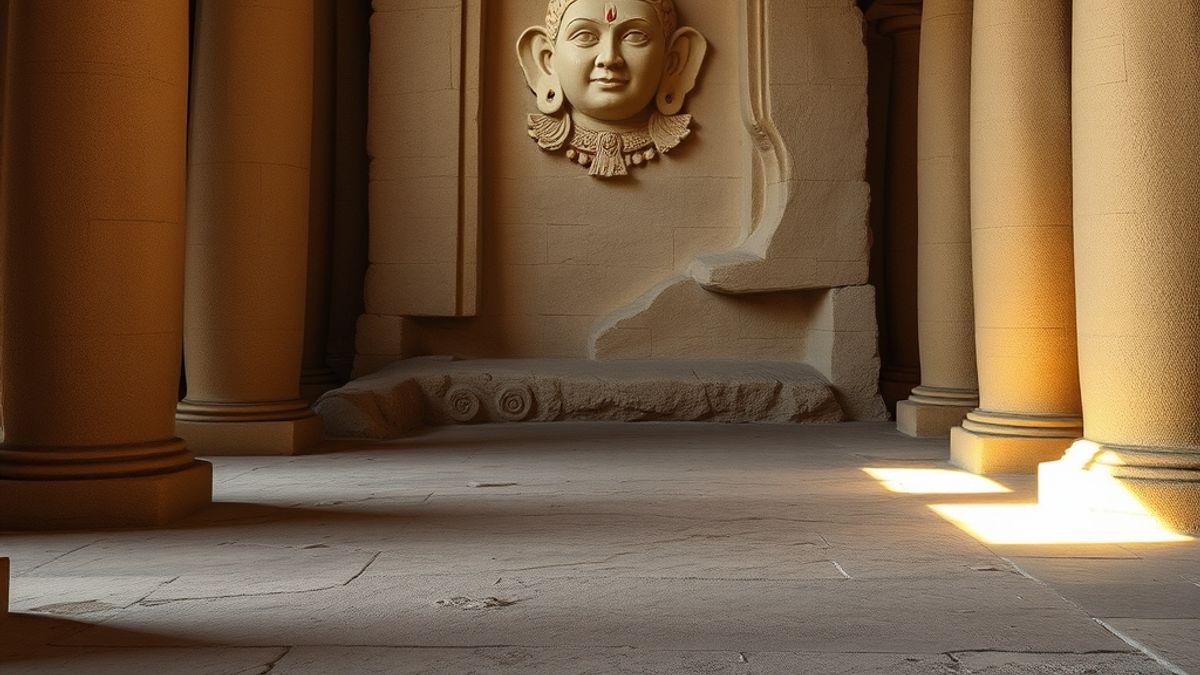
Photo: Christian Haugen · CC BY 2.0 · via Wikimedia Commons
An hour by ferry from the Gateway of India, on a green island in Mumbai harbour, lie some of India’s most magnificent rock-cut temples. The Elephanta Caves — carved into the basalt of Gharapuri Island more than a thousand years ago and dedicated to Shiva — are a UNESCO World Heritage Site and the city’s most rewarding half-day escape. You do not need to be a history buff to be moved by them; you only need a morning, sensible shoes and a little patience with the crossing. This guide covers everything you need to plan the trip, from which boat to catch to how to read the great sculptures once you are standing in front of them.
At a glance
Before we get into the detail, here is the trip on one screen. Treat every figure as a realistic range rather than a fixed price — fares and fees are revised from time to time, and the boats keep their own loose rhythm.
| Detail | What to know |
|---|---|
| Getting there | Ferry from the Gateway of India, Colaba (~1 hour each way) |
| First / last ferry out | First boat around 9am; last one out around 2pm |
| Closed | Mondays — caves and ferry service both shut |
| Ferry fare | Roughly ₹200–250 return (economy vs upper deck) |
| Cave entry | ~₹40 Indian & SAARC visitors; ~₹600 other nationals |
| Toy train on the pier | ~₹10–25 when it is running |
| The climb | Around 120 steps; palanquins available |
| Time needed | Half to full day |
| Best months | October to February; skip the monsoon |
What the caves are
The Elephanta Caves are a group of rock-cut cave temples, carved principally between roughly the mid-fifth and eighth centuries CE, and dedicated to Shiva. They were inscribed as a UNESCO World Heritage Site in 1987 and are looked after today by the Archaeological Survey of India. What makes them remarkable is not that they were built but that they were subtracted — the halls, pillars and gods were all cut downward and inward out of solid volcanic rock, with no second chances. There is no masonry here, no joins to hide. Every column and every deity is what was left behind when the stone around it was carved away.
The Portuguese, who controlled the harbour from the sixteenth century, named the island “Elephanta” after a large stone elephant statue they found near the landing. That elephant no longer stands on the island — it was later moved to the mainland and now sits in the Byculla zoo garden (Jijamata Udyan) in the city. The island’s older name, Gharapuri, is still used, and a small local community lives in a handful of hamlets among the palms, well away from the caves themselves.
The Great Cave and the Trimurti
Almost everything you have come to see is in the main cave, sometimes called Cave 1 or the Great Cave. It is a broad pillared hall cut on a cross-axis, cool and shadowed even at midday, with rows of thick columns marching back into the dark. Give your eyes a minute to adjust when you step in from the glare.
The showpiece is set into the south wall, facing the main entrance: the Trimurti (or Sadashiva), a nearly six-metre-high, three-headed sculpture of Shiva representing three of his aspects — the fierce, the serene and the gentle. It is one of the greatest works of Indian art, and photographs never quite prepare you for the calm of the central face. One thing worth clearing up, because it is the most common misunderstanding on the island: this depicts three faces of Shiva, not the Brahma-Vishnu-Shiva triad. Stand back far enough to take in all three profiles at once, then step close to read the detail in the central, meditative head.
The wall panels worth finding
The Trimurti gets the crowds, but the reliefs ranged around the hall are half the reason to come. Spend a few minutes with each of these before you leave:
- Nataraja — Shiva as the cosmic dancer, arms fanned out in motion, weathered but unmistakable.
- Ardhanarishvara — the composite form, half Shiva and half Parvati, split down a single serene body.
- Gangadhara — Shiva receiving the river Ganga in his hair as she descends to earth.
- Ravana shaking Mount Kailasa — the demon king heaving at the mountain from below while the gods above sit unmoved.
Look, too, for the lingam shrine set square in the hall and guarded at its doorways by tall dvarapala figures. Some panels are chipped and defaced; a good deal of that damage is attributed to the Portuguese period. It does not diminish them. If anything, the wear makes the surviving detail feel harder-won.
Beyond the main cave
Most visitors see the Great Cave and turn back, and if you are short on time that is a perfectly good plan. But there are several smaller rock-cut caves on the island beyond it, plainer and largely empty of sculpture, that reward a short wander if the heat allows. On the higher ground you will also find a couple of old British-era cannons, hauled up when the island was a harbour battery — an odd, breezy vantage point with views back over the water. This upper loop is the natural way to escape the crowd for twenty quiet minutes.
Getting there
The trip is genuinely simple, and it is one of the easiest day trips from Mumbai to organise on the morning of, with no booking required.
- Ferries leave from the Gateway of India in Colaba, from the jetty right beside the monument. The first boat is around 9am and the last one out to the island around 2pm; the crossing takes about an hour each way.
- The caves and the ferry service are closed on Mondays. This catches people out constantly — do not plan around it.
- Ferry cost is roughly ₹200–250 return, with a small difference between the economy and upper-deck options. Buy tickets at the ticket window on the Gateway jetty; you do not need to arrange anything in advance.
If you are coming from elsewhere in the city, the Gateway sits at the tip of Colaba, and our guide to getting around Mumbai covers the taxi, bus and train options for reaching this corner of town. Aim to be at the jetty a little before your intended boat — mornings can be busy, and the queue for tickets moves in fits and starts.
The crossing
The ferry is part of the pleasure, not just the means. The harbour opens up as you pull away, the Gateway and the grand Taj facade shrinking behind you, container ships and fishing boats sliding past on either side. Pay the small extra for the upper deck if it is offered and grab a seat in the open air; on a clear morning the light on the water is lovely and you will want to be outside for it rather than in the shaded lower cabin. Keep your return ticket or token safe — you will need it to board a boat back.
On the island
- Cave hours are roughly 9am to 5pm (last entry around 4:30pm), Tuesday to Sunday.
- Cave entry fee is about ₹40 for Indian and SAARC-region visitors and around ₹600 for other foreign nationals. This is separate from the ferry fare and is paid at the gate near the base of the steps.
- From the jetty it is a walk of several hundred metres along a long concrete pier to reach the base of the steps; an optional little toy train (around ₹10–25) covers that flat stretch when it is running. The train saves your legs for the climb, not the other way round — it does not go up the steps.
- Then it is a climb of roughly 120 steps up to the caves, lined on both sides with souvenir and refreshment vendors selling shell trinkets, carvings, sunhats, cold water and cut fruit. Palanquins (a doli carried by porters) are available for those who need them, for a negotiated price agreed before you set off.
A sensible itinerary
The whole thing sequences neatly if you go early. Catch a boat around 9am, land near 10, take the toy train or stroll the pier, and climb slowly — the steps are the only real effort of the day. Give yourself the best part of two hours on top: the Great Cave, the wall panels, a look at the cannons and the smaller caves, and a cold drink before you start down. Be back on the pier in comfortable time for an early-afternoon boat, and you will be back at the Gateway by mid-afternoon with the rest of the day still ahead of you. The last boat back leaves in the early evening, but do not treat that as your target — afternoon boats run to a loose schedule and you never want to be the person watching the final one pull away.
Planning your visit
- Go early. Catch one of the first ferries to beat both the heat and the crowds, and to leave plenty of time on the island. The Great Cave is also far more atmospheric before the tour groups fill it.
- Allow a half to full day — an hour each way on the ferry, plus a couple of hours on the island. It does not fold neatly into an afternoon; give it the morning.
- Avoid Mondays entirely; everything is shut, boats included.
- Skip the monsoon for this trip if you can — the sea crossing is rough and far less pleasant in heavy rain, and services can be curtailed in bad weather. If you are travelling in the wet months, read our guide to Mumbai’s monsoon and keep this one for a drier day. October to February is the sweet spot.
- Wear good shoes for the steps and the uneven cave floors, and carry water; there is shade but it gets warm.
- Carry some cash. Many vendors now take UPI, but the entry ticket, the toy train, the palanquin and the smaller stalls are all smoother with notes and coins in hand.
- Bring a hat and sun protection. The boat deck, the pier and the open steps are all exposed, and there is little cover between the jetty and the caves.
Guides, food and photography
You can hire a licensed guide near the ticket gate for a modest, negotiable fee, and it is worth it for the Great Cave — the wall panels tell stories that are easy to walk straight past without someone to point them out. Agree the price before you start.
For food, a couple of simple restaurants and stalls near the top serve snacks, cold drinks and basic thali-style meals. It is fuel rather than a destination; if you want a proper meal, save your appetite for the mainland and one of the sea-view restaurants back near Colaba. For photography, the interior is dim and the Trimurti faces out of the shadows — mid-morning gives you the kindest light without the harsh midday contrast, and a steady hand beats a flash every time.
What else to know
There are monkeys on the island — keep food out of sight and hold onto your belongings, especially anything shiny or in an open bag. The vendors on the steps can be persistent but are easily and politely declined; a smile and a firm “no” is all it takes, and there is no need to feel rushed into buying. Accessibility is the one real limitation: the pier is flat and the toy train helps, but the steps up to the caves are unavoidable on foot unless you take a palanquin, so factor that in for anyone who finds stairs difficult.
And remember that the harbour views on the ferry ride are lovely in their own right, so grab a seat on the deck and let the crossing be part of the day rather than dead time.
Combine it with
Because the ferry lands you back at the Gateway, the caves slot easily into a bigger day in south Mumbai. The Colaba Causeway for browsing and the galleries of Fort and Kala Ghoda are both a short walk from the jetty, and the whole quarter rewards an unhurried afternoon on foot. If the island whets your appetite for rock-cut temples, the Kanheri Caves inside Sanjay Gandhi National Park make an excellent land-based follow-up, and Mumbai’s living temples offer a very different, everyday devotion to set against Elephanta’s ancient stone. It sits comfortably near the top of any list of things to do in Mumbai.
The bottom line
The Elephanta Caves are the perfect day trip from Mumbai: a scenic harbour ferry, an atmospheric island, and one of the finest rock-cut temples in India crowned by the unforgettable Trimurti of Shiva. Go early, avoid Mondays, carry cash and water, and give yourself time to climb slowly and take it in. It is history and beauty an hour from the Gateway — do not miss it.
Frequently Asked Questions
How do you get to the Elephanta Caves from Mumbai?
Ferries leave from the jetty beside the Gateway of India in Colaba, and the crossing takes about an hour each way. The first boat is around 9am and the last one out to the island around 2pm; buy your return ticket at the window on the jetty, with no advance booking needed. Remember that the caves and the ferry service are both closed on Mondays.
How much does it cost to visit the Elephanta Caves?
The return ferry costs roughly ₹200–250, with a small extra for the upper deck. Cave entry is about ₹40 for Indian and SAARC visitors and around ₹600 for other foreign nationals, paid at the gate near the steps. Budget a little more for the optional toy train (~₹10–25), a guide or a palanquin, and carry some cash since not every vendor takes UPI.
Are the Elephanta Caves open on Mondays?
No — the caves are closed every Monday, and the ferries do not run either, so the whole trip is off on that day. They are open Tuesday to Sunday, roughly 9am to 5pm, with last entry around 4:30pm. Plan for any other day of the week and you will be fine.
How many steps are there at the Elephanta Caves?
It is a climb of roughly 120 steps from the base up to the caves, lined with souvenir and refreshment stalls. The little toy train only covers the flat pier between the jetty and the steps, not the climb itself. If stairs are difficult, palanquins carried by porters are available for a price you agree in advance.
How much time do you need for an Elephanta Caves trip?
Set aside half a day to a full day. The ferry is about an hour each way, and you will want roughly two hours on the island for the Great Cave, the wall panels and a look at the smaller caves and old cannons. Catching an early boat gives you the coolest weather, the thinnest crowds and no rush to make a boat back.
What is the best time to visit the Elephanta Caves?
The cooler, drier months from October to February are the most comfortable for both the sea crossing and the climb. Aim for one of the first ferries around 9am to beat the heat and the tour groups. Avoid the monsoon if you can, as the harbour crossing is rough and services can be curtailed in heavy rain.