
Mangalorean Food in Mumbai: Ghee Roast, Neer Dosa & Gassi
Where to eat Mangalorean food in Mumbai: chicken ghee roast, lacy neer dosa, kori gassi, koliwada and Mangalore buns, with Fort lunch homes and rough prices.
'%3E%3Crect%20width%3D'96'%20height%3D'96'%20fill%3D'%23E65100'%2F%3E%3Ccircle%20cx%3D'30'%20cy%3D'24'%20r%3D'44'%20fill%3D'%23fff'%20opacity%3D'.12'%2F%3E%3Ccircle%20cx%3D'60'%20cy%3D'74'%20r%3D'40'%20fill%3D'%23000'%20opacity%3D'.10'%2F%3E%3C%2Fg%3E%3Cg%3E%3Ccircle%20cx%3D'48'%20cy%3D'48'%20r%3D'15'%20fill%3D'none'%20stroke%3D'%23fff'%20stroke-width%3D'3'%2F%3E%3Cpath%20fill%3D'%23fff'%20d%3D'M48%2037%20l3.5%2011%20-3.5%2011%20-3.5%20-11%20z'%2F%3E%3Ccircle%20cx%3D'48'%20cy%3D'48'%20r%3D'2.2'%20fill%3D'%23fff'%2F%3E%3C%2Fg%3E%3C%2Fsvg%3E)
The Top 9
- 01
Mahesh Lunch Home
Fort (original); also Juhu, Sion, Kandivali approx. ₹1,500–2,500 for two (₹₹₹)Go for: The pioneer of Mangalorean seafood in Mumbai since 1977 — butter/garlic pepper crab, fish gassi, tandoori pomfret, prawns.
The crab is the reason to come; expect a wait at the Fort branch on weekend evenings, so go early or book.
- 02
Trishna
Kala Ghoda, Fort approx. ₹2,000–3,000 for two (₹₹₹)Go for: Iconic coastal-Mangalorean institution famous for its butter-garlic (and Hyderabadi) crab and prawn koliwada.
Reserve ahead — it's a tiny bylane spot that fills fast; ask the day's market price before ordering crab.
- 03
Pratap Lunch Home
Janmabhoomi Marg, Fort approx. ₹1,200–2,000 for two (₹₹)Go for: A 60-year-old no-frills Mangalorean seafood house — fish gassi, rava fries and a good-value fish thali.
The lunch thali is the smart order; come for the food, not the frills.
- 04
Bharat Excellensea
Shahid Bhagat Singh Marg, Fort approx. ₹1,500–2,500 for two (₹₹)Go for: Bustling Fort seafood favourite since 1989 for fresh crab, lobster and Mangalorean-Konkani gassi.
Order by the day's catch and go at midday when it's calmer than the dinner rush.
- 05
Ferry Wharf
Bandra Reclamation (opp. Lilavati); also Malad approx. ₹1,200–2,000 for two (₹₹)Go for: One of the few Mumbai spots that champions true Mangalorean (not Malvani) cooking — kori rotti, prawns ghee roast, bangda pulimunchi.
Go for the kori rotti — the crisp rice-rotti-with-chicken-curry combo is hard to find elsewhere in the city.
- 06
Fresh Catch
Bandra West (formerly Mahim) approx. ₹1,800–2,800 for two (₹₹₹)Go for: Legendary North Kanara / Karwar coastal kitchen (Mangalorean-Goan blend) built on same-day dock-fresh fish, simple fries and curries.
Ask what came in that morning and order it fried; the room is small and gets busy at dinner.
- 07
The Konkan Cafe
Vivanta by Taj President, Cuffe Parade approx. ₹4,000–5,000 for two (₹₹₹₹)Go for: Upscale coastal fine-dining (Chef Ananda Solomon's original) spanning the Konkan incl. Mangalore — seafood thali, appam, lobster.
The set thali is the move here; treat it as a special-occasion meal given the pricing.
- 08
Thangabali
Mahim (plus other branches) approx. ₹800–1,400 for two (₹₹)Go for: South-Indian all-rounder whose standout is the Mangalorean chicken ghee roast with neer dosa/appam.
Order the ghee roast with neer dosa; skip the pan-South-Indian filler and stick to the coastal dishes.
- 09
Bekal House
Marol, Andheri East approx. ₹1,200–1,800 for two (₹₹)Go for: Newer suburban coastal-Karnataka spot from a Mangalorean restaurateur — several ghee-roast variations (incl. veg) and seafood.
A rare western-suburbs option for Mangalorean flavours; the veg ghee-roasts make it workable for mixed groups.
Ranked by our Mumbai desk · prices are approximate — confirm before you go.
Mangalorean food in Mumbai is coastal-Karnataka cooking at its most confident: fiery chicken ghee roast, delicate lace-like neer dosa, and coconut-rich kori gassi, served best in the old “lunch homes” clustered around Fort, Colaba and the central suburbs. This is the food of the Tuluva and Bunt communities who migrated from Dakshina Kannada and, over decades, quietly built some of the city’s most beloved seafood kitchens. Come hungry, come at lunch, and let the day’s catch decide the rest.
Mangalorean dishes at a glance
| Dish | What it is | Approx cost (₹) | Order it with | Heat level |
|---|---|---|---|---|
| Chicken ghee roast | Chicken tossed in tangy roasted-chilli masala, finished in ghee | 350–600 | Neer dosa | High |
| Neer dosa | Soft, lacy, unfermented rice crepe | 60–120 (a stack) | Everything | None |
| Kori gassi | Brick-red coconut chicken curry | 350–650 | Rice or rice rotti | Medium |
| Prawn/fish gassi | Coconut-gravy seafood curry | 400–700 | Steamed rice | Medium |
| Mangalore buns | Slightly sweet fried banana puris | 60–120 | Coconut chutney | None |
| Prawn koliwada | Batter-fried spiced prawns | 400–700 | As a starter | Medium-high |
What makes it Mangalorean
Mangalorean cuisine is really the shared table of Tulu Nadu — the coastal belt around Mangaluru and Udupi — drawing on the Bunt, Mogaveera, Billava, Konkani and Mangalorean Catholic communities. The signatures are unmistakable: dried Byadgi red chillies for a deep red colour without brutal heat, fresh coconut and coconut milk, tamarind for a sour edge, curry leaves, and a generous hand with ghee. It is a cuisine built on the sea and the paddy field, and it tastes like both.
In Mumbai, this tradition arrived with families from the Karnataka coast who came to work and cook. The “lunch home” — a no-frills, brightly lit room built around fresh fish and quick service — is their gift to the city. It is a distinct thing from a Maharashtrian or Malvani seafood joint, even where the menus overlap.
The four dishes to build a meal around
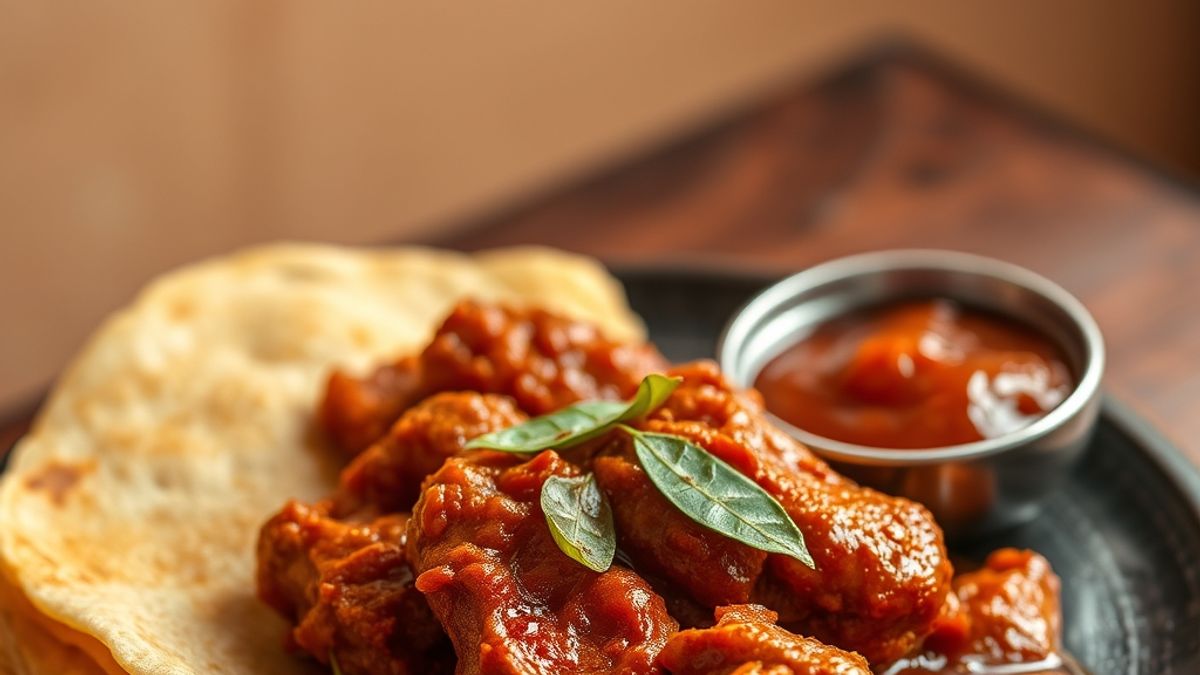
- Chicken ghee roast — the star. Boneless or on-the-bone chicken tossed in a thick, glossy masala of roasted red chillies, garlic and tamarind, then finished in ghee until it clings and caramelises. Tangy, spicy and rich all at once. A Kundapur specialty by origin, and a good one is cooked fresh to order, so expect a wait.
- Neer dosa — “water dosa,” a soft, lacy, unfermented rice crepe that is almost translucent. Neutral and milky, it exists to mop up gassi and ghee roast. Order a stack.
- Kori gassi — the Bunt community’s signature chicken curry (kori is chicken, gassi is curry in Tulu). A brick-red coconut gravy, layered and warming rather than sharp. The prawn and fish versions are just as good.
- Mangalore buns — slightly sweet, fluffy deep-fried banana puris, usually eaten with coconut chutney. A soft-spoken counterpoint to all that chilli, and a great way to open or close.
Add kori rotti (that same chicken curry poured over brittle wafers of rice rotti until they soften), prawn koliwada, surmai (kingfish) fry and neer dosa with sukka (a drier, grated-coconut stir-fry) and you have the full coastal spread.
Where to eat Mangalorean food in Mumbai
Fort and the Fort–Churchgate seafood belt
The historic heartland, home to the old-guard seafood lunch homes.
- Mahesh Lunch Home, near Pherozeshah Mehta Road, is among the most famous — a decades-old institution known for its surmai curry, butter-garlic crab, prawn gassi, and ghee roast with neer dosa.
- Trishna, tucked into a Fort lane, is the more upscale, globally known coastal address, celebrated for its crab and koliwada.
- Apoorva, near Horniman Circle, is the buzzy, packed favourite for koliwada, crabs and a huge range of fish.
Colaba and the central suburbs
Beyond Fort, coastal-Karnataka lunch homes are scattered across Colaba and the central suburbs around Sion, Matunga and Dadar, where much of the community settled — unassuming rooms that cook ghee roast from scratch and take their time. If you spot a “lunch home” with a Mangalorean name and a full house at lunch, trust it. A queue here is telling you something.
If you can’t pin down a specific outlet, do not chase a name — head to the Fort seafood cluster or a busy suburban lunch home and order the four dishes above. This cuisine travels better than any single address.
What it costs
These are honest, everyday prices rather than fine-dining ones, though the Fort names sit at the pricier end. As rough bands: a plate of chicken ghee roast runs roughly ₹350–600, neer dosa is a few rupees each (a stack, maybe ₹60–120), and kori gassi or a fish curry lands around ₹350–650 depending on the seafood. A full seafood meal for two at a mid-range lunch home is roughly ₹1,200–2,500; crab and lobster push it higher. Treat all of these as ballpark figures — prices move with the daily catch and the outlet.
Mangalorean, Malvani or Goan? Telling the coasts apart
Mumbai serves three great Konkan-coast cuisines and the menus overlap enough to confuse a newcomer, so here is the shorthand. Mangalorean (coastal Karnataka) leans on Byadgi chillies, coconut, tamarind and ghee, and its calling cards are ghee roast, gassi, neer dosa and rice rotti. Malvani (the coastal Konkan belt of Maharashtra) is hotter and more astringent, built on the fierce kombdi vade, sol kadhi and tikhat masalas, with kokum souring the curries. Goan brings vinegar, recheado and xacuti into the picture, a legacy of the Portuguese. All three do superb pomfret and prawns, but if the room calls itself a “lunch home”, advertises ghee roast and neer dosa, and has a Tulu or Bunt name over the door, you’re in Mangalorean territory.
Eating by the season
The coastal kitchen follows the catch, and the calendar matters more than at most restaurants. The freshest sea fish — pomfret, surmai, rawas — lands in the drier months, roughly October to May, which is also when prices ease and the fryers work hardest. Prawns and crab are near year-round staples, and chicken ghee roast never depends on the tide, so it carries the menu whatever the weather. During the monsoon fishing ban (roughly 1 June to Narali Purnima in August) the trawlers stay in, and while lunch homes stay open, premium sea fish gets scarcer and dearer; that is the window to lean into gassi, ghee roast, prawns and the coconut-forward vegetarian dishes rather than chasing a fresh pomfret.
A quick word on how a lunch home works
Walk in, grab a table, and don’t expect a leisurely rollout of courses — service is brisk and food-first. The waiter will reel off the day’s fresh fish; that is your cue to ask what came in. Order the ghee roast immediately (it takes the longest), then build around it. Water, rice and neer dosa arrive fast; the curries follow. Tables turn over quickly at the popular spots, especially at midday, which is exactly when the kitchen is at its sharpest.
What to drink, and how to finish
The coastal meal has its own liquid companions. Solkadhi — a pink-tinged cooler of kokum and coconut milk — is the classic digestive foil to all that chilli and ghee, and worth ordering even if it’s not offered; sip it through the meal rather than after. Plain buttermilk (taak) does a similar cooling job. To finish, look for sanna (soft steamed rice-and-coconut cakes) if the kitchen makes them, and don’t leave without a couple of Mangalore buns with coconut chutney — sweet, pillowy, and the gentlest possible full stop. A small filter coffee to close is very much in the coastal spirit.
Dishes to graduate to
Once the four classics are under your belt, the coastal menu opens up. Order kori rotti on a return visit — the same chicken gassi poured over brittle rice wafers that soften as you eat, a texture you won’t find elsewhere in the city. Sukka dishes (chicken, prawn or clam tossed dry with grated coconut and curry leaves) are the drier, more intense cousins of gassi and superb with rice. Seafood lovers should chase the day’s tawa fry — surmai or pomfret in a rava-and-red-chilli crust — and, in season, crab sukka or a butter-pepper-garlic crab, messy and worth every minute. Neer dosa with a coconut-jaggery finish is the sweet variation locals grow up on. None of these are exotic; they’re just what the community actually eats once you’re past the greatest hits.
Tips for a first-timer
- Order the ghee roast first. Often cooked fresh, it can take 20–30 minutes, so get it in before you settle into the rest.
- Pace the chilli. Ghee roast and gassi are bold; neer dosa, rice and Mangalore buns are the cooling counterweights. Balance the plate.
- Ask what came in fresh today. Surmai, pomfret, prawns and crab vary by the day’s catch, and the staff will happily steer you.
- Go for lunch. The “lunch home” name is no accident — midday is when the kitchens are busiest and the fish freshest.
- Cash and UPI both work, and the popular rooms fill up, so aim slightly before the 1pm rush.
Getting there
The Fort cluster is an easy walk from Churchgate station (Western line) or CSMT / Chhatrapati Shivaji Maharaj Terminus (Central and Harbour lines), and a short cab from Colaba. For the suburban lunch homes, Dadar, Matunga and Sion stations put you within a short auto or walk. If you are already doing a coastal crawl, this pairs naturally with a wider seafood tour of Mumbai or the filter-coffee-and-dosa belt of South Indian Matunga.
Monsoon caveat
If you are chasing the very freshest catch, mind the monsoon fishing ban along this coast, roughly 1 June to Narali Purnima in August, when trawlers stay in and much of the market runs on frozen or backwater stock. The kitchens stay open and the ghee roast is as good as ever, but pomfret and premium sea fish can be scarcer and pricier; prawns, chicken and the coconut-forward dishes carry you through beautifully.
Insider tips to eat the coast right
- A first-rate meal for two is ghee roast, a stack of neer dosa, one kori (or prawn) gassi, and a plate of Mangalore buns — that quartet is the whole coast on one table.
- Vegetarians should not skip out: ask for veg gassi, a sukka, and buns; the coconut-and-chilli backbone carries meat-free just as well.
- If the ghee roast arrives and you want more heat, ask for extra dry roasted-chilli masala on the side rather than dousing everything.
- Kori rotti is the sleeper order — pour the gassi tableside and eat it before the wafers go fully soft.
Mangalorean food is one of Mumbai’s quiet greats — less famous than the city’s street food, but fiercely loved by those who know it. Find a proper lunch home, order chicken ghee roast with a stack of neer dosa, a bowl of kori gassi and a couple of Mangalore buns, and you’ll understand why a certain kind of Mumbaikar plans a whole afternoon around it.
Frequently Asked Questions
What is the difference between kori gassi and chicken ghee roast?
Kori gassi is a coconut-based chicken curry — a red, layered gravy eaten with rice, neer dosa or rice rotti. Chicken ghee roast is a drier, thicker dish where chicken is tossed in a tangy roasted-chilli masala and finished in ghee until it clings and caramelises.
Where is the best area for Mangalorean food in Mumbai?
Fort, especially the Fort–Churchgate seafood belt, is the historic heartland, home to famous lunch homes like Mahesh Lunch Home, Trishna and Apoorva. Coastal-Karnataka lunch homes also cluster around Colaba and the central suburbs near Sion, Matunga and Dadar.
Is Mangalorean food vegetarian-friendly?
Yes. Though best known for seafood and chicken, the Tuluva table has plenty for vegetarians — neer dosa, Mangalore buns, coconut-based vegetable gassi and sukka dishes are all staples.
What should a first-timer order at a Mangalorean lunch home?
Start with chicken ghee roast and a stack of neer dosa, add a bowl of kori gassi, and finish with Mangalore buns. Ask what fish came in fresh that day, and order the ghee roast first since it is cooked to order and takes time.
How much does a Mangalorean seafood meal cost in Mumbai?
Roughly Rs 1,200–2,500 for two at a mid-range lunch home. A plate of chicken ghee roast runs about Rs 350–600 and a fish curry Rs 350–650, while crab and lobster push the bill higher. Treat all figures as ballpark; prices move with the daily catch.