
The Best Seafood Restaurants in Mumbai
The best seafood in Mumbai: butter-garlic crab at Trishna, stuffed pomfret at Mahesh, koliwada prawns and Malvani fish thali, with prices and what to order.
'%3E%3Crect%20width%3D'96'%20height%3D'96'%20fill%3D'%23E65100'%2F%3E%3Ccircle%20cx%3D'30'%20cy%3D'24'%20r%3D'44'%20fill%3D'%23fff'%20opacity%3D'.12'%2F%3E%3Ccircle%20cx%3D'60'%20cy%3D'74'%20r%3D'40'%20fill%3D'%23000'%20opacity%3D'.10'%2F%3E%3C%2Fg%3E%3Cg%3E%3Ccircle%20cx%3D'48'%20cy%3D'48'%20r%3D'15'%20fill%3D'none'%20stroke%3D'%23fff'%20stroke-width%3D'3'%2F%3E%3Cpath%20fill%3D'%23fff'%20d%3D'M48%2037%20l3.5%2011%20-3.5%2011%20-3.5%20-11%20z'%2F%3E%3Ccircle%20cx%3D'48'%20cy%3D'48'%20r%3D'2.2'%20fill%3D'%23fff'%2F%3E%3C%2Fg%3E%3C%2Fsvg%3E)
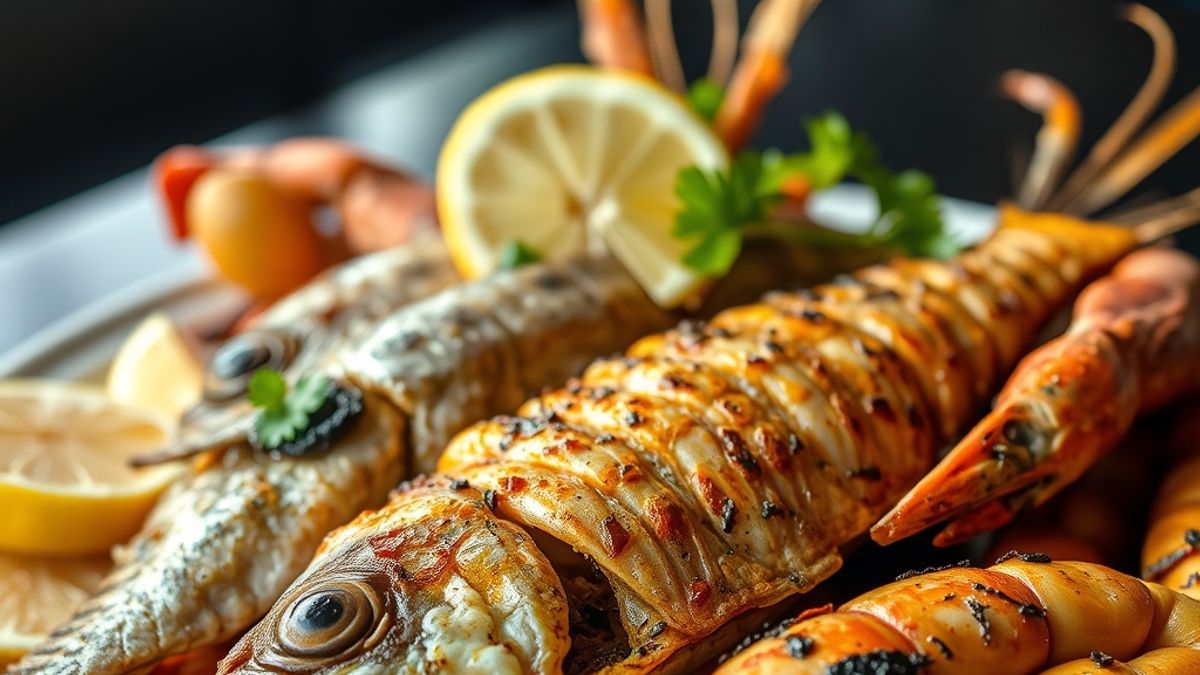
Mumbai is a fishing town that grew into a megacity, and the sea never left its plate. From the pre-dawn auctions at Sassoon Dock to white-tablecloth crab feasts in Fort, seafood here is serious business — four great coastal traditions, Mangalorean, Malvani, Gomantak and Koli, all landing on the same shoreline. This guide points you to the best of it, high and low, and tells you exactly what to order once you are seated with a napkin tucked in.
Quick reference: where to eat seafood in Mumbai
| Restaurant | Area | Signature dish | Approx cost (₹) | Nearest station |
|---|---|---|---|---|
| Trishna | Kala Ghoda, Fort | Butter-garlic crab | 2,000–3,500 for two | CSMT / Churchgate |
| Mahesh Lunch Home | Fort / Juhu | Stuffed pomfret, prawns | 1,500–2,500 for two | CSMT / Vile Parle |
| Gajalee | Vile Parle | Whole Malvani fish | 1,500–2,500 for two | Vile Parle (WR) |
| Apoorva | Fort | Butter-garlic crab | 1,200–2,000 for two | CSMT |
| Highway Gomantak | Bandra East | Fish thali (closed Thu) | 400–800 for two | Bandra (WR) |
| Sassoon Dock | Colaba | The auction (not dining) | Free to watch | CSMT + cab |
What to order
The menu at a Mumbai seafood house can run to four pages. Cut through it with this shortlist — order across it and you will have eaten the coast properly.
- Butter-pepper-garlic prawns or crab — the great Mangalorean crowd-pleaser: shellfish drenched in a garlicky, black-peppery butter. Messy, magnificent, and the dish to build a splurge around.
- Koliwada prawns — batter-fried, spiced prawns named for the Koli fishing communities. The perfect crisp, tangy starter while you decide on mains.
- Stuffed or tandoori pomfret — the prized silver flatfish, either slit and stuffed with green chutney or grilled whole in the tandoor. Ask if the pomfret is fresh that day before committing.
- Rava-fried fish — surmai (kingfish) or bangda (mackerel) in a crisp semolina crust, shallow-fried. The reliable everyday order at any coastal room.
- Fish thali — rice, a fish curry, a fried fish and sol kadhi for one price. The cheapest and most complete way into the cuisine.
- Sol kadhi — the pink coconut-and-kokum drink that cuts the spice and settles a rich meal. Keep it coming.
The four coastal traditions on one shoreline
Part of what makes Mumbai seafood so rich is that four distinct traditions land on the same plate. Knowing them helps you read a menu and order well.
- Mangalorean — the Tulu-coast style from around Mangalore, defined by gassi (a coconut-and-tamarind curry), ghee-roast preparations and the famous butter-pepper-garlic treatment. This is what Trishna and Mahesh do best.
- Malvani — from the Konkan coast of southern Maharashtra, built on freshly ground malvani masala, coconut and kokum, and best known for whole rava-fried fish and fiery curries. Gajalee is the standard-bearer.
- Gomantak (Goan-Saraswat) — the Hindu Goan tradition, gentler and more sour-sweet, strong on prawn curry, sol kadhi and fish thalis. Highway Gomantak is the home-style hero.
- Koli — the cooking of Mumbai’s own fishing community, robust and unfussy, at its purest in the koliwadas themselves and in the koliwada-style fried prawns named after it.
Order across two or three of these in one meal and you taste the whole coast, not just one village’s idea of it.
The restaurants worth crossing town for
Trishna — Kala Ghoda, Fort
The upscale benchmark and the name most food-lovers reach for first. Trishna does Mangalorean seafood with real finesse in a snug, dimly lit room off Kala Ghoda, and its butter-garlic crab and Hyderabadi-style ravas have a genuine international reputation. Roughly ₹2,000–3,500 for two. Book ahead — it is small and permanently busy, especially on weekend evenings.
Mahesh Lunch Home — Fort, Juhu and others
A thirty-plus-year institution serving reliably excellent coastal food across several outlets. The butter-pepper-garlic prawns, stuffed pomfret and Mangalorean gassi are all dependable, and the Fort branch near Cowasji Patel Tank is the original. Around ₹1,500–2,500 for two. A safe, consistent choice when you want quality without gambling.
Gajalee — Vile Parle and other outlets
The Malvani seafood specialist, known for large, glistening whole fish cooked with coconut, kokum and curry leaf. The rava-fried surmai and the tandoori pomfret are highlights. Roughly ₹1,500–2,500 for two, though a big whole fish priced by weight can push the bill toward ₹3,000–4,000 — worth it for a coastal blowout.
Apoorva — Fort
A long-loved coastal spot on Nanik Motwane Marg in Fort, famous among office-goers and regulars for its butter-garlic crab and prawns at gentler prices than the marquee names. Around ₹1,200–2,000 for two. A great weekday-lunch option in the old business district.
Highway Gomantak — Bandra East
The affordable, home-style hero — a Malvani and Gomantak fish thali served since 1991, opposite the Mahim post office. The thali, sol kadhi and fried bangda are the order. Around ₹400–800 for two, and note it is usually closed on Thursdays. This is where you eat brilliantly and cheaply.
For the adventurous: the koliwadas and the dock
Mumbai’s original fishing villages — the koliwadas of Worli, Versova and Mahim — are where the city’s seafood tradition lives closest to the source. Wandering the Worli koliwada at the tip of the sea link, or Versova on the western edge, gives you the atmosphere of a working fishing community: drying bombil (Bombay duck), nets, boats and the smell of the catch. For a guaranteed sit-down meal the established restaurants above are the safer bet, but the koliwadas are the real thing.
For pure spectacle, Sassoon Dock in Colaba is a working wholesale fish market dating to 1875, one of the oldest docks in the city. Arrive before dawn to watch the boats unload and the auctions crackle — women of the Koli community bargaining over crates of pomfret, prawn and surmai as the light comes up. It is about watching, not dining, but it is one of the most unforgettable free hours in Mumbai. Carry a bag for your shoes; the floor is wet and fishy, and photography is best asked about first.
More coastal rooms worth knowing
The five above are the classics, but Mumbai’s seafood bench runs deep across price points:
- Bharat / Excellensea (Fort) — a long-running Fort favourite near the docks, famous for crab and a broad Mangalorean-Malvani menu; mid-range and reliable.
- Pratap Lunch Home (Fort) — another old-school coastal room in the same district, popular for prawns and thalis at office-lunch prices.
- Soul Fry (Bandra, Pali Naka) — a lively, affordable Goan-Malvani spot that is as much a neighbourhood hangout as a fish restaurant.
- Bastian (Bandra) — the glossy, celebrity-favourite end of the spectrum, where seafood turns into a see-and-be-seen night out; book well ahead and expect a premium bill.
The point is you can eat superb seafood in Mumbai at almost any budget, from a ₹200 Fort thali to a four-figure crab feast — the coast does not gatekeep by price.
Which fish, which season
Seafood in Mumbai is at the mercy of the tide and the fishing calendar. A few pointers:
- Bombil (Bombay duck) — the soft local fish, best rava-fried; freshest in the cooler months and often sold dried the rest of the year.
- Surmai (kingfish) and pomfret — the prized firm and flat fish; available much of the year but priciest and best just after the monsoon ban lifts.
- Prawns and crab — reliable through the season, with crab priced by weight at the daily rate.
- The monsoon ban — Maharashtra restricts fishing through much of the monsoon (roughly June to early August), so peak-rain “fresh fish” is frequently frozen. Eat seafood at its very best from late August into winter.
How to eat seafood in Mumbai well
- Ask what is fresh today. A good coastal restaurant will steer you to the best catch of the day rather than let you order frozen surmai in the wrong season. Take the advice — the waiter knows what came in.
- Prices track the market. Crab, lobster and large whole fish are sold by weight at the daily rate, so always confirm the price before ordering the showpiece. A “market price” pomfret can quietly double your bill.
- Start with koliwada, build to crab. A fried-prawn or koliwada starter, then a thali or a whole fish, and butter-garlic crab if you are going big. That is the natural arc of a coastal meal.
- Keep sol kadhi close. It is the ideal counterpoint to the chilli and richness, and it settles the stomach after a heavy, oily crab.
- Mind the monsoon. The Maharashtra fishing ban runs through much of the monsoon (roughly June to early August), so peak-rain fish is often frozen or imported. Eat seafood at its best from late August onwards, when the boats return.
- Book the popular spots. Trishna and the Fort favourites fill up on weekend evenings; a reservation saves a long, hungry wait on the pavement.
How to order a whole fish without overpaying
The showpiece whole fish — a tandoori pomfret, a rava-fried surmai — is where bills balloon and where a little know-how pays off:
- Ask the rate before you order. Whole fish and crab are sold by weight at the day’s market price, which the menu rarely prints. Ask “how much per kilo today” and roughly what the piece will weigh.
- See the fish first. Good coastal restaurants will bring the raw fish to your table so you can check it is fresh — clear eyes, firm flesh, a clean sea smell. Take them up on it.
- Pick the preparation to the fish. Delicate pomfret suits stuffing or a gentle tandoor; firmer surmai takes a rava fry or a curry well. Ask the waiter what that day’s catch is best cooked as.
- Split it. A whole fish easily feeds two to three alongside a thali or a starter, so order one to share rather than one each.
Plan your seafood day
For a splurge, book Trishna or Mahesh Lunch Home and go straight for the butter-garlic crab. For a Malvani feast, head to Gajalee and order a whole fish by weight. For the best value in the city, take the Western line to Bandra and eat a fish thali at Highway Gomantak (just not on a Thursday). And if you are an early riser, watch the auctions at Sassoon Dock at dawn before eating the very fish you saw come off the boat. Ask what is fresh, keep the sol kadhi flowing, and let the coast do what it has done for this city for four centuries — feed it superbly.
Frequently Asked Questions
Which is the best seafood restaurant in Mumbai?
Trishna in Kala Ghoda is the most celebrated, famous for its butter-pepper-garlic crab and Hyderabadi-style ravas, at around ₹2,000–3,500 for two. Mahesh Lunch Home in Fort is the other benchmark. For Malvani seafood, Gajalee in Vile Parle leads, and Highway Gomantak in Bandra East is the budget champion.
What seafood dish should I order in Mumbai?
Order butter-pepper-garlic prawns or crab as the showpiece, koliwada prawns as a starter, and a stuffed or tandoori pomfret if it is fresh. A Malvani fish thali with sol kadhi is the best-value complete meal, and rava-fried surmai or bangda is the reliable everyday choice.
How much does a seafood meal cost in Mumbai?
A home-style Malvani fish thali runs around ₹400–800 for two, mid-range coastal restaurants like Mahesh or Apoorva ₹1,200–2,500 for two, and upscale spots like Trishna ₹2,000–3,500. Crab and large whole fish are priced by weight at the day's market rate, so confirm the price before ordering the big dish.
Where can I see Mumbai's fish market and the day's catch?
Sassoon Dock in Colaba is a working wholesale fish market dating to 1875. Arrive before dawn to watch the auctions and the boats unload. It is about the spectacle, not dining. The koliwadas of Worli and Versova are the original fishing villages where the tradition lives closest to the source.