
Beaches Near Mumbai: The Best Coastal Weekend Getaways
The best beaches near Mumbai for a weekend: Alibaug, Kashid, Murud-Janjira, Diveagar, Harihareshwar and Ganpatipule — ferry, drive times, seasons and costs.
'%3E%3Crect%20width%3D'96'%20height%3D'96'%20fill%3D'%23E65100'%2F%3E%3Ccircle%20cx%3D'30'%20cy%3D'24'%20r%3D'44'%20fill%3D'%23fff'%20opacity%3D'.12'%2F%3E%3Ccircle%20cx%3D'60'%20cy%3D'74'%20r%3D'40'%20fill%3D'%23000'%20opacity%3D'.10'%2F%3E%3C%2Fg%3E%3Cg%3E%3Ccircle%20cx%3D'48'%20cy%3D'48'%20r%3D'15'%20fill%3D'none'%20stroke%3D'%23fff'%20stroke-width%3D'3'%2F%3E%3Cpath%20fill%3D'%23fff'%20d%3D'M48%2037%20l3.5%2011%20-3.5%2011%20-3.5%20-11%20z'%2F%3E%3Ccircle%20cx%3D'48'%20cy%3D'48'%20r%3D'2.2'%20fill%3D'%23fff'%2F%3E%3C%2Fg%3E%3C%2Fsvg%3E)
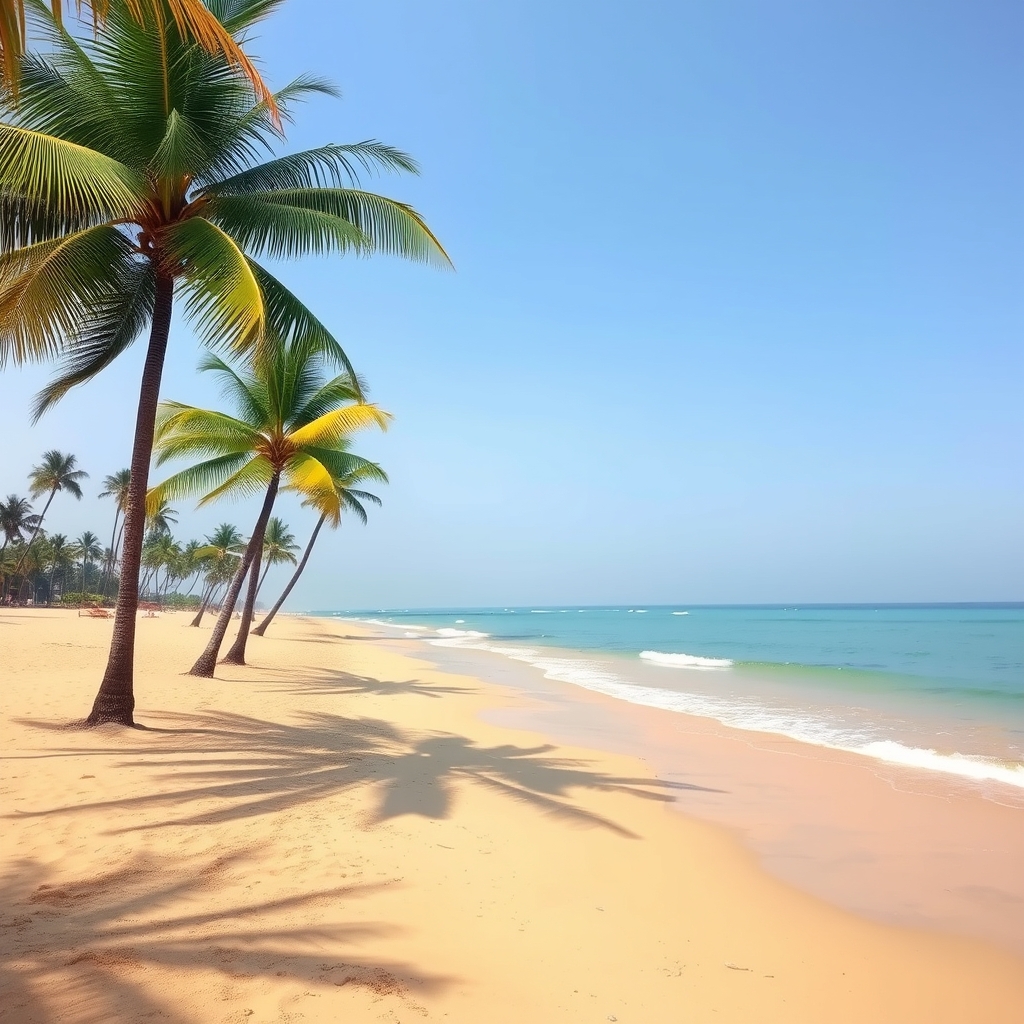
The best thing about living in Mumbai is that the moment the city gets too much, the Konkan coast is right there — a ferry ride or a few hours’ drive down the Arabian Sea to sand, palms and seafood thalis. You don’t need a week or a flight. A Saturday-morning start and a booked room is enough for most of these. Below are six escapes we’d actually send a friend to, ordered roughly by how far you’ll have to go, with honest drive times, the ferry lowdown and when to bother.
Think of this stretch as three tiers. Alibaug is the reflex weekend — close enough to leave after breakfast and still get sand under your feet by lunch. Kashid and Murud-Janjira are the confident second trip, worth a full night and a fort. And Diveagar, Harihareshwar and Ganpatipule are the deeper Konkan, where the beaches lengthen, the crowds thin and the whole point becomes doing very little. Match the beach to the time you actually have, and you’ll come back rested instead of frazzled.
Quick reference: which beach, how far
| Beach | Distance from Mumbai | Getting there | Best for | Ideal stay |
|---|---|---|---|---|
| Alibaug | ~1 hr by ferry (Mandwa) | Ferry + short drive, or ~2.5–3 hr drive | First-timers, day trips, water sports | Day trip–1 night |
| Kashid | ~130 km / ~4 hr | Drive, or ferry to Mandwa then road | Clean white sand, families | 1 night |
| Murud-Janjira | ~160 km / ~4.5 hr | Drive + sailboat to the fort | History, fort lovers | 1 night (pair with Kashid) |
| Diveagar | ~170 km / ~5 hr | Drive | Quiet, homestays, walks | 1–2 nights |
| Harihareshwar | ~184 km / ~5 hr | Drive | Temple town, rocky coast | 1–2 nights |
| Ganpatipule | 320+ km / 6–9 hr | Drive (break the journey) | Long weekend, temple beach | 2+ nights |
Prices below are honest ranges you can plan around, not quotes — ferry fares, boat rates and room tariffs all swing with season, operator and how far ahead you book.
Getting there: the Mandwa ferry beats the drive
For Alibaug and everything just south of it, the sea route saves you the long crawl out through Panvel and around the creek. Two options run across the harbour to Mandwa jetty, and both take about an hour. The alternative — the all-road route via the Sion–Panvel Highway and Pen — is genuinely useful only if you’re carrying a lot, travelling with elderly family who’d rather not board a boat, or setting out in the monsoon when the smaller craft stop. Otherwise the water wins on both time and mood: you swap a stop-start highway for a breezy deck and a first glimpse of the Gateway of India from the sea.
The M2M RoRo (Bhaucha Dhakka to Mandwa)
This is the one to know about, because it carries your car. The M2M RoPax sails from Bhaucha Dhakka (Ferry Wharf) in the docks area to Mandwa, so you drive on in Mumbai and drive off on the other side with no repacking. Reckon on roughly Rs 390–460 per passenger plus around Rs 1,000 for the car, and book online in advance — weekend sailings fill up. It’s also the most dependable service in the monsoon, when the smaller boats stop. Pets are allowed, with a dedicated arrangement, for a small extra fee. Tip: if you’re a foot passenger, the cheaper catamarans below are fine; the RoRo earns its price only if you want your own vehicle at the other end. Having your car at Mandwa pays off most if you plan to push south to Kashid or Murud the same day rather than stay put in Alibaug.
Catamarans from the Gateway of India
If you’re travelling light, the passenger catamarans from the Gateway of India — PNP, Maldar and Ajanta among them — are the quick, cheap way across, from around Rs 135 to Rs 285 depending on operator and deck, with a free bus onward from Mandwa into Alibaug town. There are 25-plus departures a day in season, roughly every half hour through the morning, so you rarely wait long. The catch: these are frequently suspended from June to September because of rough seas, so in the monsoon fall back on the M2M RoRo or drive. Mandwa jetty to Alibaug town proper is about 20 km. Tip: grab the upper open deck if the sun isn’t fierce — the harbour views of the city skyline, the anchored ships and the naval dockyard are half the reason to take the boat at all. Once at Mandwa, shared autos and local taxis wait at the jetty; agree the fare before you climb in.
Alibaug: the easy first weekend
Barely an hour across the water and you’re in Alibaug, which is why it’s the default. It’s less a single beach than a cluster of them, so pick your base by mood, and don’t try to see all of them in a day. Weekends here are noticeably busier than weekdays; if you can shift your trip to a Sunday-night-to-Tuesday window, you’ll get the same sand at half the crowd. For a full breakdown of how to structure a day or a night here, our dedicated Alibaug day-trip guide goes beach by beach.
Kolaba Fort, off Alibaug beach
A more than 300-year-old sea fort that was a naval station under the Marathas, Kolaba sits just offshore from the main town beach. At low tide you can walk out to it across the sand; at high tide it’s marooned and best admired at sunset. Tip: check the tide before you set off — the walk-out window is only a few hours, and there are freshwater wells and old temples inside worth the timing. Local tide charts are easy to find online, or simply ask at your homestay the night before; getting caught halfway as the water rises is a real risk families should plan around. Wear sandals you don’t mind soaking, because the last stretch is often ankle-deep even at low tide.
Nagaon and Kihim beaches
Nagaon, about 9 km from town, is the water-sports beach — parasailing, jet-ski and banana-boat rides, all at fairly reasonable rates and busiest on Sunday. Expect to pay somewhere in the region of a few hundred rupees per person for a jet-ski spin or a banana-boat ride, and rather more for parasailing; rates are negotiable, especially midweek, and always confirmed at the beach rather than booked ahead. Kihim, around 12 km out, is the gentler counterpoint, a golden-sand stretch backed by trees that birdwatchers and butterfly-spotters have loved for decades. If you’ve come with children, Nagaon for the activity and Kihim for the calm makes a good split. Best season for Alibaug overall is October to February.
Where you sleep sets the tone. Simple guesthouses and homestays sit in the ₹1,500–3,000 a night band, comfortable mid-range beach resorts run roughly ₹3,500–7,000, and the fashionable private villas Alibaug is now known for climb well past that. Booking a place that serves home-style Konkani food often beats hunting for a restaurant at night, when many kitchens in the smaller villages wind down early.
Kashid: the white-sand crowd-pleaser
About 30 km south of Alibaug — and roughly 130 km, four hours or a bit more, from Mumbai if you drive the whole way — Kashid is the postcard beach of this stretch: pale sand, casuarina groves and cleaner water than you’ll find nearer the city. The coastal road down from Alibaug, hugging the sea past Nagaon and Revdanda, is a pleasure in itself. It gets busy on long weekends, so go early; by late morning the parking near the main stretch fills and the shacks selling corn and cold drinks do brisk trade. Tip: combine it with Murud in a single trip; they’re only about 20 km apart, and Kashid makes the nicer place to stay the night while Janjira is the day’s outing. The swimming here is better than most, but the sea still has currents — stay within your depth and keep an eye on children, as there are no formal lifeguards.
Murud-Janjira: the island fort that never fell
Janjira Fort, off Rajapuri jetty
This is the one piece of genuine drama on the coast — an oval sea fort on its own island, famously never conquered despite the Marathas, Portuguese and British all trying. It’s roughly 160 km and about four and a half hours from Mumbai. You reach it by sailboat from Rajapuri jetty, near Murud town; a round trip on the traditional sailboat runs about Rs 80–100, with motorboats and speedboats dearer at Rs 200–300. Entry to the fort itself is free. Boats generally run from around 7 am to about 4.45 pm and stop for the monsoon, roughly June to September. Tip: allow 1.5 to 2 hours on the island for the ramparts, the huge cannons and the freshwater tanks, and haggle for a sailboat that waits rather than paying twice. Go in the morning if you can — the light is kinder for photos and the afternoon sea can turn choppy, which makes both the crossing and the wait less pleasant. There’s little shade on the island, so carry water, a hat and sunscreen. For a closer look at the fort’s history and the crossing logistics, see our full Murud-Janjira day-trip guide.
Murud town and beach
Murud itself deserves an evening rather than a rushed exit. The town beach is long and unhurried, the old Nawab’s palace sits on the hill above it, and the whole place has a slow, small-town feel that’s a world away from Mumbai. Fishing boats come in through the afternoon, which means the seafood at dinner is about as fresh as it gets. Stays here lean towards modest hotels and beachfront guesthouses in the ₹2,000–4,500 band, with a handful of pricier resorts for those who want a pool.
Diveagar and Harihareshwar: the quieter Konkan
Cross into the deeper Konkan and the crowds thin, the beaches lengthen and the pace drops. This pair, plus Shrivardhan between them, makes an ideal two-night loop, and it’s the stretch we’d steer anyone who’s already “done” Alibaug and wants something softer. There’s no ferry shortcut here — it’s a drive, on roads that narrow and wind through mango and betel-nut country the further south you go — so set out early and treat the journey as part of the trip.
Diveagar
A clean, roughly 5 km sweep of sand about 170 km and five hours from Mumbai, in Raigad district. It’s a place for doing very little — long walks, casuarinas, fresh fish. The Suvarna Ganesh temple in the village is the local draw. Tip: this is homestay-and-guesthouse country rather than resort territory; book a place that does home-style Konkani thalis and you’ll eat far better than at any restaurant. A typical Konkani or Malvani thali here — rice, sol kadhi, a fish curry, a fry — lands somewhere around ₹250–500, and half-board homestays that fold dinner and breakfast into the room rate are the sweet spot, usually in the ₹1,500–3,000 band per night. Come for the quiet and you’ll find the biggest event of the day is the sunset; plan accordingly. If village-scale seafood is your thing, our guides to Malvani cuisine and Mumbai’s seafood restaurants will tell you what to order and why.
Harihareshwar (and Shrivardhan)
Around 184 km and about five hours out, Harihareshwar is the more atmospheric of the two, a temple town wrapped around a headland. The Kalbhairav and Harihareshwar temples anchor it, and the pradakshina — a circular walk over the sea-worn rocks below the temple — is the thing people remember, especially at high tide when the waves come up hard. Wear grippy shoes and mind your footing on the wet rock; the same waves that make the walk memorable make it slippery. Shrivardhan, about 25 km and 40 minutes from Diveagar, sits between them with its own long beach and the Peshwa-era Laxminarayan temple. Tip: the MTDC (Maharashtra Tourism) resort at Harihareshwar is a reliable, well-placed stay with the sea on its doorstep — worth booking ahead on weekends. If you’re doing the loop, base a night in Diveagar and a night here, and you’ll cover all three beaches without a single long drive between them.
Ganpatipule: for a longer break
The furthest of the lot, down in Ratnagiri district — count on 320-plus km and, realistically, six to nine hours depending on route and stops. That distance makes it a proper long weekend or a break-the-journey trip rather than a one-nighter, but the reward is one of the coast’s finest temple beaches. The swayambhu (self-manifested) Ganesh temple here is around 400 years old and unusual for facing west out to sea. Tip: stay at the MTDC Ganpatipule beach resort — it’s a two-minute walk to the sand and about five minutes from the temple, with everything from AC rooms to bamboo huts. If you’re driving down, break the trip at Harihareshwar or Ganpatipule’s neighbouring beaches rather than doing it in one brutal push. Ratnagiri district is also Alphonso mango country, so a trip in April or May — hot, but peak season for the fruit — comes with a delicious consolation. Around Ganpatipule itself, the coast is dotted with quieter beaches like Aare-Ware, worth a detour if you have a spare morning.
Eating and drinking your way down the coast
Half the reason to make this trip is the food, and it’s remarkably consistent from Alibaug to Ratnagiri. The template is a Konkani or Malvani thali built around rice, a fiery fish curry, sol kadhi (the pink, cooling kokum-and-coconut drink), and whatever came off the boats that morning — pomfret, surmai (kingfish), prawns, bangda (mackerel), or bombil (Bombay duck) fried crisp. Vegetarians are well looked after too, with coconut-rich veg thalis and the ubiquitous ussal and modak. Expect to pay roughly ₹250–500 for a full seafood thali at a village eatery, more at resort restaurants, less at a no-frills local mess. Tip: the best meals are almost always at homestays and family-run places rather than anywhere with a fancy sign; ask your host what’s fresh and let them cook it. If all this leaves you wanting more, our seafood restaurants guide covers where to chase the same flavours back in the city.
When to go
The whole coast reads the same way: October to March is the season, with pleasant weather and calm seas that keep the boats running. April and May turn hot and sticky, though they’re prime mango months if you’re heading as far as Ratnagiri. The monsoon, June to September, is heavy here — the sea currents get dangerous, ferries and fort boats suspend, and swimming is off — but if you only want green hills, empty sand and the drama of a grey Arabian Sea, and you’re happy to drive rather than sail, it has its own following. If a rain-soaked escape is what you’re after, our roundup of monsoon getaways near Mumbai leans into that side of the Konkan, and there’s a whole different set of options in our guide to day trips from Mumbai when the sea is off-limits.
Practical tips before you set off
A little planning is the difference between a restful weekend and a stressful one on this coast.
- Book the ferry and the room together, and early. For weekends in season, sort both a week or more ahead. RoRo car slots and the MTDC resorts fill first.
- Carry cash. Villages, sailboat operators and small eateries often don’t take cards, and UPI can be patchy where the signal drops.
- Respect the sea. These are open-ocean beaches with real currents and no lifeguards. Swim within your depth, keep children close, and don’t go in after dark or after a drink.
- Time the tides. Kolaba Fort’s walk-out and Harihareshwar’s rock pradakshina both depend on low water. A quick tide check the night before saves a wasted trip.
- Drive fresh and daylight-first. The Konkan’s roads are scenic but narrow and winding, with the odd rough patch. Break long drives, avoid night driving on the smaller sections, and keep the tank topped up between towns.
- Pack light but smart. Sunscreen, a hat, mosquito repellent for the evenings, a change of clothes you can get salty, and any medicines you need — pharmacies thin out fast once you leave the bigger towns.
If your idea of a coastal weekend is more sunset-and-city than sand-and-fort, Mumbai’s own shoreline — from Marine Drive to Juhu — is covered in our guide to beaches and Marine Drive in the city, and there’s beach camping within reach too in our camping near Mumbai roundup.
The bottom line
If you’ve never done it, start with Alibaug and the Mandwa ferry — it’s the shortest hop and the gentlest introduction. Once you’ve got the rhythm, Kashid and Murud-Janjira make the best next weekend, Diveagar and Harihareshwar reward a slower two nights, and Ganpatipule is the one to save for a long weekend when you fancy driving deeper into the Konkan. Whichever you pick, go between October and March, book ahead, and don’t over-plan — half the point of this coast is doing nothing at all with your feet in the sand.
Frequently Asked Questions
Which beach near Mumbai is best for a first weekend trip?
Alibaug is the easiest first choice because the Mandwa ferry gets you there in about an hour and skips the long road crawl. It has a cluster of beaches for every mood — Nagaon for water sports, Kihim for calm, and Kolaba Fort just offshore — so you can tailor the day. You can even do it as a day trip if an overnight stay isn't on the cards.
Is the Mandwa ferry from Mumbai running during the monsoon?
The passenger catamarans from the Gateway of India (PNP, Maldar, Ajanta and others) usually stop from June to September because of rough seas. The M2M RoRo from Bhaucha Dhakka is the service that keeps sailing through the monsoon, and it carries your car too. Always check the schedule before you set out, and book weekend sailings in advance as they fill quickly.
Can I visit these beaches without a car?
Alibaug is very doable car-free: take a catamaran to Mandwa, use the free connecting bus into town, then autos and taxis locally. For Kashid, Murud-Janjira, Diveagar, Harihareshwar and especially Ganpatipule, having your own vehicle or a hired cab makes a big difference because public transport is sparse and the beaches are spread out. The M2M RoRo lets you take your own car across if you want to drive on the far side.
How much does it cost to reach Janjira Fort at Murud?
You cross to the island fort by boat from Rajapuri jetty near Murud town. A round trip on a traditional sailboat runs about Rs 80–100 per person, while motorboats and speedboats cost more at roughly Rs 200–300. Entry to the fort itself is free. Boats generally run from around 7 am to 4.45 pm and stop during the monsoon, so plan a morning visit and haggle for a boat that waits for you rather than paying twice.
What is the best time of year to visit the beaches near Mumbai?
October to March is the season, with pleasant weather, calm seas and boats and fort ferries running normally. April and May get hot and humid, though they are peak Alphonso mango months if you head down to Ratnagiri. The monsoon from June to September brings heavy rain, dangerous currents and suspended boat services, so swimming is off — but the green, dramatic coast draws its own crowd if you are happy to drive rather than sail.
How far in advance should I book a beach weekend from Mumbai?
For weekends in season, book both the ferry and your room a week or more ahead. The RoRo's car slots and the MTDC government resorts at places like Harihareshwar and Ganpatipule tend to sell out earliest. Carrying cash is wise too, as many village homestays, sailboat operators and small eateries do not take cards and mobile signal can be patchy.