
Where to Eat Pav Bhaji in Mumbai
The definitive Mumbai pav bhaji guide — Sardar, Amar Juice Centre and Cannon, plus Jain, cheese and khada varieties, real ₹ ranges and how to eat it right.
'%3E%3Crect%20width%3D'96'%20height%3D'96'%20fill%3D'%23E65100'%2F%3E%3Ccircle%20cx%3D'30'%20cy%3D'24'%20r%3D'44'%20fill%3D'%23fff'%20opacity%3D'.12'%2F%3E%3Ccircle%20cx%3D'60'%20cy%3D'74'%20r%3D'40'%20fill%3D'%23000'%20opacity%3D'.10'%2F%3E%3C%2Fg%3E%3Cg%3E%3Ccircle%20cx%3D'48'%20cy%3D'48'%20r%3D'15'%20fill%3D'none'%20stroke%3D'%23fff'%20stroke-width%3D'3'%2F%3E%3Cpath%20fill%3D'%23fff'%20d%3D'M48%2037%20l3.5%2011%20-3.5%2011%20-3.5%20-11%20z'%2F%3E%3Ccircle%20cx%3D'48'%20cy%3D'48'%20r%3D'2.2'%20fill%3D'%23fff'%2F%3E%3C%2Fg%3E%3C%2Fsvg%3E)
The Top 10
- 01
Sardar Pav Bhaji
Tardeo, South Mumbai ₹250–450 for two (approx)Go for: The city's most iconic butter-drenched pav bhaji, running since the 1960s — a full pat of Amul butter melts into the bhaji; the cheese and khada (chunky) versions are also great.
Expect a queue and a crowd at peak hours; go slightly off-peak and don't ask them to cut back on the butter.
- 02
Cannon Pav Bhaji
Opposite CST Station, Fort ₹150–300 for two (approx)Go for: A no-frills, women-run stall famous for buttery, homestyle pav bhaji right by CST — a classic pre- or post-train stop.
It's stand-and-eat and tightly packed; carry cash and be ready to share table space, and avoid the noon and evening rush.
- 03
Amar Juice Centre
Vile Parle West ₹300–500 for two (approx)Go for: Beloved juice centre serving 8–10 pav bhaji variations; the cheese pav bhaji and khada pav bhaji are the picks, washed down with a fresh juice.
Open till late night — great for a late-supper run; gets very busy on weekends, so go early or expect a wait.
- 04
Sukh Sagar
Girgaum Chowpatty, South Mumbai ₹350–550 for two (approx)Go for: Long-standing seaside sit-down spot known for crisp, well-buttered pav and a reliably good plate; pairs well with their falooda.
Combine it with a walk on Chowpatty beach, but note the place fills up on evenings and weekends.
- 05
Amrut Sagar
Hill Road, Bandra West ₹350–500 for two (approx)Go for: Bandra's go-to for rich, generously buttered pav bhaji, tucked in among a huge veg fast-food menu.
Non-AC, high turnover and almost always crowded — best for a quick, casual bite rather than a leisurely meal.
- 06
Swati Snacks
Tardeo (also Nariman Point) ₹500–800 for two (approx)Go for: Upscale, spotless institution (since 1963) serving a refined, smooth pav bhaji alongside its famous panki, vada pav and Gujarati snacks.
No reservations and long queues at mealtimes, so arrive early; pricier than street stalls but very consistent.
- 07
Shiv Sagar
Kemps Corner (and outlets across Mumbai) ₹400–600 for two (approx)Go for: Well-known vegetarian chain that built its name on pav bhaji — the signature pav bhaji fondue with unlimited pav is the thing to order.
Air-conditioned, family-friendly outlets make it a comfortable option; ask for the fondue rather than the standard plate.
- 08
Achija
Ghatkopar East / Mulund West ₹300–500 for two (approx)Go for: Long-running suburban favourite (since 1987) famous for heavily buttered pav bhaji, often served with free papad.
A central-suburb staple that draws crowds on weekends; the cheese pav bhaji is a popular upgrade.
- 09
Gypsy Corner
Shivaji Park, Dadar ₹200–350 for two (approx)Go for: Vegetarian Maharashtrian joint opposite Shiv Sena Bhavan doing an excellent, superb-value pav bhaji with well-buttered pav.
Pav bhaji is only served from around 3pm onwards — don't turn up at lunchtime expecting it.
- 10
Shreejee's
Oshiwara, Andheri West ₹300–500 for two (approx)Go for: Popular western-suburb Udupi-style restaurant serving a solid, buttery pav bhaji all day, with tava pulao alongside.
Reliable, family-friendly and open late — a good bet if you're around Andheri or Lokhandwala.
Ranked by our Mumbai desk · prices are approximate — confirm before you go.
Pav bhaji is Mumbai’s great equaliser. It began as fuel for textile-mill workers who needed something hot, filling and cheap they could eat standing up, and it grew into the one dish the whole city agrees on. A spiced mash of vegetables cooked down on a giant flat tawa, a fist of Amul butter melting into it, and two soft pav toasted in that same buttery slick — that is the platonic plate. This guide covers the three institutions everyone name-drops, the varieties worth knowing, what a good plate should look like, and how to eat it like a local rather than a tourist.
Mumbai’s pav bhaji legends at a glance
| Place | Area | Known for | Approx cost (₹) | Nearest station |
|---|---|---|---|---|
| Sardar | Near Tardeo | Butter-drowned classic since the 1960s | 150–280 | Mumbai Central (W) |
| Amar Juice Centre | Vile Parle | Late-night cheese pav bhaji | 180–320 | Vile Parle (W) |
| Cannon | Opposite CSMT | Quick, buttery plate by the station | 150–280 | CSMT (Central/Harbour) |
The holy trinity: Sardar, Amar, Cannon
Three names come up again and again, and all three genuinely earn it.
Sardar (near Tardeo). The one purists send you to first. Sardar has been serving pav bhaji from the Tardeo area since the 1960s, and its calling card is butter — genuinely obscene amounts of it, ladled on until the bhaji glistens. The bhaji itself is a natural brown rather than the fluorescent red you get elsewhere, because they lean on real vegetables and masala instead of colour. Go hungry, and do not fight the butter; it is the whole point.
Amar Juice Centre (Vile Parle). A Vile Parle institution and the go-to for a certain kind of Mumbai night out. Amar is famous for its cheese pav bhaji — a buttery bhaji buried under a heap of grated cheese — and for staying open very late, which makes it a magnet for post-cinema and after-party crowds. If you want the indulgent, cheese-loaded version of the dish, this is the address people quote.
Cannon (opposite CSMT). A tiny, endlessly busy stall right across from Chhatrapati Shivaji Maharaj Terminus, run largely by a team of Maharashtrian women. There is barely any seating, but the turnover is fast and the plate — buttery pav, generous bhaji, and a popular cheese version topped with a proper slab of butter — is exactly what you want when you have twenty minutes between trains. The location makes it the most convenient legend on this list for anyone passing through South Mumbai.
Know your varieties before you order
Half the fun of Mumbai pav bhaji is that no two plates have to be the same. The main variations you will actually see:
- Regular (masala) pav bhaji — the classic, vegetables mashed smooth into a spicy, buttery gravy. Order nothing special and this is what arrives.
- Cheese pav bhaji — a blizzard of grated cheese melted over the top. Rich, gooey, and the version college students and late-night crowds swear by. Amar and Cannon are both known for it.
- Khada pav bhaji — “khada” means standing; here the vegetables are left chunky rather than mashed, so you get texture and bite instead of a smooth purée. Order this if you like to taste the individual vegetables.
- Jain pav bhaji — made without onion, garlic and potato to suit Jain diets, usually with raw banana (plantain) standing in for potato. Widely available, but confirm at smaller stalls before ordering.
- Paneer / extra-butter / “special” — many places will fold in paneer, pile on extra butter, or do a loaded “special” plate. Just ask; Mumbai stalls are happy to customise.
What a good plate should look like
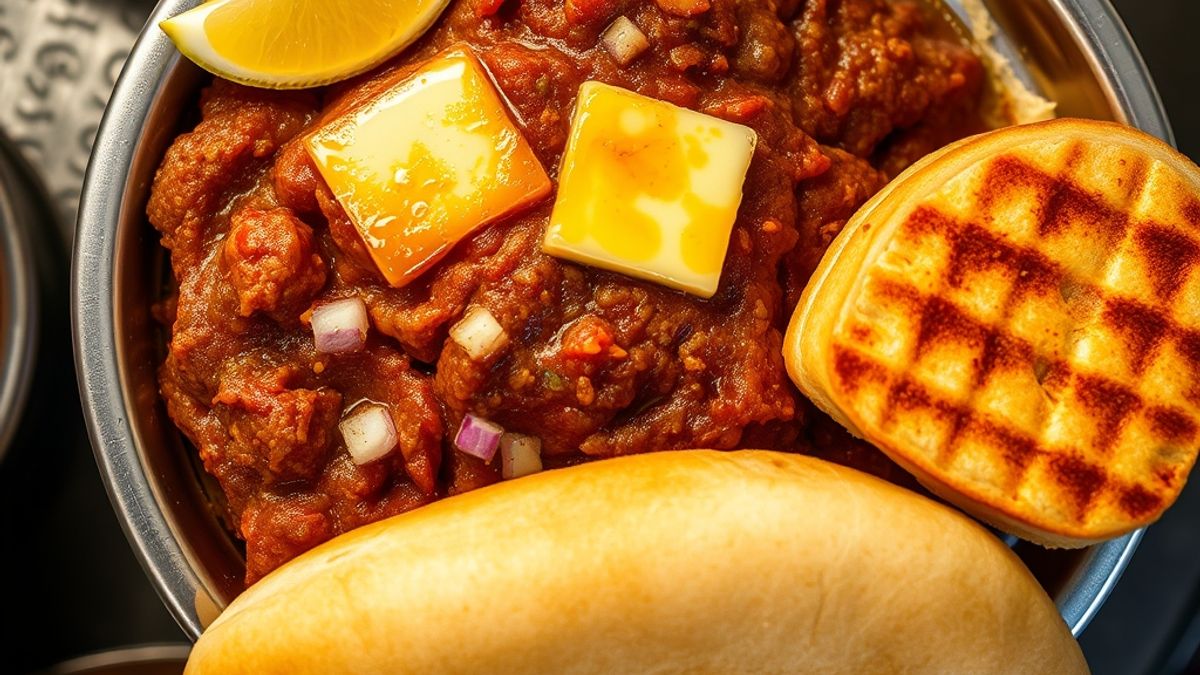
You can judge a pav bhaji before you taste it. The bhaji should be a deep, glossy brown-red, not a chemical scarlet. There should be a visible pat of butter melting on top, with a little raw chopped onion, a lemon wedge and sometimes fresh coriander on the side. The pav should be griddle-toasted in butter until the cut faces are golden and slightly crisp, not just warmed through. Squeeze the lemon over, tip the onion into or onto the bhaji, tear the pav, and scoop. Do not reach for a fork if you can help it — hands and pav are the tools.
Beyond the big three
The trinity is not the whole story. Areas like Juhu and Chowpatty have long-running beachside and roadside stalls that draw crowds every evening, and neighbourhood juice centres and Udupi-style eateries across the suburbs turn out perfectly good, cheaper plates for locals. The reliable signal in any neighbourhood: if a stall is packed with families at 8pm and the tawa never stops scraping, that beats any list. For a wider sweep of cheap, brilliant street eating, our budget eats guide is a good companion, and pav bhaji sits comfortably alongside the city’s other bread-based icons in our Mumbai street food coverage.
What it costs and when to go
Pav bhaji is street food, so keep expectations to street-food prices. A standard plate at most stalls runs roughly ₹120–250, with cheese and “special” versions climbing higher; at the famous names, expect to pay a little more for the reputation and the butter. Treat these as rough bands — prices move with the outlet and with vegetable and butter rates, so check on the day.
Evening is prime time. The tawa is hottest, the crowd energy is best, and the classic experience is a plate at 7–10pm. Amar’s late hours make it the natural choice past midnight. Weekends get seriously busy at the legends, so go early in the evening if you dislike queues, and be ready to eat standing at the smaller stalls. In a heavy monsoon spell, the open-air stalls near the sea can shut early or move under cover — a quick call or a glance at the sky saves a wasted trip.
What to drink alongside
Pav bhaji is rich, buttery and hot, so the pairings that work best are cold, sharp or sweet enough to reset your palate between scoops. The all-time local combination is a glass of sweet or salted lassi, thick enough to stand a spoon in, which tames the chilli and the butter in one go. A tall fresh lime soda (sweet, salted or mixed) is the lighter option and cuts grease beautifully. At the juice-centre legends like Amar, a fresh fruit juice or a cold coffee is the natural chaser — these places built their names on juices before pav bhaji, after all. Skip anything too fizzy-sweet if you are ordering the extra-butter version; you will want the acidity, not more sugar.
How pav bhaji fits the tawa family
Once you are watching the giant flat griddle, you will notice it does more than one dish, and it helps to know the neighbours so you order what you actually want:
- Pav bhaji — the smooth, spiced vegetable mash with butter-toasted pav. The anchor of the whole tawa.
- Tawa pulao — the leftover-genius sibling, where the same masala and vegetables are tossed through rice on the hot griddle. Order this if you want the flavour without more bread.
- Masala pav — pav split, stuffed and fried in the bhaji masala, a snackier, handheld cousin great for one person.
- Cheese/paneer variants — layered onto any of the above on request.
If you are eating solo, a masala pav or a plate of tawa pulao is often the smarter order than a full two-pav bhaji; in a group, get one of each and share across the table.
Getting there by train and Metro
Everything here is easy to reach on the local train, which is how most of Mumbai travels.
- Cannon — CSMT on the Central and Harbour lines drops you almost at the door; it is directly opposite the station.
- Amar Juice Centre — Vile Parle station on the Western line is the closest hop, followed by a short auto ride.
- Sardar — the Tardeo area is walkable or a quick auto from Mumbai Central on the Western line, or from Grant Road.
Pin your exact stall on maps before setting out, since the small ones sit tucked into busy junctions rather than on an obvious frontage.
How to spot a great pav bhaji stall
When you’re off the beaten track and choosing between stalls, a few reliable tells sort the good from the forgettable:
- A hot, crowded tawa that never stops. Constant scraping and a queue mean fresh bhaji, not a pot sitting since lunch.
- Real butter, generously used. A good stall reaches for a block of Amul without flinching; stinginess with butter is a bad sign.
- Brown-red bhaji, not neon. Natural colour signals real vegetables and masala rather than food dye covering for thin cooking.
- Griddle-toasted pav. The cut faces should hit the buttered tawa and come off golden, not arrive from a plastic bag lukewarm.
- A busy family crowd, not just passing tourists. Locals eating there on a weeknight is the strongest endorsement there is.
A few local tips
- Say “extra butter” out loud if you want the full experience — and most people should, at least once.
- Ask for Jain or khada explicitly; the default is always the mashed, onion-garlic classic.
- Carry cash in small notes. The busiest stalls move fast and do not want to fuss with change.
- Eat it fresh off the tawa. Pav bhaji does not travel — the pav goes soft and the butter congeals, so it is far better on the spot than delivered.
- One plate is two pav and a scoop of bhaji; regulars often order an extra pav (“do pav aur”) to finish the last of the gravy.
Is pav bhaji vegetarian and how spicy is it?
Pav bhaji is naturally vegetarian — the bhaji is a mash of potato, cauliflower, peas, capsicum, tomato and onion, bound with butter and pav-bhaji masala — which is a big part of why it became a citywide staple. It is not, however, vegan or light: butter is central, both in the bhaji and on the griddled pav, so ask for it cooked in oil if you need to avoid dairy (though purists will wince). On heat, a standard plate is mild-to-medium by Mumbai standards — warming rather than punishing — and stalls will happily dial the chilli up or down if you say so when you order. The raw onion, lemon and a cold lassi on the side are the built-in cooling system.
Plan your plate: the insider wrap-up
If you have one pav bhaji outing in Mumbai, make it an evening one. Head to Sardar for the butter-soaked purist’s version, Cannon if you are threading it between trains at CSMT, or Amar in Vile Parle when the night runs late and cheese is the answer. Order it extra-butter at least once, add a squeeze of lemon and a heap of raw onion, and eat it standing with your hands off a hot tawa. That is not just how you order pav bhaji in Mumbai — it is how the city eats its favourite dish.
Frequently Asked Questions
Which is the most famous pav bhaji in Mumbai?
Sardar near Tardeo is the name purists reach for first, prized for drowning its bhaji in butter and running since the 1960s. Amar Juice Centre in Vile Parle and Cannon opposite CSMT are the other two legends most Mumbaikars will point you to.
What is the difference between khada pav bhaji and regular pav bhaji?
In regular pav bhaji the vegetables are mashed into a smooth, spicy gravy. In khada pav bhaji they are left chunky, so you get distinct bites of the individual vegetables. Same flavours, more texture — order khada if you like to taste each vegetable.
Can I get Jain pav bhaji in Mumbai?
Yes. Jain pav bhaji, made without onion, garlic and potato (usually with raw banana standing in for potato), is widely available across the city. At smaller stalls it is worth confirming before you order, but most established places will make it on request.
How much does a plate of pav bhaji cost in Mumbai?
A standard plate at most stalls runs roughly ₹120–250, with cheese and 'special' versions climbing higher. At the famous names you pay a little more for the reputation and the butter. Prices move with vegetable and butter rates, so treat these as rough bands.