
Boutique & Heritage Hotels in Mumbai: Character Stays with a Story
Mumbai's boutique and heritage hotels — Art Deco and colonial-era character stays in Colaba, Fort, Kala Ghoda and Marine Drive, with honest price bands.
'%3E%3Crect%20width%3D'96'%20height%3D'96'%20fill%3D'%23E65100'%2F%3E%3Ccircle%20cx%3D'30'%20cy%3D'24'%20r%3D'44'%20fill%3D'%23fff'%20opacity%3D'.12'%2F%3E%3Ccircle%20cx%3D'60'%20cy%3D'74'%20r%3D'40'%20fill%3D'%23000'%20opacity%3D'.10'%2F%3E%3C%2Fg%3E%3Cg%3E%3Ccircle%20cx%3D'48'%20cy%3D'48'%20r%3D'15'%20fill%3D'none'%20stroke%3D'%23fff'%20stroke-width%3D'3'%2F%3E%3Cpath%20fill%3D'%23fff'%20d%3D'M48%2037%20l3.5%2011%20-3.5%2011%20-3.5%20-11%20z'%2F%3E%3Ccircle%20cx%3D'48'%20cy%3D'48'%20r%3D'2.2'%20fill%3D'%23fff'%2F%3E%3C%2Fg%3E%3C%2Fsvg%3E)
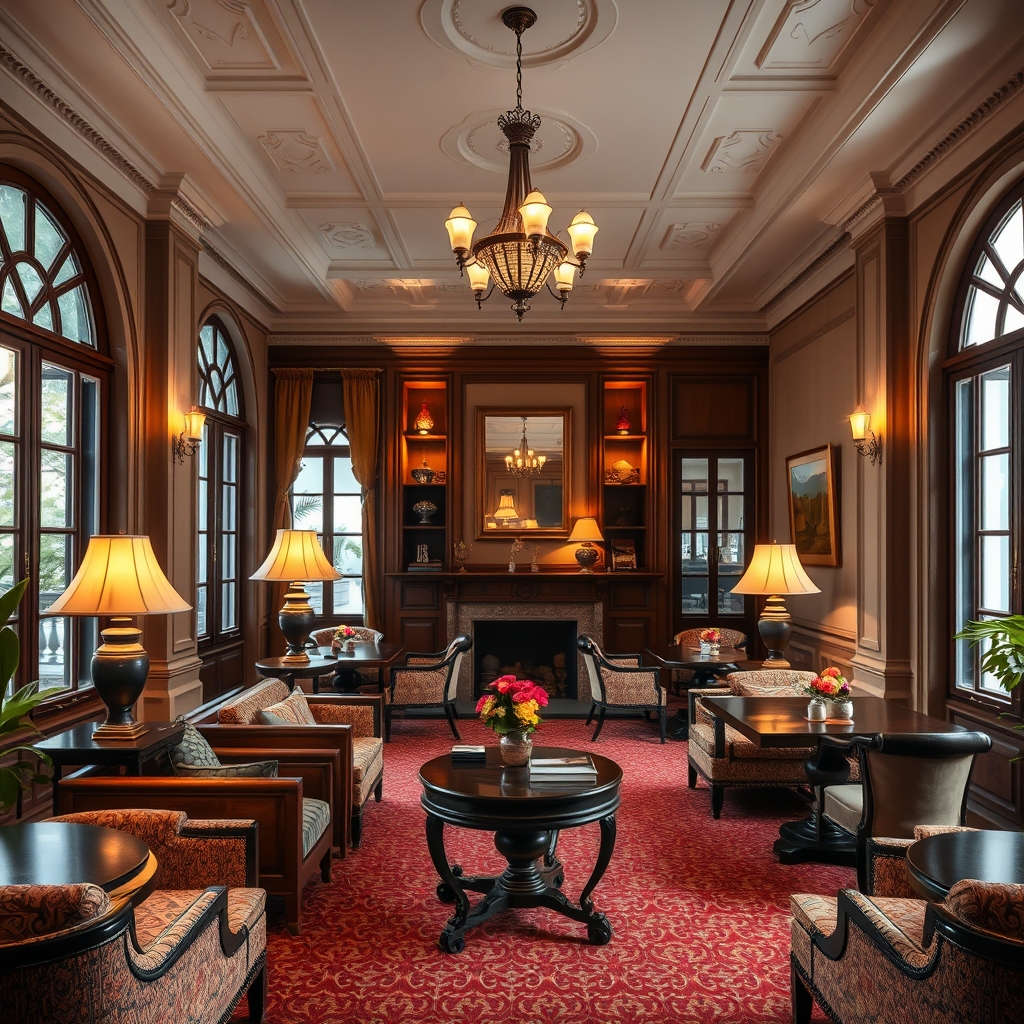
Mumbai does big-brand luxury very well — the marble lobbies, the identical thread counts, the room that could just as easily be in Dubai or Singapore. But the city’s real character sits in its smaller, older buildings: turn-of-the-century mansions in Colaba, restored Art Deco blocks along Marine Drive, and colonial-era piles in Fort where the lift is a caged antique and the ceilings are twice the height they need to be. If you would rather stay somewhere with a story than somewhere with a spa the size of a football pitch, this is your part of town.
South Mumbai is the natural home of the character stay. Colaba, Fort and Kala Ghoda are compact, walkable and stuffed with the sort of buildings that don’t get built any more — the same stone-and-arch streetscape you’ll cover on a heritage architecture walk. Below is a grounded run through the properties worth knowing: what they actually are, roughly what you’ll pay, and a practical tip for each. Treat every figure as a rough band. Rates swing hard with the season, peaking through the November-to-February wedding months and the holiday rush, and softening noticeably in the monsoon. For the wider lay of the land — which suburb suits which kind of trip — pair this with our broader where to stay in Mumbai guide.
The quick-reference table
| Hotel | Area | Rough price/night | Best for |
|---|---|---|---|
| Abode Bombay | Colaba | From ₹5,000 | Design lovers, a first boutique stay |
| Gordon House | Apollo Bunder, Colaba | ₹5,000–7,500 | Quirky themed rooms by the Gateway |
| Bentley’s Hotel | Colaba | From ₹3,000 | Faded grandeur on a budget |
| Taj Mahal Palace (Palace wing) | Apollo Bunder | ₹20,000+ | A once-in-a-trip splurge |
| Grand Hotel | Ballard Estate | From ₹6,000 | Quiet courtyard, business-district calm |
| Residency Hotel Fort | Fort (D.N. Road) | ₹4,500–6,500 | A reliable heritage-shell base |
| YWCA International Centre | Fort–Colaba border | From ₹3,500 | Solo and women travellers, value |
| Sea Green / Sea Green South | Marine Drive | From ₹5,000 | Art Deco sea views |
| Chateau Windsor | Churchgate | From ₹3,500 | Rooftop breakfast, central location |
| Le Sutra | Khar (near Bandra) | From ₹7,000 | An art-hotel detour away from SoBo |
Use it as a shortlist, not gospel — the prices are indicative starting points, and the “best for” column is about temperament as much as budget.
What a heritage stay actually buys you
It’s worth being clear-eyed before you book, because “heritage” and “boutique” get sprayed onto a lot of listings that are neither. In this part of Mumbai the words tend to mean something real: a building that predates Independence, often by decades, with the fabric to prove it — jackwood staircases, Minton or Bharat tiles underfoot, Burma-teak windows, ceilings high enough to keep a room cool before air-conditioning existed. What you’re paying for is the building and the location, not a checklist of amenities.
That trade is the whole point, and it cuts both ways. On the plus side, you get rooms with proportion and light that no new tower can match, and you get to walk out of the door straight into the Gateway of India, the causeway, or the museum quarter. On the minus side, expect the occasional temperamental lift, an air-conditioner that grumbles, plumbing that was retrofitted into walls a century old, and rooms that vary wildly in size at the same rate. None of that is a fault so much as the texture of the genre. If you need everything to be seamless and identical, a business hotel will serve you better; if a few creaks are a fair price for character, read on.
How the seasons move the price
Mumbai has three broad rhythms, and they matter more to your bill than the star rating. Peak runs roughly October to February, when the weather is dry and pleasant and the wedding-and-festival calendar fills every good room in the old city; book weeks ahead and expect the top of each band. The shoulder months of March to May are hot and humid but quieter, and rates ease. Then comes the monsoon, June to September, when the city turns green and grey, the rain hammers down in bursts, and the character hotels quietly drop their prices — a genuinely good time to stay if you don’t mind carrying an umbrella and building slack into your plans. February is worth a special mention: the Kala Ghoda Arts Festival packs the Fort and Kala Ghoda streets, which is wonderful to be near and a reason to reserve very early.
Colaba: the heartland of the boutique stay
Colaba is where the genre begins in Mumbai — a dense, salt-air neighbourhood of causeway shopping, old cafés and art galleries, all a short walk from the Gateway. It is the most tourist-facing corner of the old city and, not coincidentally, where the boutique idea took root. Spend a morning on the Colaba Causeway shopping strip and an afternoon in the galleries, and you’ll understand why people choose to sleep here rather than commute in. For the fuller picture of the area’s lanes and landmarks, our Colaba neighbourhood guide goes deeper.
Abode Bombay
Where: Lansdowne House, a quiet lane off the causeway, near the Regal cinema.
Often called Mumbai’s first proper boutique hotel, Abode occupies a heritage building dating to around 1910, and the restoration is the point. The teak floorboards were salvaged from demolished buildings, the cement tiles hand-laid, the cushions stitched from old saris, and the Art Deco antiques hunted down in local markets. It runs to around 25 well-kept rooms — the smallest are genuinely small — rising to larger upper-floor suites with wooden ceilings, exposed brick and freestanding tubs. There’s a café, a little shop, and a home-cooked breakfast that guests single out again and again. The staff tend to know the neighbourhood inside out, which turns a stay here into an informal concierge service for the whole of SoBo.
Rough price: from around ₹5,000 for the entry rooms; suites well above.
Tip: book the higher floors if you can — they get the best light and the most of that reclaimed-timber warmth. The lower-category rooms trade character for price, so go up a tier if the mood of the place is why you’re coming.
The Gordon House Hotel
Where: Battery House, Apollo Bunder, a five-minute walk from the Gateway.
Gordon House is the quirky one: around 30 rooms arranged around a courtyard and themed by floor — Mediterranean, country and Scandinavian — a conceit that has aged into genuine charm rather than kitsch. Rooms are simple, clean and better soundproofed than the busy location would suggest. The long-standing All Stir Fry restaurant downstairs is a fixture in its own right, and a handy fallback for a late, easy dinner without leaving the building. You’re steps from the Gateway, the ferry jetties and the causeway, which makes this a plausible base for a day trip out to the Elephanta ferries or an early morning at the waterfront.
Rough price: roughly ₹5,000–7,500 a night.
Tip: there has historically been a nightspot in the building, so if you’re a light sleeper planning early nights, ask for a room on an upper floor and away from the venue.
Bentley’s Hotel
Where: 17 Oliver Road (with a second block on Henry Road), Colaba.
Bentley’s is the budget end of heritage — a roughly century-old colonial building, run for decades by a Parsi family, full of high ceilings, old furniture and the faded grandeur that makes a certain kind of traveller very happy. Rooms are large and plain rather than designed; you’re paying for space, character and an unbeatable postcode rather than polish. It’s the sort of place that rewards travellers who like the idea of an Irani café morning and a wander more than a rooftop pool, and it slots neatly alongside the rest of our budget hotels in Mumbai picks.
Rough price: from around ₹3,000, among the best value in the neighbourhood.
Tip: the Oliver Road rooms are noticeably quieter than those on Henry Road, and the hotel leans heavily on cash — carry some, confirm the payment terms when you book, and don’t expect dedicated parking.
The Taj Mahal Palace
Where: Apollo Bunder, directly facing the Gateway of India.
Yes, it’s a big-brand five-star — but the original Palace wing, opened in 1903 and commissioned by Jamsetji Tata, is the grandmother of every heritage stay on this list, built in the Indo-Saracenic style with a famous cantilevered staircase. If the boutique places are about intimacy, this is about occasion. It also anchors the top of the city’s luxury tier, so if a grand stay is really what you’re after, weigh it against the rest of the luxury hotels in Mumbai. You needn’t check in to enjoy it, either: the Sea Lounge and the ground-floor corridors are open to anyone who walks in for a coffee or an afternoon tea.
Rough price: north of ₹20,000 for the heritage Palace wing; far less to simply have tea.
Tip: if you do splurge, insist on the Palace wing and not the 1970s tower — they’re two different experiences at broadly similar money, and only one of them is the reason people talk about this hotel.
Fort, Ballard Estate and Kala Ghoda: colonial-era grandeur
Just north of Colaba, the Fort district and its Ballard Estate and Kala Ghoda pockets are Mumbai’s stone-and-arch heart — the museums, the university, the High Court, the stock exchange and some of the finest colonial architecture in Asia. It’s also where you’ll find the Fort and Kala Ghoda galleries, the art museums, and the UNESCO-listed CSMT terminus — all within an easy walk of the hotels below. Staying here puts you in the working, historic core rather than the tourist strip.
Grand Hotel
Where: Sprott Road, Ballard Estate, between CSMT and the Fort.
The Grand opened in the early 1920s in a building by George Wittet — the architect behind the Gateway of India and the Prince of Wales Museum (now the CSMVS). It’s a proper courtyard hotel in a handsome, low-rise, planned business district that empties out and goes quiet in the evenings, which is either a bug or a feature depending on your temperament. Reviews are honest about it: the newly refreshed rooms are lovely; some of the older ones still await their turn. The surrounding grid of Edwardian commercial buildings is one of the most cohesive early-20th-century streetscapes in the city.
Rough price: from around ₹6,000.
Tip: ask specifically for a renovated room when you book, and enjoy Ballard Estate’s after-hours calm — it’s one of the few genuinely peaceful corners of the old city once the offices close.
Residency Hotel Fort
Where: D.N. Road, in the Fort heritage precinct, about 100 metres from CSMT.
More business-hotel-in-a-heritage-shell than design statement, the Residency earns its place through location and reliability: spotless rooms — some heritage-styled with a small lounge, others in a modern annexe — warm service, and a breakfast with live dosa and egg counters that guests rave about. You’re steps from the UNESCO-listed terminus and a short walk from Kala Ghoda’s galleries, which makes it an excellent walkable base for the whole Fort–Kala Ghoda circuit. If you plan to be out all day among the museums and heritage buildings and just want a dependable, central room to come back to, this is the pragmatic pick.
Rough price: roughly ₹4,500–6,500.
Tip: rooms can run small — pay up a category if space matters — and lean into the location by doing the neighbourhood on foot rather than fighting the traffic.
YWCA International Centre
Where: 18 Madame Cama Road, on the Fort–Colaba border.
Not a boutique hotel in the design sense, but a long-running institutional guest house that’s clean, safe, calm and remarkably central — a five-minute walk from the Gateway. It’s a sensible, unpretentious choice, particularly for solo travellers and women, with family rooms and tidy, no-fuss service. The location straddles the best of both worlds: the galleries and offices of Fort on one side, the cafés and causeway of Colaba on the other.
Rough price: from around ₹3,500, usually with a small temporary membership fee and breakfast included.
Tip: it books out well ahead precisely because it’s good value in a pricey postcode — reserve early, especially in peak season, and confirm whether the membership formality needs sorting before or on arrival.
Marine Drive and Churchgate: Art Deco by the sea
Mumbai holds one of the world’s great concentrations of Art Deco, much of it strung along Marine Drive and the Oval Maidan — a UNESCO-recognised ensemble of curved, sea-facing blocks from the 1930s and ’40s. A couple of these buildings are still hotels, and staying in one puts the Marine Drive promenade and its sunset crowds on your doorstep. It’s also the stretch where the best sunset viewpoints cluster, so an evening walk along the Queen’s Necklace becomes part of the stay rather than an outing.
Sea Green Hotel and Sea Green South
Where: Marine Drive, on the Queen’s Necklace.
Two adjacent Deco properties from the 1930s, taken over as army barracks during the Second World War and converted to hotels afterwards. They are wilfully old-fashioned — the aesthetic is frozen somewhere around the mid-century — but the rooms are large, air-conditioned and, crucially, some of them look straight out over the Arabian Sea. This is a stay you choose for one reason: to wake up to that view and to stroll the promenade at dusk when half the city comes out to do the same.
Rough price: from roughly ₹5,000, more for a sea-facing room.
Tip: the whole reason to stay is the view, so pay the premium for a sea-facing room or don’t bother — a road-facing room here is just an old room, and there are better old rooms elsewhere. For more options in the same vein, see our roundup of sea-view hotels in Mumbai.
Chateau Windsor
Where: 86 Veer Nariman Road, Churchgate, a street back from Marine Drive.
A friendly, old-charm guest house spread over a single building near Churchgate station, with a sea-view rooftop where breakfast is served and a shared kitchen for longer stays. Fittings are dated in places and it isn’t cheap for what it is, but the location is hard to fault: walk to Marine Drive, the Fort, the Oval and the cricket stadiums, and hop the local train from Churchgate whenever you need to head north. It suits travellers who want a homely base over a polished one, and who value being able to do most of SoBo on foot.
Rough price: from roughly ₹3,500.
Tip: rooms vary a lot in size and light, so if you’re staying more than a night, ask to see a couple before you settle in.
Beyond the old city: a design-led detour
Le Sutra
Where: Khar, next to Bandra, in the western suburbs.
If your interest is contemporary design rather than colonial heritage, Le Sutra is worth the trip north. Billed as an Indian art hotel, its 14 rooms are spread over three floors themed on the three gunas of Hindu philosophy — Tamas, Rajas and Sattva — with sculptures, installations and painted walls throughout, the work of a large cast of Indian artists. The Out of the Blue restaurant sits within it. It’s a very different proposition from a Colaba mansion: this is the fashionable, café-lined western suburbs rather than the historic core, so it makes sense if your days are shaped around Bandra rather than the Gateway.
Rough price: roughly ₹7,000 upwards.
Tip: it’s a suburban base, so it suits travellers spending their time in the boutiques and restaurants of the Bandra neighbourhood rather than the SoBo sights — factor in 45 minutes to an hour of traffic each way if you plan to shuttle down to Colaba.
How to choose your neighbourhood
The building is the romance, but the neighbourhood is the decision that shapes your whole trip, so make it first. If it’s your first visit and you want to walk to the headline sights — the Gateway, the causeway, the museums — base yourself in Colaba or Fort, where almost everything worth seeing is within a taxi-free radius. If Art Deco and sea views are the draw, Marine Drive or Churchgate put you on the promenade with the whole southern shoreline at your feet. And if you’d rather a quieter, design-led stay plugged into the cafés and shopping of the western suburbs, Khar or Bandra is your answer — livelier at night, further from the monuments.
Money is the other axis, and heritage doesn’t have to mean expensive. Bentley’s, the YWCA and Chateau Windsor all start in the ₹3,000–3,500 range; Abode and Le Sutra sit higher and sell you a fuller design experience; only the Taj Palace is a true splurge. Between those poles there’s a comfortable middle — the Grand, the Residency, the Sea Greens — where ₹4,500 to ₹7,500 buys you a large, characterful room in a superb location.
Making the booking work
- Ask to see the room, or ask pointed questions before you pay. In these properties, two rooms at the same rate can be wildly different — a renovated one versus one awaiting its turn, a sea view versus a wall, a large corner versus a windowless box. A short, specific enquiry at booking saves a lot of disappointment at check-in.
- Location is the luxury. In Colaba and Fort you can walk to almost everything, which is worth far more than a bigger television. Choose the postcode that keeps you on foot.
- Carry cash and don’t count on parking. Several of the older places prefer cash, and dedicated parking is rare to non-existent; street parking in Colaba is a genuine ordeal. If you’re not driving, none of this matters — app cabs and black-and-yellow taxis are everywhere.
- Book early for peak season. The best-value character stays are small and fill fast from November to February and around the February arts festival. If your dates are fixed in that window, reserve weeks ahead.
- Budget for the building’s quirks. Bake a little patience into the plan — a slow lift, a fussy AC, a bit of street noise. It’s the cost of sleeping inside the city’s history, and it’s usually a bargain.
For trip-planning context beyond the bed itself — how to get around, what to see, and where the city’s stories are buried — lean on our guides to things to do in Mumbai and the history of Mumbai. If you want another layer of the old city’s texture, the tucked-away lanes of Khotachiwadi heritage village make a lovely half-day from any of the SoBo hotels above.
The bottom line
Mumbai’s boutique and heritage hotels aren’t about ticking off five-star amenities — they’re about waking up inside the city’s history. Abode Bombay and Le Sutra give you considered, contemporary design; Bentley’s, the Grand and the Sea Greens give you old bones and honest value; the Taj Palace gives you sheer grandeur. Pick the neighbourhood first, the building second, and accept a few creaks in exchange for a stay you’ll actually remember. In a city this alive, that’s the better bargain.
Frequently Asked Questions
Which Mumbai neighbourhood is best for a boutique or heritage hotel?
For a first visit where you want to walk to the main sights, base yourself in Colaba or Fort — both are compact, packed with heritage buildings, and minutes from the Gateway of India and the museum quarter. For Art Deco architecture and sea views, choose Marine Drive or Churchgate. If you prefer a quieter, design-led stay near the western-suburb cafés and shopping, Khar or Bandra is the better fit, though it's an hour from the southern sights.
Are heritage hotels in Mumbai expensive?
Not necessarily. Character stays like Bentley's, the YWCA International Centre and Chateau Windsor start in the ₹3,000–3,500 range, which is strong value for the postcode. Design-forward places such as Abode Bombay and Le Sutra sit higher, from around ₹5,000–7,000. Only the Taj Mahal Palace's heritage wing, at ₹20,000 and up, is a true splurge — so there's a genuine heritage option at almost every budget.
Is South Mumbai safe for solo and women travellers?
Broadly yes. Colaba and Fort are busy, well-lit and well-policed, and the streets stay lively into the evening. Institutional guest houses like the YWCA International Centre are popular precisely because they feel secure and calm, with family rooms and tidy service, and boutique stays such as Abode are well regarded on the same count. As anywhere, keep the usual city awareness at night and stick to app cabs or licensed taxis for late journeys.
Do Mumbai's heritage hotels have parking, and should I rent a car?
Often there's no dedicated parking, and street parking in Colaba and Fort is difficult. Bentley's, for example, offers none. If you're relying on taxis and app cabs, this barely matters — they're plentiful and cheap across South Mumbai, and the whole point of staying in Colaba or Fort is that you can walk to most sights. For a heritage-hotel trip in the old city, you generally don't need a car at all.
When is the cheapest time to book a heritage hotel in Mumbai?
The monsoon, roughly June to September, brings the lowest rates and a quieter, greener city — a good deal if you don't mind sudden downpours and a little slack in your plans. Peak season runs October to February, when dry weather and the wedding-and-festival calendar push prices to the top of each band; February's Kala Ghoda Arts Festival is especially busy. The hot shoulder months of March to May sit in between on both weather and price.
Can I experience a Mumbai heritage hotel without staying overnight?
Easily, and it's a great way to sample the grandeur on a budget. Walk into the Taj Mahal Palace for afternoon tea at the Sea Lounge or a stroll through its ground-floor corridors — no reservation required. You can also eat at All Stir Fry inside the Gordon House Hotel, or have breakfast on Chateau Windsor's sea-view rooftop. These let you soak up the buildings' character for the price of a meal rather than a room.