
Lakeside Camping Near Mumbai: Pawna Lake and Beyond
A Mumbai local's honest guide to lakeside camping near the city — Pawna, Bhandardara, Kolad, Prabalmachi — with seasons, real ₹ costs, what's included and safety.
'%3E%3Crect%20width%3D'96'%20height%3D'96'%20fill%3D'%23E65100'%2F%3E%3Ccircle%20cx%3D'30'%20cy%3D'24'%20r%3D'44'%20fill%3D'%23fff'%20opacity%3D'.12'%2F%3E%3Ccircle%20cx%3D'60'%20cy%3D'74'%20r%3D'40'%20fill%3D'%23000'%20opacity%3D'.10'%2F%3E%3C%2Fg%3E%3Cg%3E%3Ccircle%20cx%3D'48'%20cy%3D'48'%20r%3D'15'%20fill%3D'none'%20stroke%3D'%23fff'%20stroke-width%3D'3'%2F%3E%3Cpath%20fill%3D'%23fff'%20d%3D'M48%2037%20l3.5%2011%20-3.5%2011%20-3.5%20-11%20z'%2F%3E%3Ccircle%20cx%3D'48'%20cy%3D'48'%20r%3D'2.2'%20fill%3D'%23fff'%2F%3E%3C%2Fg%3E%3C%2Fsvg%3E)
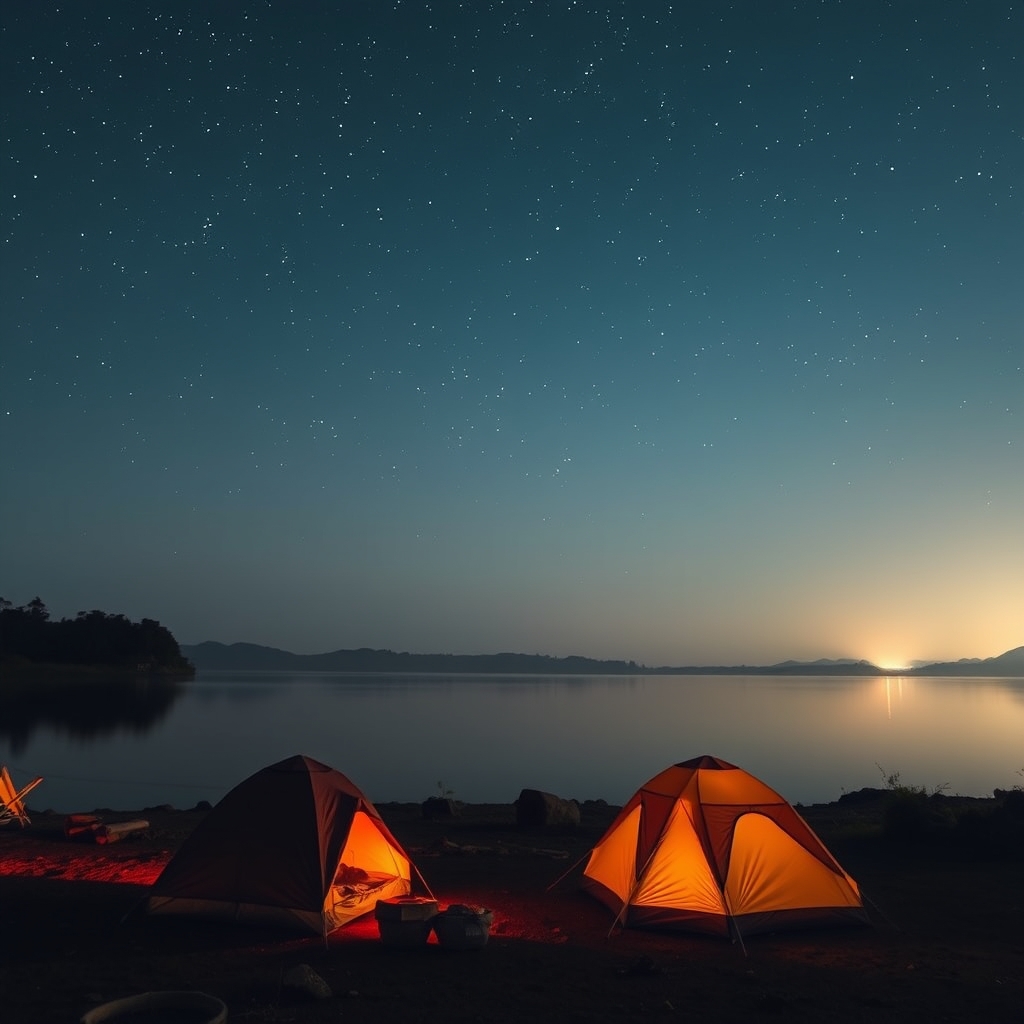
There is a particular kind of quiet you only get a few hours out of Mumbai: the tent zip goes up, the last WhatsApp finally fails to send, and the loudest thing around is water lapping at a dam wall. Lakeside camping has quietly become the city’s default weekend escape, and the best part is you don’t need any gear, any experience, or much money to try it. Pitch up at Pawna, drive out to Bhandardara for the stars, raft at Kolad, or trek-and-camp at Prabalmachi — a full package with tent, dinner and bonfire starts at around ₹999 a head. This is an honest guide to where to go, what it actually costs, what you really get for the money, and how not to spoil it for yourself or anyone else.
The four at a glance
Before the detail, here is the whole decision in one table. Distances are one-way from the western suburbs; drive times assume you leave before the Expressway clogs.
| Spot | From Mumbai | Best season | Best for |
|---|---|---|---|
| Pawna Lake | ~110–120 km, ~3 hr | Oct–Feb | First-timers, easy shoreline, sunsets |
| Bhandardara | ~170 km, ~4.5–5 hr | Dec–Jan (skies), May–Jun (fireflies) | Stargazing, dark skies, Kalsubai trek |
| Kolad | ~120–125 km, ~3 hr | Jun–Oct | White-water rafting, monsoon energy |
| Prabalmachi | base ~10 km from Panvel, <2 hr | Oct–Feb | Trek-and-camp, fort climbs |
If you read nothing else: go Pawna for your first night out, Bhandardara when you want the Milky Way, Kolad for the adrenaline, and Prabalmachi when you want the camping to come with a summit.
When to go
Season decides everything here, more than the operator, more than the price. Pick the wrong month and even a good campsite disappoints.
October to February — the sweet spot
This is the window everyone means when they say “camping weather.” Dry air, clear nights, and temperatures cool enough that a bonfire feels earned rather than pointless. The reservoirs are still high from the monsoon, so the shoreline looks its best, and the mornings are made for a slow chai before the drive home.
December and January give you the cleanest skies of the year for stargazing — and, in the same breath, the coldest nights. Up in the hills after midnight it gets genuinely chilly, the kind of cold Mumbai spends the whole year forgetting exists. Do not trust the t-shirt-and-slippers instinct that works fine in the city; carry a proper jacket even if the operator swears there are blankets. This is also peak booking season, so weekends fill early and the popular Pawna plots go first.
Mid-May to mid-June — firefly season
For a couple of weeks before the rains break, the forests light up. Thousands of fireflies pulse through the trees in the muggy pre-monsoon nights, best around Bhandardara but also seen along stretches of the Pawna shoreline. It is a genuinely strange, lovely thing to witness, and it draws a crowd — book well ahead, and manage your expectations on comfort, because these are the stickiest, most humid nights of the whole calendar.
June to September — the monsoon
The monsoon turns all of this an unreal, saturated green and is the one time to camp purely for the drama of it. It is also wet, windy, foggy, and unforgiving. Some campsites simply shut, tents leak, bonfires are a lost cause, and exposed fort climbs become genuinely dangerous as the rock turns slick. If you love the rain and want the greenery, this is your season — but go in with eyes open. Our wider notes on picking a wet-weather escape are in the monsoon getaways near Mumbai guide, and if the plan is more walking than camping, read the monsoon treks near Mumbai rundown first so you don’t attempt something that needs dry rock.
The monsoon’s one clear winner is Kolad, whose entire reason for existing — big, dependable white water — depends on high river levels. When every other outdoor plan is rained off, Kolad is at its peak.
The four lakes to know
Pawna Lake
Area: near Kamshet and Lonavala, roughly 110–120 km and about three hours from Mumbai via the Mumbai–Pune Expressway.
This is the beginner’s classic and, by a distance, the busiest. Pawna is a man-made reservoir ringed by low green hills, with a gentle, shelving shoreline that makes for easy, unintimidating camping and some of the better sunsets you’ll see anywhere near the city. On calm mornings there’s kayaking on glassy water, and the whole area is stitched into a web of trekking routes up the surrounding forts — Tung, Tikona, Lohagad and Visapur are all within reach, with Tung’s compact summit handing you a 360-degree sweep of the lake in a single climb. If a fort walk appeals as the daytime half of your trip, our treks near Mumbai guide covers the grades and start points.
Dozens of operators run plots along the water, and quality varies wildly from one to the next; established Mumbai outfits such as Treks and Trails India have camped here for years and are a safer starting point than an unknown name off an Instagram ad. Because Pawna sits so close to the hill stations, it also pairs neatly with a lazier follow-on day — the Lonavala and Khandala day trip is fifteen minutes further on.
Tip: Pawna’s popularity is also its flaw. On a Saturday night the shoreline can feel like a wedding ground, with rival sound systems competing across the water until 1 am. Book a plot well away from the main cluster, or simply go on a weeknight, and you’ll get the calm, star-strewn version you actually came for.
Bhandardara
Area: Ahmednagar district, on Arthur Lake beside the old Wilson Dam, roughly 170 km and four and a half to five hours from Mumbai via Kasara.
This is the one for the sky. Bhandardara sits in one of the darkest pockets in this part of Maharashtra, with so little light pollution that on a clear winter night you can trace the Milky Way with the naked eye — no telescope, no app, just your eyes adjusting for twenty minutes. In May and June the surrounding forest fills with fireflies. Beyond the campsite itself there’s Randha Falls, thunderous in and just after the rains; the century-old Wilson Dam; and Kalsubai, the highest peak in Maharashtra, for anyone up for a serious pre-dawn trek to catch sunrise from the top. If waterfalls are the draw, the waterfalls near Mumbai guide has the monsoon timings.
Because it’s the longest haul on this list, Bhandardara rewards being treated as a two-night trip rather than a smash-and-grab, and it slots well into a broader loop — the wine country around Nashik is within striking distance if you want to soften the second day, covered in our Nashik vineyards wine tour piece.
Tip: the distance is the whole catch — do not plan to leave Mumbai after work and arrive in the dark. Give yourself a proper daylight drive. And winter nights here are cold in a way the city genuinely forgets; carry a real jacket, a beanie if you have one, and don’t rely solely on the operator’s blankets.
Kolad
Area: Raigad district, on the Kundalika river, roughly 120–125 km and about three hours from Mumbai.
Kolad is the adrenaline pick. The Kundalika runs on water released from an upstream dam, which gives it dependable white water — Grade II–III rapids that are punchy enough to be a real thrill but forgiving enough for total first-timers — plus kayaking and riverside camps to fall into afterwards. Rafting is strongest from June to October, exactly when the rest of the region’s outdoor plans are being rained off, which is why Kolad fills up in the monsoon while everything else empties out. It sits in the same broad belt as Karjat, so if you want the greenery without committing to a raft, the Karjat monsoon day trip is a gentler cousin.
Tip: rafting depends entirely on the dam’s release schedule — usually a fixed morning window — so confirm your slot at the moment of booking rather than turning up and hoping the water is running. And insist that helmets and life jackets come as standard equipment, included in the price, not offered as a paid extra. A reputable operator won’t blink at the question.
Prabalmachi
Area: a hill plateau near Panvel, between Prabalgad and Kalavantin Durg; the base village is about 10 km from Panvel, under two hours from the city.
The honest exception on this list — Prabalmachi is a trek-and-camp, not a lakeside one, and the closest of the four to the city. You climb to a plateau, sleep in hilltop tents under a wide, unobstructed sky, and at first light tackle one of two famous climbs: Kalavantin Durg, with its vertiginous, rock-cut steps, or the broader, more forgiving Prabalgad Fort. It’s the pick if you want the night out to come with a genuine sense of achievement rather than just a change of scenery. Because the base is so close to Panvel, it’s also the easiest of the four to reach by train.
Tip: Kalavantin’s steps are steep, exposed, and have no railings whatsoever — a single carved staircase up a rock face. Attempt them only sober, sure-footed, and in daylight, and skip that particular climb entirely in the monsoon when the rock turns to glass. Prabalgad is the sensible choice if anyone in the group is nervous about heights.
What you actually get for the money
The standard all-inclusive tent package sits at roughly ₹999 to ₹1,800 per person, and for that you should expect a fairly consistent bundle: a lakeside tent with a foam mattress, bedsheet and blanket; evening tea and snacks on arrival; a barbecue starter; a bonfire with music once it’s dark; unlimited dinner; and breakfast the next morning before you leave. Most operators let you reserve with a small deposit — around ₹400 — and pay the balance in cash at the campsite, which is normal here and not a red flag on its own.
Add-ons change the arithmetic quickly. Booking transport from Mumbai through the operator roughly doubles the headline price — Bhandardara with a seat on the bus lands somewhere around ₹2,700–3,000 a head once you fold in the long drive. Kolad’s overnight-plus-rafting resort packages are pricier still, in the ₹3,000–4,000 band on a sharing basis, because you’re paying for the activity, the safety gear and the meals as one combined bill rather than à la carte.
The cheapest way to do any of this is to arrange your own transport — by car if you have one, or train-plus-cab if you don’t — and pay only for the campsite. That’s how the ₹999 figure becomes real rather than a teaser.
Getting there without a car
You do not need a car for most of these. Pawna is reachable by taking a Pune-bound train to Lonavala or a stop nearer Kamshet, then a local cab or auto to the shoreline plot — confirm the exact drop point with your operator, because “Pawna” spans a lot of shoreline. Prabalmachi is the most train-friendly of the lot: a fast local or outstation train to Panvel, then a short cab to the base village where the trek begins. Kolad is on the Konkan railway line, with cabs from the station to the riverside camps. Bhandardara is the awkward one — the nearest railhead is Igatpuri or Kasara, and you’ll still need a long road transfer, which is a real argument for either driving or taking the operator’s bus for that particular trip.
If you’re new to the suburban network and outstation trains, the local train guide and the broader getting around Mumbai primer will save you a lot of platform confusion before you even leave the city.
Before you book
The gap between a memorable night and a miserable one is usually decided in the five minutes before you pay. A few specific questions:
- Ask precisely where the plot is. “Pawna Lake camping” covers a huge stretch of shoreline, and quality varies enormously from operator to operator and plot to plot. Get a landmark, a pin, or a village name — not just the lake.
- Confirm whether the tent is shared or private. Groups are usually segregated — couples, families, ladies, gents — but a private plot or a private tent costs more. Settle this before you arrive, not at the campsite in the dark.
- Check the toilet situation. These are almost always basic shared portable loos, and occasionally worse. Ask plainly, so it isn’t a nasty surprise for anyone in the group who was picturing a resort.
- Specify the food. State clearly whether you want veg, Jain or non-veg when you reserve, and re-confirm on the day. Kitchens here are small and improvised.
- Read recent reviews — recent being the operative word. Operators come and go, and a name that was excellent two seasons ago may not be running the same site, or the same standards, now. Weight reviews from the last few months over glowing ones from two years back.
What to pack
The packages are built for people who own nothing, so your list is short but non-negotiable. Bring warm layers for the cold hours after midnight; a torch or headlamp, because campsites are genuinely dark and phone torches die fast; a power bank; insect repellent, especially in and around firefly season; basic medicines and any personal prescriptions; a full change of clothes; and sturdy closed shoes if there’s any chance you’ll trek. Add a reusable water bottle, a small trash bag, and the plain discipline to carry your own rubbish back out. These shorelines are visibly suffering under weekend crowds, and the litter you see is left by people exactly like you.
If your idea of a getaway is a bed and a roof rather than a groundsheet, that’s a perfectly good instinct too — a hill-station room on Matheran or one of the coastal options in the beaches near Mumbai guide gives you the escape without the foam mattress.
Staying safe and sensible
The hills near Mumbai are welcoming, not wild, but they still ask for a little respect.
Do not wade into the reservoirs. Water levels and depth are unpredictable, the banks shelve away sharply just past the shallows, and dam-fed lakes can change level without warning. Every year brings avoidable stories. Paddle at the edge if you must, but treat the deep water as off-limits.
Leopards range across all of these hills. That is not a scare line — it’s the reason to keep food sealed inside tents, avoid leaving scraps around the fire, and not wander off alone into the dark, especially after a few drinks. Stay near the camp, use your torch, and you’ll almost certainly never see one.
Respect the fort climbs. Kalavantin Durg and the more exposed routes are not casual after-dinner strolls; do them sober, in daylight, and never in the monsoon when the rock is wet. If in doubt, the safer, broader climbs exist for exactly this reason.
In the monsoon, expect disruption. Check the forecast the morning you leave, accept that some sites shut at short notice, and give exposed climbs a wide berth entirely. Keep valuables on you, don’t leave a tent unattended with anything worth taking, and share your live location with someone back in the city.
The bottom line
You do not need to be an outdoorsy person to sleep under the stars near Mumbai. Pick your season, pick your lake, ask the right three questions before you pay, and pack a warm layer — that’s genuinely most of the skill. Pawna for your first go, Bhandardara when you want the Milky Way, Kolad for the rush, Prabalmachi for the climb. Treat the water and the hills with a bit of respect, take your litter home, and you’ve got the best-value weekend the city offers: a tent, a fire, and a horizon that isn’t a building. When you’re ready to range further afield, the wider day trips from Mumbai guide has your next dozen ideas.
Frequently Asked Questions
Which is the best camping spot near Mumbai for first-timers?
Pawna Lake, comfortably. It is the closest of the popular sites, the cheapest, has the flattest and gentlest shoreline, and offers the widest choice of established operators. Packages there are built for people with zero gear or experience, so tent, bedding, meals and bonfire are all provided. Once you've done one night out, Bhandardara is the natural upgrade for darker skies and stargazing.
How much does an overnight camping trip near Mumbai cost?
A standard all-inclusive tent package runs roughly ₹999 to ₹1,800 per person, covering the tent, mattress, blanket, evening snacks, a barbecue starter, unlimited dinner, a bonfire and breakfast. Most operators take a small deposit of around ₹400 to reserve, with the balance paid in cash at the campsite. Adding transport from Mumbai roughly doubles the price, and rafting-plus-stay packages at Kolad sit higher, around ₹3,000 to ₹4,000 on a sharing basis.
What is the best time of year to camp near Mumbai?
October to February is the sweet spot — dry, clear and cool enough for a bonfire to feel worthwhile. December and January give the cleanest skies for stargazing but the coldest nights, so carry a real jacket. Mid-May to mid-June is firefly season around Bhandardara and parts of Pawna. The monsoon from June to September is dramatic and green but wet, foggy and risky for fort climbs, with Kolad's rafting being its one clear high point.
Can you camp near Mumbai without your own tent or equipment?
Yes. The packages at Pawna, Bhandardara, Kolad and Prabalmachi are designed for people who own nothing outdoors-related. The tent, foam mattress, bedsheet, blanket, all meals and the firewood for the bonfire are provided as standard. You only need to bring personal items — warm layers, a torch or headlamp, a power bank, insect repellent, basic medicines, a change of clothes and sturdy shoes if you plan to trek.
Is camping near Mumbai safe for families and couples?
Yes, at reputable operators. The popular sites are well-populated and operators typically segregate tents by group — couples, families, ladies and gents — with private plots available at a higher price. For the calmest experience, book a weeknight rather than a Saturday, when Pawna in particular can get loud with competing sound systems. Keep to basic precautions: don't wade into the reservoirs, keep food sealed as leopards range these hills, and don't leave tents unattended.
How do you get to Pawna Lake or Prabalmachi from Mumbai without a car?
Both are doable by public transport. For Pawna, take a Pune-bound train to Lonavala or a stop nearer Kamshet, then a local cab or auto to your specific shoreline plot — always confirm the exact drop point with your operator. Prabalmachi is the most train-friendly: a train to Panvel followed by a short cab to the base village where the trek starts. Kolad sits on the Konkan railway with cabs from the station, while Bhandardara is best reached by car or the operator's bus due to a long road transfer from the nearest railhead.