
Andhra & Telugu Meals in Mumbai: Spicy Rice Thalis
Andhra & Telugu meals in Mumbai: gongura, Guntur-chilli curries, pesarattu, Andhra biryani and banana-leaf thalis — what to order, prices, best areas and tips.
'%3E%3Crect%20width%3D'96'%20height%3D'96'%20fill%3D'%23E65100'%2F%3E%3Ccircle%20cx%3D'30'%20cy%3D'24'%20r%3D'44'%20fill%3D'%23fff'%20opacity%3D'.12'%2F%3E%3Ccircle%20cx%3D'60'%20cy%3D'74'%20r%3D'40'%20fill%3D'%23000'%20opacity%3D'.10'%2F%3E%3C%2Fg%3E%3Cg%3E%3Ccircle%20cx%3D'48'%20cy%3D'48'%20r%3D'15'%20fill%3D'none'%20stroke%3D'%23fff'%20stroke-width%3D'3'%2F%3E%3Cpath%20fill%3D'%23fff'%20d%3D'M48%2037%20l3.5%2011%20-3.5%2011%20-3.5%20-11%20z'%2F%3E%3Ccircle%20cx%3D'48'%20cy%3D'48'%20r%3D'2.2'%20fill%3D'%23fff'%2F%3E%3C%2Fg%3E%3C%2Fsvg%3E)
The Top 8
- 01
Aavakay – The Andhra Kitchen
Kandivali East (Thakur Complex) ~₹700–900 for two (₹₹), approxGo for: Mumbai's go-to dedicated Andhra restaurant — spicy veg & non-veg Andhra thali, Andhra Kodi Iguru (chicken curry), gongura pickle, Chicken 65 and mirapakaya bajji.
Order the non-veg Andhra thali at lunch and specify your spice level — the kitchen genuinely cooks it Andhra-hot.
- 02
Dakshin Coastal
ITC Maratha, Andheri East (Sahar) ₹₹₹₹ (fine dining, roughly ₹6,000–8,500 for two), approxGo for: Marquee fine-dining South Indian covering Andhra & Telangana — Andhra-style seafood and curries, Hyderabadi/Andhra biryani, pepper and gongura preparations.
Reserve ahead and treat it as a special-occasion meal; ask the staff to point you to the Andhra/Telangana regional dishes.
- 03
Zambar
Andheri East (Sakinaka); also Terminal 2 airport ₹₹₹ (roughly ₹1,500–2,000 for two), approxGo for: Coastal South Indian (Andhra, Chettinad, Kerala, Mangalorean) — fiery Andhra curries, coastal seafood, appams and rice meals in a boathouse-style room.
The Andhra and coastal curries are the highlight; a solid sit-down option if you're near the airport.
- 04
Andhra Kodi Pulao
Multiple outlets — Powai, Worli, Goregaon West, Chembur, Andheri, Mira Road ~₹400–600 for two (₹₹), approxGo for: Andhra-style chicken (kodi) pulao and biryani specialist, mostly delivery — spicy pulao with fried chicken pieces.
Order the signature kodi pulao; it's a delivery-first brand, so use a food app rather than expecting dine-in.
- 05
South of Vindhyas
The Orchid Hotel, Vile Parle East ₹₹₹ (roughly ₹3,500–4,500 for two), approxGo for: Sit-down South Indian restaurant spanning Andhra, Kerala, Tamil Nadu, Chettinad and Mangalore — known for its big South Indian thali spread and huge vegetarian breakfast buffet.
Come hungry for the thali/buffet; the vegetarian spread is especially strong.
- 06
Om Sai Ram Andhra Mess (Om Sri Gurudatha)
Ghansoli, Navi Mumbai ~₹300–500 for two (₹), approxGo for: Community-run authentic Andhra mess — home-style Andhra non-veg meals, boneless chicken biryani and generous family meal thalis.
Budget, no-frills and genuinely authentic — go at lunch; portions are large and the spice is real.
- 07
Andhra Cuisine
Kopar Khairane / Airoli, Navi Mumbai ~₹300–500 for two (₹), approxGo for: Dedicated Andhra spot popular with the local Telugu crowd — spicy Andhra biryani, non-veg curries, dosas and rasam.
It's right opposite Kopar Khairane station; ask for the authentic (not toned-down) spice level.
- 08
Shree Sai Ram Andhra Mess
Airoli, Navi Mumbai ~₹300–500 for two (₹), approxGo for: No-frills Andhra mess serving home-style Telugu meals and Andhra-style biryani.
Best for a quick, cheap, properly spicy home-style Andhra meal — don't expect ambience, do expect flavour.
Ranked by our Mumbai desk · prices are approximate — confirm before you go.
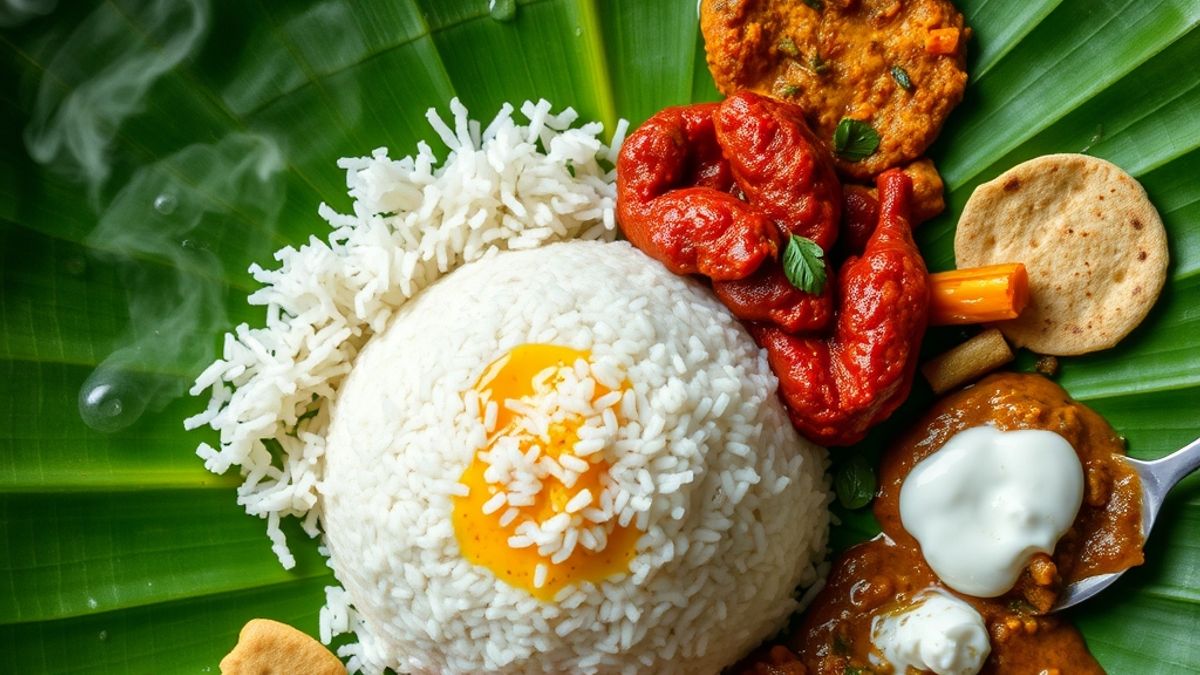
An Andhra meal in Mumbai is a rice-first, chilli-forward feast — steamed rice you flood with pappu, sambar and rasam, a lineup of fiery kura and vepudu, sour gongura pachadi and a mound of gunpowder, usually eaten off a banana leaf. It is louder and hotter than the gentle South Indian tiffin most Mumbaikars know, and this guide tells you what to order, where to find the real thing, and roughly what to budget.
Ask a Mumbaikar about “South Indian food” and they will almost always picture the same thing: a Matunga breakfast of soft idli, buttery masala dosa and frothy filter coffee — the mild, comforting South Indian tiffin that the city has loved for a century. Andhra and Telugu cooking is a different animal. It is built around rice by the ladleful, chillies ground to a paste and fried in oil to pull out maximum heat, and a table of sharp, sour, punchy accompaniments designed to be mixed and re-mixed until you cannot eat another grain. Once you have had a real Andhra meal off a banana leaf, the tidy compartmentalised thali starts to feel a little tame.
This is a practical, on-the-ground guide to eating it across Mumbai — what the plate actually contains, how to attack it, the flavours that define it, and the pockets of the city where you have the best odds of finding the genuine thing. A note on money before we start: every price here is per person and a rough band, not a fixed rate. A no-frills neighbourhood “mess” and a polished sit-down restaurant can serve the same dish at very different prices, and rates drift with the season, the outlet and how much rice you put away.
Andhra meal at a glance
Use this as a quick order-and-budget reference before you sit down. Heat levels assume the kitchen has not toned things down for you — always an option if you ask.
| Order this | What it is | Heat | Rough spend (per head) |
|---|---|---|---|
| Full Andhra veg meal | Rice (usually unlimited) with pappu, kura, vepudu, sambar, rasam, pachadi, podi, pickle, papad, curd, sweet | Medium–hot | ₹120–250 mess · ₹350–500 sit-down |
| Gongura pachadi | Sour sorrel-leaf chutney — the signature Telugu taste | Medium | Part of the meal, or ₹40–90 à la carte |
| Andhra chicken / mutton curry | Fried-chilli gravy; gongura mutton is the standout | Hot | ₹250–450 |
| Andhra (pakki) biryani | Drier, redder, chilli-forward rice-and-meat | Hot | ₹250–400 |
| Pesarattu | Crisp green-moong-dal crepe, a morning tiffin item | Mild–medium | ₹80–160 |
| Filter coffee | Strong decoction-and-milk brew to finish | — | ₹20–60 |
What an Andhra meal actually is
Forget the idea of neat little bowls arranged around a steel plate. A proper Andhra meal is not a fixed layout — it is a sequence you build on rice and keep rebuilding, course by course, until you surrender. At a true meals place, the server circles back with fresh rounds of rice, sambar and rasam, and the pace is set by you.
The rice-first ritual
Rice is the constant; everything else is a partner for it. You start with a first mound, dress it with something rich, eat that down, then take a second mound and dress it differently. A single meal can move from ghee-and-podi rice, to pappu rice, to a vegetable-and-rice round, to sambar rice, and finally to curd rice — five distinct “dishes” made from the same base. This is why regulars eat slowly and in stages rather than mixing everything at once: each round is meant to taste like its own thing.
The supporting cast
The line-up shifts by kitchen and by day, but the usual players are consistent:
- Steamed rice — the base, served in rounds and often unlimited at a genuine meals joint.
- Pappu — Andhra-style dal, frequently cooked with greens or a vegetable, so you will see tomato pappu, palakura (spinach) pappu, dosakaya (yellow cucumber) pappu and more.
- Kura and vepudu — a wet vegetable curry (kura) and a dry stir-fry or fry (vepudu). Both tend to be chilli-forward; the vepudu in particular is a crisp, spice-crusted mouthful.
- Sambar and rasam — the rasam here is thinner, more peppery and almost drinkable, and it usually comes at the end to loosen the last of the rice.
- Pachadi and podi — chutneys plus gunpowder (idli podi or the fierier karam podi), the dry chilli-lentil powder you work into rice with a spoon of ghee or oil.
- Pickle, papad, curd and a small sweet to punctuate and cool the whole affair.
How to eat it
The rhythm matters more than any rulebook. Mix small, taste, then commit — flood the rice only with what you have decided you love. Keep the ghee and the podi for an early, comforting round; save the curd rice for last, because it is the built-in fire extinguisher after the chilli has had its say. Eating with your right hand off a banana leaf is normal and, frankly, part of the pleasure: the leaf lends a faint grassy aroma and the food simply tastes better scooped by hand.
The flavours that make it Telugu
Two ingredients, more than any others, separate Andhra and Telugu food from the milder South Indian cooking Mumbai grew up on.
Gongura, the sour green
Gongura is a red-stemmed sorrel leaf with a bracing, almost lemony sourness. Cooked down with chillies into a thick pachadi, or simmered with mutton and prawns, it delivers a tang that no other South Indian staple quite matches. For homesick Telugu diners in Mumbai, gongura is the flavour they chase hardest — the taste that says home. If it is on the menu, order it; a good gongura pachadi mixed into hot rice with a little ghee is one of the great simple pleasures of the cuisine.
Guntur chilli and the fried-paste heat
Guntur chilli, from Andhra’s Guntur belt, is notoriously fierce, and Andhra kitchens use it in a way that maximises the burn: chillies are ground to a paste and fried in oil, which extracts far more heat than the yoghurt-suspended chilli of a Hyderabadi kitchen. This is the technical reason an honest Andhra curry can genuinely hurt — the capsaicin is worked into hot oil rather than tamed in dairy. If you love Tamil Nadu’s pepper-heavy Chettinad cooking, Andhra heat is a cousin worth knowing, though it hits sharper and more directly.
Podi, pickle and the curd-rice finish
The dry and the sour do a lot of quiet work here. Gunpowder gives you controllable heat you can dial up spoon by spoon; the pickles — often mango (avakai) or gongura — add a salty-sour jolt; and the curd rice at the end resets your palate and puts out the fire. This push-and-pull between burn and balance is the whole point. If you are heat-shy, say so before the food arrives and ask the kitchen to go easy — but understand that some of this is meant to make you sweat a little, and the curd, rice and sweet on the plate exist precisely to carry you through it.
Andhra biryani is not Hyderabadi biryani
People lump the two together; they really should not. Andhra biryani is typically pakki-style — the meat is marinated and cooked in a fried chilli masala almost to completion, and only then does the rice go on top. The result is drier, redder and more directly spicy, the chilli hitting you head-on rather than mellowed inside a sealed dum pot. Hyderabadi biryani — covered in full in our Hyderabadi biryani and dum guide — is the fluffier, more aromatic, kachchi-dum cousin, where raw marinated meat and rice steam together under a sealed lid. Both are wonderful. But if you want fire and a bolder, more upfront masala, the Andhra plate is your order, ideally with a side of raita and a wedge of onion.
Veg, non-veg and the standout dishes
The vegetarian meal is the flagship and the easiest way in, but the non-veg side is where Andhra cooking really flexes.
- Gongura mutton — the dish to seek out. Mutton simmered with sour sorrel leaves, tangy and rich and deeply spiced, it is the plate that converts sceptics.
- Andhra chilli chicken — a drier, chilli-crusted fry, hotter and less sweet than the Indo-Chinese version most Mumbaikars know.
- Kodi kura and mutton curry — home-style gravies built on that fried-chilli base, best eaten with rice rather than roti.
- Prawns and fish — coastal Andhra loves its seafood, and gongura prawns turn up on the better menus; if you want to go deeper on the city’s catch generally, our seafood restaurants guide covers the wider scene.
Vegetarians are not shortchanged. The full veg meal, with its rotating cast of pappu, kura and vepudu, is a genuine feast, and dishes like gutti vankaya (stuffed baby brinjal) and a good dosakaya pappu can be the highlight of the table.
Pesarattu and the tiffin side
Andhra has its own tiffin repertoire, distinct from the dosa-idli canon. The star is pesarattu, a crepe made from green moong dal rather than the usual rice-and-urad batter — crisp at the edges, savoury, a little earthy, and often studded with chopped onion, ginger and green chilli. It is classically a breakfast-to-midday item, served with a punchy ginger chutney, and the great regional move is pesarattu-upma (MLA pesarattu), where a scoop of soft upma is folded inside the crepe. Expect roughly ₹80–160. Alongside it you will find punugulu (fried batter fritters) and, of course, filter coffee — the same strong decoction-and-milk brew you would get on the Matunga food trail, poured back and forth between tumbler and dabara to build its froth.
Where to eat it: areas over addresses
Mumbai has no single “Little Andhra,” so you hunt by pocket rather than by one famous address. Kitchens open, close and change hands, so the most reliable move is to search delivery apps or Google Maps for “Andhra meals” or “Andhra mess” plus your locality, then read the recent photos and reviews. A real meals place gives itself away in its pictures: banana leaves, rice refills, a mound of podi, a queue at lunch.
Matunga, King’s Circle and Sion
The historic South Indian belt around Matunga station is the natural first stop for a newcomer. It leans Tamil-Brahmin vegetarian — this is the heart of the Matunga breakfast and tiffin scene — but the wider neighbourhood is where Telugu families and small Andhra-style kitchens cluster, and it is the easiest, most walkable place to start. Even where the meal skews Tamil, you are in exactly the right cultural corridor to find the Telugu version nearby.
Chembur, Kurla, Ghatkopar and Vikhroli
The central-suburb stretch has a strong South Indian working population, and small, cheap “Andhra mess”-type eateries turn up here — the kind of unglamorous rooms that do a brisk lunch trade feeding office-goers and students. These are often the best value in the city proper, if the least polished.
Navi Mumbai — Vashi, Nerul, Belapur
If you are willing to cross the harbour, Navi Mumbai is arguably the strongest bet. A large, settled Telugu-speaking community means genuine, unfussy Andhra meals joints that cook for their own — and that usually translates to the most honest flavours and the friendliest prices in the region. A weekend meals plate in Vashi or Nerul can be a revelation.
Juhu, Andheri and the western suburbs
For a more comfortable, sit-down experience, dedicated Andhra restaurants have opened for the western-suburb professional crowd. One well-known Juhu restaurant is even named for gongura and serves a full Andhra meal in a proper dining-room setting. These are pricier and more polished than a neighbourhood mess — you trade a little authenticity of atmosphere for air-conditioning, a printed menu and a wider à la carte spread.
Home kitchens and tiffin
Some of the most authentic Andhra food in Mumbai never appears in a restaurant at all — it comes out of home kitchens run by Telugu families, sold as tiffin or weekend meals through word of mouth and neighbourhood groups. If you want gongura and pappu cooked the way a Guntur grandmother would make it, the city’s home kitchens and tiffin services are worth chasing down; a good one will beat most restaurants on flavour, if not on convenience.
What to order, and the rough spend
- The full Andhra veg meal is the thing to order first. At a no-frills mess, budget roughly ₹120–250; at a polished sit-down restaurant, more like ₹350–500. Rice, sambar and rasam are often unlimited, so come hungry and pace yourself.
- Gongura pachadi — get it whenever it appears. It is the single most distinctive taste on the table.
- Andhra chicken or mutton curry, or biryani — for non-veg, expect roughly ₹250–450 depending on the place, with gongura mutton and Andhra chilli chicken the picks.
- Pesarattu — the green-moong crepe, roughly ₹80–160, ideally the pesarattu-upma version if it is on offer.
- Filter coffee to finish, ₹20–60, and if there is a small sweet or a bowl of curd rice, take it — both close the meal the way it is meant to end.
Portions run generous across the board. A full meal comfortably feeds one genuinely hungry person, and two lighter eaters can happily share a meal plus a curry.
Timing, trains and table manners
- Timing. Meals culture peaks at lunch, roughly 12–3 pm, when the full spread and the rice refills are freshest and fastest. Pesarattu and the tiffin items are a morning-to-midday affair. Weekends bring queues at the famous Matunga institutions, so go early — before the 1 pm rush if you can.
- By train. Matunga (Central Line) and Matunga Road (Western Line) drop you straight into the South Indian belt; Sion, Kurla and Vikhroli are all on the Central Line; Chembur sits on the Harbour Line; and for Navi Mumbai, the Harbour Line to Vashi, Nerul or Belapur runs direct. If you are new to the network, our local train guide will get you to the right platform.
- Practicalities. Smaller messes are cash-and-UPI friendly and refreshingly informal. Eating off a banana leaf with your right hand is the norm, not a performance — fold the leaf toward you when you are done to signal you are finished. Carry water; the chilli is real, and the tap tumbler may not keep up.
A note on heat, and being honest with the kitchen
Andhra food has a reputation for scorching, and some of it earns that reputation — but plenty of the meal is layered, sour and savoury rather than simply hot, and the balance is deliberate. If you are cautious about spice, tell the server before you order and ask them to go light; most kitchens are happy to oblige, and the curd, rice and sweet are there as a safety net regardless. Do not let the fear of heat talk you out of the gongura or the podi, though. They are the soul of the plate, and even at their fiercest they are meant to be enjoyed, not endured.
Come hungry, order the gongura, keep the curd rice for the finish, and let the rice do the heavy lifting. Eat in stages, refill without shame, and drink the rasam at the end. That, more than any single dish, is the Andhra way.
Frequently Asked Questions
What is the difference between an Andhra meal and a regular South Indian meal in Mumbai?
An Andhra meal is rice-centric and considerably spicier, built on pappu, fried chilli-heavy kura and vepudu, sour gongura pachadi and gunpowder, and eaten in refilled rounds off a banana leaf. A typical Mumbai South Indian outing leans toward milder tiffin like idli, dosa, vada and sambar, usually as a breakfast rather than a full rice meal. The Andhra plate is hotter, sourer and more of a sit-down feast, while the Udupi-style breakfast is lighter and quicker.
Is Andhra food always very spicy?
Much of it is genuinely hot, because Guntur chillies are ground into a paste and fried in oil, which extracts far more heat than chilli suspended in yoghurt. That said, a lot of the meal is sour, savoury and layered rather than just fiery, and the balance is intentional. You can ask any kitchen to tone it down, and the curd, rice and small sweet on the thali are there specifically to cool the fire.
Where can I get an authentic Andhra meal in Mumbai?
Start in the Matunga and Sion belt, then look at central suburbs like Chembur, Kurla, Ghatkopar and Vikhroli, and especially Navi Mumbai — Vashi, Nerul and Belapur — where the Telugu community is large and the meals are most authentic and best value. Dedicated sit-down Andhra restaurants have also opened in Juhu and Andheri for the western-suburb crowd. Searching "Andhra meals" or "Andhra mess" plus your locality on delivery apps or Google Maps, then checking recent photos, is the most reliable way to find a genuine one.
What is gongura and why is it special in Andhra food?
Gongura is a red-stemmed sorrel leaf with a sharp, almost lemony sourness, cooked down with chillies into a thick pachadi or simmered with mutton and prawns. It is the signature flavour of Telugu cooking and the taste homesick Andhra diners in Mumbai chase hardest. Mixed into hot rice with a spoon of ghee, gongura pachadi is one of the simplest and most memorable things you can eat from the cuisine, so order it whenever it is on the menu.
How is Andhra biryani different from Hyderabadi biryani?
Andhra biryani is usually pakki-style, meaning the meat is marinated and cooked in a fried chilli masala almost fully before the rice is layered on top, giving a drier, redder and more directly spicy result. Hyderabadi biryani is a kachchi dum biryani, where raw marinated meat and rice steam together under a sealed lid, producing a fluffier, more aromatic and gently spiced dish. If you want upfront heat and a bolder masala, go Andhra; if you want fragrance and softness, go Hyderabadi.
How much does an Andhra veg meal cost in Mumbai, and is the rice unlimited?
At a no-frills neighbourhood mess, a full Andhra veg meal runs roughly ₹120–250 per person, while a polished sit-down restaurant is closer to ₹350–500. At most genuine meals places the rice, sambar and rasam are unlimited, so the price covers refills until you stop. Non-veg curries and biryanis typically cost around ₹250–450, and a pesarattu tiffin is roughly ₹80–160.