
Bombay Sandwiches: Grilled, Masala & Cheese Chilli Toast
Mumbai's Bombay sandwich decoded: veg, masala toast, grilled, cheese and chilli-cheese versions, where to find the best carts, and what you'll pay.
'%3E%3Crect%20width%3D'96'%20height%3D'96'%20fill%3D'%23E65100'%2F%3E%3Ccircle%20cx%3D'30'%20cy%3D'24'%20r%3D'44'%20fill%3D'%23fff'%20opacity%3D'.12'%2F%3E%3Ccircle%20cx%3D'60'%20cy%3D'74'%20r%3D'40'%20fill%3D'%23000'%20opacity%3D'.10'%2F%3E%3C%2Fg%3E%3Cg%3E%3Ccircle%20cx%3D'48'%20cy%3D'48'%20r%3D'15'%20fill%3D'none'%20stroke%3D'%23fff'%20stroke-width%3D'3'%2F%3E%3Cpath%20fill%3D'%23fff'%20d%3D'M48%2037%20l3.5%2011%20-3.5%2011%20-3.5%20-11%20z'%2F%3E%3Ccircle%20cx%3D'48'%20cy%3D'48'%20r%3D'2.2'%20fill%3D'%23fff'%2F%3E%3C%2Fg%3E%3C%2Fsvg%3E)
The Top 12
- 01
Sandwizzaa
Santacruz West (original outlet; multiple branches across the city) ₹150–300 for two (₹)Go for: Pure-veg Bombay sandwich institution running since 1986 — grilled veg-cheese and chilli-cheese sandwiches with their signature green chutney.
Ask for it extra-grilled and loaded with chutney; the Santacruz original is the one purists rate.
- 02
Amar Juice Centre
Vile Parle West (near Cooper Hospital, Gulmohar Road) ₹400–700 for two (₹₹)Go for: Iconic roadside spot famous for its grilled veg-cheese sandwiches washed down with thick fresh fruit juices.
Pair the grilled sandwich with a seasonal fruit juice or a sitaphal cream in winter; busiest late evening.
- 03
Jay Sandwich
Bandra West (off Linking Road, near National College) ₹120–250 for two (₹)Go for: Long-running student favourite; the cheese masala toast and cheese-tomato grilled sandwich are the go-to orders.
Go off college-rush hours; cash is easiest at this kerbside stall.
- 04
Lucky's Sandwich & Pizza Corner
Vile Parle West (Bajaj Road / Station Road corner) ₹120–250 for two (₹)Go for: Historic Parle stall; the chilli-cheese grilled sandwich and the option of brown bread keep regulars loyal.
Order the grilled chilli-cheese and skip the pizza — the sandwiches are the reason to come.
- 05
Raju Sandwich
Churchgate (Dinshaw Vachha Road, opposite HR College) ₹120–250 for two (₹)Go for: Churchgate street classic famous for buttery masala cheese toast served with a double dose of chutney.
Grab it as a quick bite between Marine Drive and Churchgate station; expect a short wait at lunchtime.
- 06
Anand Stall
Vile Parle (relocated to Vile Parle East / Juhu after the old Mithibai kerb spot was cleared) ₹120–250 for two (₹)Go for: Legendary Parle stall — freshly sliced veg stacked on buttered, chutney-slathered bread; the house chutney is the star.
The original Mithibai-college spot is gone, so head to the relocated Vile Parle East/Juhu outlet.
- 07
Popular Sandwich
Lower Parel (NM Joshi Marg) ₹150–300 for two (₹)Go for: Well-known grill stall with a big spread — corn, mushroom, veg and cheese grilled sandwiches plus paneer garlic-bread.
Try the grilled corn-cheese; good pick if you want variety beyond the standard veg sandwich.
- 08
Vinay Health Home
Charni Road / Girgaon (South Mumbai) ₹200–400 for two (₹₹)Go for: Decades-old Maharashtrian joint whose cheese-chilli sandwich has become a quiet favourite alongside its misal.
Pair the cheese-chilli sandwich with their misal pav and a kokam sarbat for the full old-Bombay experience.
- 09
Narayan Sandwich (Narayan Snacks Parlour)
Andheri East (outside the station, near Vissanji Academy) ₹120–250 for two (₹)Go for: Commuter favourite known for customisable masala-toast sandwiches and a distinctive chutney.
Great grab-and-go before catching a train; tell them your spice level for the chutney.
- 10
Sanjay Singh Sandwichwallah
Fort (Mahatma Gandhi Road, near Mantralaya) ₹120–250 for two (₹)Go for: Over 30 years on the same corner; 16-odd sandwich varieties and happy-to-customise combinations.
A solid weekday-lunch stop in the office district; ask him to build a custom veg-cheese.
- 11
Right Place
Breach Candy (Warden Road, near Breach Candy Hospital) ₹150–300 for two (₹₹)Go for: South Mumbai stalwart doing the traditional double-seasoned Bombay sandwich, with soft-serve on the side.
Finish with the soft-serve; handy stop if you're around Warden Road or the seafront.
- 12
Kailash Parbat
Colaba (plus other outlets) ₹700–1200 for two (₹₹₹)Go for: Sit-down veg institution since 1952; its Bombay masala sandwich is a reliable, cleaner alternative to a kerb stall.
Choose this when you want AC seating and a full chaat spread rather than a street-side bite.
Ranked by our Mumbai desk · prices are approximate — confirm before you go.
The Bombay sandwich is Mumbai’s signature street snack: buttered white bread, green chutney, boiled potato and raw veg, either served cold or pressed into a crisp grilled toast — with cheese and green-chilli versions the crowd favourites. You’ll find the best ones at pavement carts near stations and colleges across South Mumbai and the western suburbs.
Nearly every Mumbai street corner has one: a vendor behind a small cart, a slab of Amul butter softening in the heat, a tower of white bread, and a rhythm of slicing, layering and pressing that barely pauses from the breakfast rush to the evening commute. The Bombay sandwich isn’t a single dish so much as a whole grammar built from the same handful of ingredients — vegetable, toast, grilled, cheese, chilli-cheese — and endlessly customised to whoever is standing in front of the cart. It’s cheap, vegetarian, fast and completely local. This guide walks you through how to read the menu, what separates a great cart from a forgettable one, where the clusters are, and what to order first.
Quick reference: the sandwich menu at a glance
| Order | What’s in it | Rough price | Best for |
|---|---|---|---|
| Plain veg (cold) | Buttered bread, green chutney, sliced potato, cucumber, tomato, onion, beetroot | ₹30–60 | Tasting the chutney and raw-veg crunch |
| Masala toast | The above plus a spiced mashed-potato layer, pressed crisp | ₹50–90 | The classic all-rounder |
| Grilled veg sandwich | Full veg stack pressed golden in an electric griller | ₹60–110 | First-timers |
| Cheese sandwich / toast | Any version with a thick layer of grated cheese | ₹80–140 | Cheese lovers |
| Cheese chilli toast | Grated cheese and chopped green chillies, grilled till bubbling | ₹80–150 | Heat and simplicity |
| Jumbo / “special” | Extra layers, double bread, more cheese and veg | ₹120–200 | A full meal off a cart |
Treat every figure here as a rough band, not a fixed price. What you actually pay swings with the neighbourhood, the amount of cheese, and how far the vendor has nudged prices since last year — a Nariman Point cart will always cost more than one outside a suburban college gate.
The anatomy of a Bombay sandwich
At its core, the classic veg sandwich is buttered white bread spread with a sharp green coriander-mint chutney, then layered with thin slices of boiled potato, cucumber, tomato, onion and beetroot, dusted with a pinch of salt and chaat masala. That is the “plain” or cold sandwich, and every other version on the cart is a variation on it. Understanding the four or five moving parts tells you exactly why one cart tastes better than the one twenty metres away.
The chutney is the whole game
The green chutney is the make-or-break element, full stop. A good stall’s chutney is fresh, punchy and a little fiery — ground that morning from coriander, mint, green chilli and a squeeze of lime, sometimes with a whisper of garlic or roasted cumin. A bad one, watery or sitting out too long, turns the whole sandwich flat no matter how much butter and cheese pile on top. If you only learn one habit from this guide, make it this: judge a cart by its chutney. Ask for a little extra and see whether the vendor is proud of it or stingy with it.
The bread and the butter
The bread is deliberately plain — soft white pav-style loaf sliced thin, chosen for how it crisps under the press rather than for any flavour of its own. The butter, almost always Amul, is spread generously right to the crust, and on a grilled sandwich it is what browns the outside into that golden, slightly blistered finish. A cart that skimps on butter gives you a dry, pale toast; a cart that is generous gives you crunch and richness in the same bite. This is also the biggest lever on how heavy the sandwich feels, so it is worth clocking.
The vegetables and the spice
The raw layer — potato, cucumber, tomato, onion, beetroot — is what makes the Bombay sandwich feel almost virtuous next to a plate of fried snacks. Good carts slice everything thin and even so the stack holds together; the beetroot is the giveaway, staining the bread pink and adding an earthy sweetness that balances the chilli. Over all of it goes salt and chaat masala, and often a second, drier red-chilli-and-cumin powder that the vendor taps on with practised carelessness. That spice dusting, more than anything, is what makes the sandwich taste unmistakably of a Mumbai street rather than a home kitchen.
Reading the menu: the main varieties
Because the format is so standardised, the “menu” is really just a set of upgrades layered onto that base sandwich. Here is how the names map to what actually lands on your plate.
- Plain (cold) vegetable sandwich — uncooked, assembled in under a minute, cut into triangles. This is the original, and the honest test of a cart’s chutney and knife work.
- Masala toast — the same fillings plus a layer of spiced mashed potato, pressed in a hinged toaster (traditionally over coals) until the bread crisps. More filling, more spice, more warmth.
- Grilled sandwich — pressed in an electric griller so the outside turns golden and the inside melts together into one hot, cohesive bite. The most popular default order.
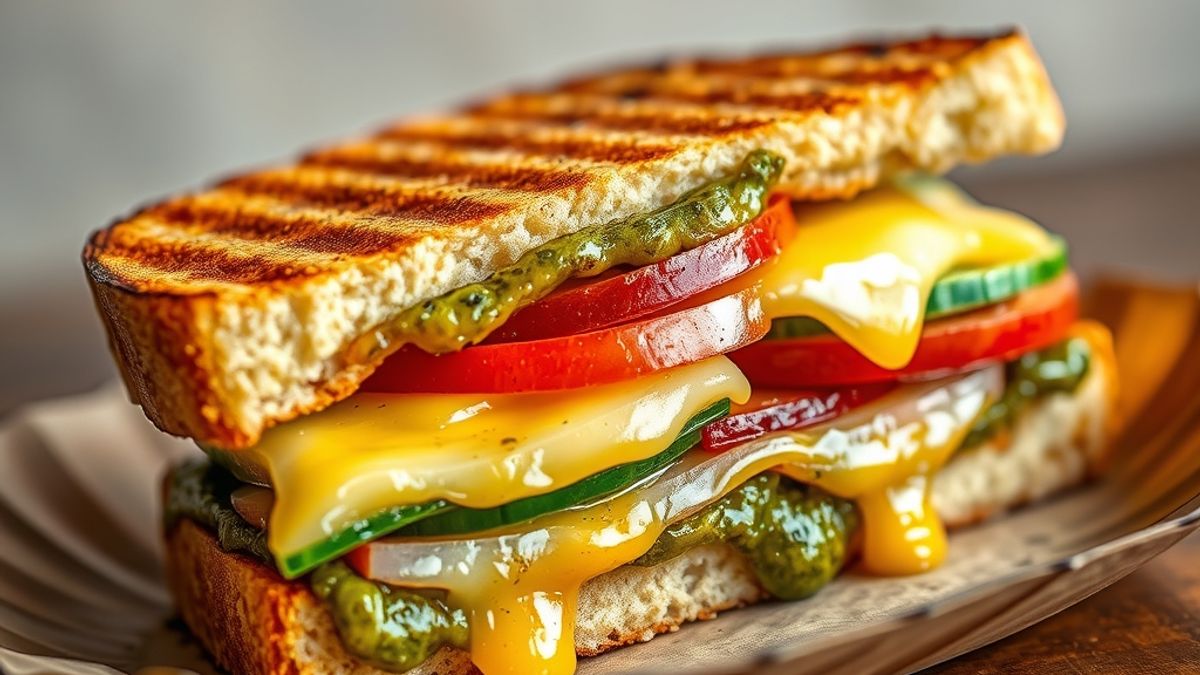
- Cheese sandwich — a thick blanket of grated processed cheese added to any of the above; the cheese fuses with the butter under heat into something gloriously indulgent.
- Cheese chilli toast — grated cheese and chopped green chillies over buttered toast, grilled till bubbling. Simple, sharp and hugely popular, and a completely different beast from the veg-stacked versions: fewer vegetables, more direct heat and richness.
- Jumbo, club or “special” — carts near colleges and offices often run oversized versions with double bread and extra everything, sold as a full lunch rather than a snack.
You can mix and match freely. “Grilled cheese masala toast” is a perfectly normal order, and most vendors will happily add extra cheese, a chilli hit or a grilled upgrade for a small top-up. That flexibility is the whole point.
The stall culture: how it works
This is street food built for speed. A cold veg sandwich is assembled in under a minute; a grilled one takes a few minutes more under the press. You order standing, eat off a paper plate or a scrap of newspaper, and move on. Most stalls are cash-and-carry pavement operations clustered near railway stations, college gates and office districts — exactly where a hungry commuter needs a two-minute meal between a local train and a desk.
Watch a busy vendor for a minute and the choreography reveals itself: butter, chutney, a fan of vegetables, a tap of masala, close, press, cut, hand over, take the next order — all while a small queue re-forms behind you. That turnover is not just theatre; it is your best signal of quality. A cart that sells out its bread and chutney several times a day is working with fresher ingredients than a quiet one where the chutney has been sitting since morning. Because the format is so uniform, quality comes down to exactly these details — the freshness of the chutney, the generosity with butter and cheese, how crisp the toast gets, and how well the potato is spiced. A single legendary cart can out-draw a whole restaurant on reputation alone, and it is part of a wider, world-class street food tradition that runs from vada pav to pav bhaji.
Where to eat: South Mumbai
The office belt of South Mumbai has some of the city’s most famous sandwich clusters, feeding a lunchtime crowd that is precise about where it queues.
- Churchgate and Nariman Point — the lanes around Veer Nariman Road and the office towers of Nariman Point are dense with sandwich carts working the lunch rush. Many are unbranded and more or less interchangeable, so the reliable move is to pick whichever cart has the longest line of office-goers in front of it.
- Fort and the college gates — carts outside colleges and near Churchgate and CST (CSMT) stations do brisk trade in grilled and cheese versions all day. This is prime territory for a mid-morning masala toast between errands.
- Colaba and the Causeway — the pavements around Colaba Causeway and the Gateway of India mix sandwich carts in with the wider snack scene, handy if you are already out shopping along the Colaba Causeway market.
Expect roughly ₹40–120 for a veg or masala toast here, and a bit more once you pile on cheese. These are rough bands, not fixed prices, and the South Mumbai carts sit at the pricier end of the range.
Where to eat: the western suburbs
The suburbs are just as serious about their sandwiches, and often a little cheaper for the same thing.
- Vile Parle — a long-standing student-and-office haunt, closely associated with the old-school Bombay sandwich. The grilled cheese-chilli versions here have a devoted local following that goes back decades.
- Bandra — the stretch around Linking Road and the college gates is reliable territory for a well-made cheese masala toast, and it slots neatly into a wider Bandra food trail if you are grazing your way through the neighbourhood.
- Andheri and Santacruz — carts just outside the busy suburban stations turn out grilled and chilli-cheese sandwiches for the commuter rush, and a couple of long-running spots near Santacruz are locally famous for their green chutney.
- Dadar and Matunga — the food-dense lanes here fold sandwich carts into a much bigger snack culture; both the Dadar food trail and the Matunga food trail are worth a wander if you want to eat your way through more than a sandwich.
As with the South Mumbai carts, treat specific stall names as a starting point rather than gospel. Pavement vendors move, close and rebrand, but the format and the queue-length test stay dependable year after year.
What to order first
If you are new to this, the choice can feel deceptively large for something so simple. A quick decision tree:
- First timer: a grilled veg sandwich — it shows off the full stack of vegetables, chutney and spice in one hot, crisp package, and it is the safest introduction to what the whole thing is about.
- Cheese lover: a cheese masala toast, or go straight for the cheese chilli toast if you want heat with your richness.
- Purist: the plain (cold) vegetable sandwich, uncooked, to taste the chutney and the raw-veg crunch exactly as it was originally eaten before the electric griller took over.
- Big appetite: the jumbo or “special”, which turns a snack into a genuine one-plate lunch.
- Add-ons: many carts will toss in extra cheese, a green-chilli hit, or a “grilled” upgrade for a small top-up — almost always worth it.
Prices: what you’ll actually pay
A Bombay sandwich remains one of the best-value hot meals in the city. At a street cart you are broadly looking at ₹30–60 for a plain cold veg sandwich, ₹50–90 for a masala toast, and ₹80–150 once cheese and chilli come into play; jumbo and “special” versions climb toward ₹200. Prices run higher inside a café or a mall food court, where the same idea is dressed up with better bread and air conditioning, but the pavement version is the real thing.
Carry cash and small change — most carts are cash-first, though a growing number now take UPI. And remember these bands drift upward over time and vary by area, so read them as a guide to relative cost, not a menu you can hold a vendor to. For a fuller picture of eating well without spending much, our budget eats in Mumbai guide covers the whole low-cost landscape.
Tips for eating well
- Judge the chutney first. If the green chutney is fresh and sharp, the rest of the sandwich almost always follows. It is the single most reliable quality signal on the cart.
- Go for the queue. At interchangeable station clusters, the busiest cart is busy for a reason — and the high turnover keeps the ingredients fresh.
- Ask for it grilled if you like crunch. The press transforms a soft, cold sandwich into something with real texture, and on a cheese version it is transformative.
- Mind the butter and cheese. A “double cheese, extra butter” order is glorious but heavy — pace yourself if you are grazing across several stalls in one outing.
- Say your spice level. Vendors dust on the chilli powder by habit; a quick “kam teekha” (less spicy) or “extra green chilli” gets you exactly the heat you want.
- Eat it fresh. A Bombay sandwich is at its best straight off the toaster. It does not travel or wait well, so eat it standing there rather than carrying it home to go soft.
Best time to go
Sandwich carts are a morning-to-evening affair, peaking at breakfast, the lunch rush and the early-evening commute. If you want to actually talk to the vendor and watch a sandwich being built from scratch, aim for the calmer windows in late morning or mid-afternoon, when the queue thins out and there is time to ask for it your way. For a wider look at where the city eats first thing, our breakfast spots guide is a good companion.
During the Mumbai monsoon, a hot cheese chilli toast off a covered cart is one of the city’s great small pleasures — the contrast of grey rain and a bubbling, buttery toast is hard to beat. Just pick a stall with proper shelter and a working griller, and keep the sandwich under cover until you are ready to eat it.
How to get there
The beauty of the Bombay sandwich is that you barely have to plan. The best clusters sit right next to transport: Churchgate and CST (CSMT) for South Mumbai, and Vile Parle, Bandra, Santacruz and Andheri on the Western line for the suburbs. Step off the local train — if you are new to the network, our local train guide makes it painless — and there is almost always a cart within sight of the station gate.
Because the sandwich is quick and light, it pairs naturally with a longer snack crawl. Chase it with a vada pav or a plate of pav bhaji, and for the carts that don’t show up on any map, see our guide to Mumbai’s hidden food gems. However you build the route, the sandwich is the easy, reliable, two-minute anchor at the centre of it — the snack the whole city agrees on.
Frequently Asked Questions
What is a Bombay sandwich made of?
Classically, it is buttered white bread spread with a green coriander-mint chutney and layered with thin slices of boiled potato, cucumber, tomato, onion and beetroot, seasoned with salt and chaat masala. That is the plain, cold version. Cheese, a spiced mashed-potato layer and chopped green chillies are the most common add-ons, and any of these can be pressed into a hot grilled toast.
What's the difference between masala toast and a grilled sandwich?
Masala toast adds a spiced mashed-potato layer to the veg stack and is traditionally pressed in a hinged toaster over coals. A grilled sandwich is pressed in an electric griller until the outside turns golden and the inside melts together. Both end up crisp, but the masala toast is more heavily spiced and filling, while the grilled version is prized for its even, buttery crunch.
How much does a Bombay sandwich cost in Mumbai?
At a street cart you'll pay roughly ₹30–60 for a plain cold veg sandwich, ₹50–90 for a masala toast, and ₹80–150 once cheese and chilli are involved, with jumbo or special versions climbing toward ₹200. South Mumbai carts sit at the pricier end and suburban college-gate carts are cheaper. Treat these as rough bands that vary by area and creep up over time.
Where can I find the best Bombay sandwiches in Mumbai?
The most reliable clusters are near stations, colleges and office districts. In South Mumbai, look around Churchgate, Nariman Point's Veer Nariman Road, Fort and CST; in the western suburbs, Vile Parle, Bandra's Linking Road, Andheri and Santacruz are all strong. Specific stalls move and rebrand, so the dependable trick is to pick whichever cart has the longest queue of regulars.
Is the Bombay sandwich vegetarian?
Yes. The Bombay sandwich is entirely vegetarian in its classic form, built from bread, butter, green chutney, raw vegetables, potato, cheese and chillies, with no meat, egg or fish involved. It is one reason the snack is so universally popular across the city. If you avoid dairy, you can skip the butter and cheese, though the butter in particular is central to the flavour.
What is cheese chilli toast?
Cheese chilli toast is a stripped-down favourite: grated processed cheese and chopped green chillies over buttered white bread, grilled until the cheese bubbles and the bread crisps. Unlike the veg-stacked sandwiches, it skips most of the salad and leans into direct richness and heat. It is a monsoon and late-evening staple, and one of the most ordered items at sandwich carts across Mumbai.