
Parsi Food & Irani Cafés in Mumbai
A guide to Mumbai's Parsi cuisine and Irani cafés: Britannia's berry pulao, dhansak, sali boti, akuri and bun-maska at the old cafés of Fort and Ballard Estate.
'%3E%3Crect%20width%3D'96'%20height%3D'96'%20fill%3D'%23E65100'%2F%3E%3Ccircle%20cx%3D'30'%20cy%3D'24'%20r%3D'44'%20fill%3D'%23fff'%20opacity%3D'.12'%2F%3E%3Ccircle%20cx%3D'60'%20cy%3D'74'%20r%3D'40'%20fill%3D'%23000'%20opacity%3D'.10'%2F%3E%3C%2Fg%3E%3Cg%3E%3Ccircle%20cx%3D'48'%20cy%3D'48'%20r%3D'15'%20fill%3D'none'%20stroke%3D'%23fff'%20stroke-width%3D'3'%2F%3E%3Cpath%20fill%3D'%23fff'%20d%3D'M48%2037%20l3.5%2011%20-3.5%2011%20-3.5%20-11%20z'%2F%3E%3Ccircle%20cx%3D'48'%20cy%3D'48'%20r%3D'2.2'%20fill%3D'%23fff'%2F%3E%3C%2Fg%3E%3C%2Fsvg%3E)
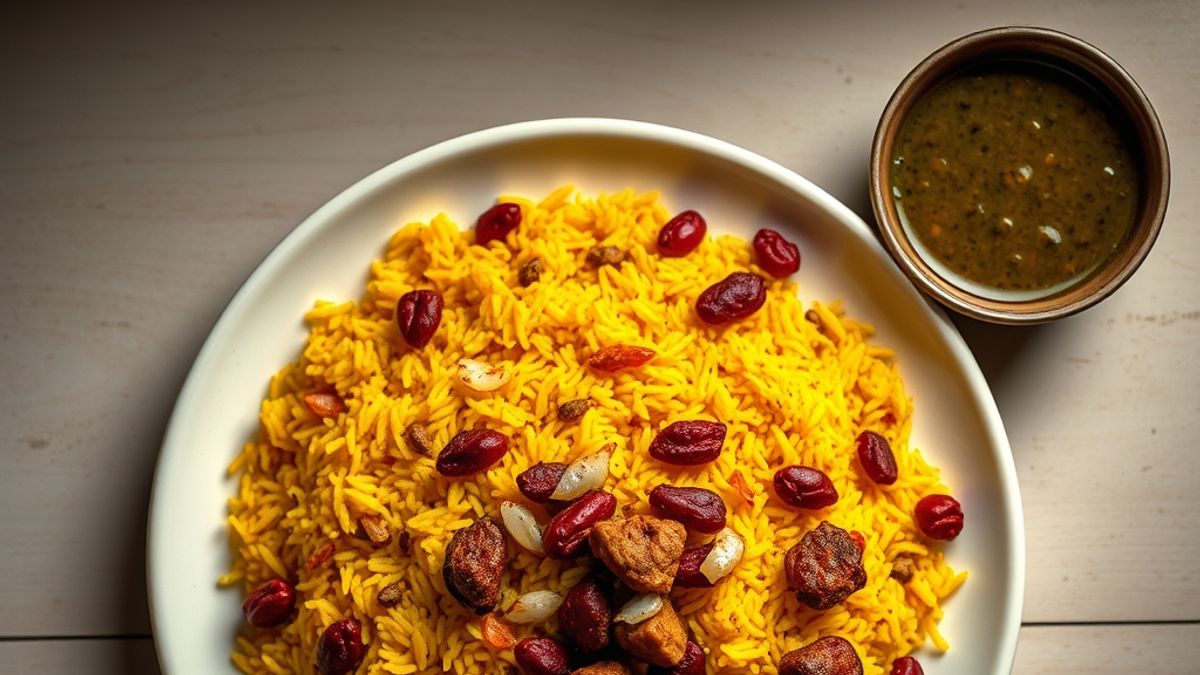
Few things are as quintessentially Mumbai as a Parsi meal in a high-ceilinged old café: marble-topped tables, bentwood chairs, an owner who has run the place for fifty years, and a plate of food that traces its lineage back to Persia. The Parsi community, descendants of Zoroastrians who fled Iran centuries ago, gave the city a cuisine and a café culture found almost nowhere else on earth. This guide is your way into both, from the berry pulao you build a lunch around to the bun-maska breakfast you sneak in before work.
The Parsi and Irani table at a glance
| Place | Area | Signature order | Approx cost (₹/head) | Nearest station |
|---|---|---|---|---|
| Britannia & Co | Ballard Estate | Berry pulao, dhansak, caramel custard | 600–1,000 | CSMT (C) |
| Kyani & Co | Marine Lines | Bun-maska, keema, akuri, chai | 150–350 | Marine Lines (W) |
| Ideal Corner | Fort | Dhansak, sali boti (closed Mon) | 300–600 | CSMT (C) |
| Yazdani Bakery | Fort | Brun-maska, apple pie, chai | 100–250 | CSMT (C) |
| B. Merwan & Co | Grant Road | Mawa cakes, bun-maska | 100–250 | Grant Road (W) |
| Jimmy Boy | Fort | Wedding-style lagan nu bhonu | 400–800 | CSMT (C) |
Understanding the food
Parsi cooking is rich, a little sweet, a little sour, and deeply comforting. It leans on meat, lentils, jaggery, vinegar and dried fruit, and it rewards a slow, unhurried lunch:
- Dhansak — the signature dish: mutton or chicken cooked with lentils and vegetables, spiced and slightly tangy, served with caramelised brown rice. Traditionally a Sunday meal, and by custom a mourning dish never cooked on festive days.
- Berry pulao — fragrant rice with spiced meat and a scattering of tart barberries imported from Iran. Britannia’s version is famous across the country.
- Sali boti — mutton in a sweet-and-tangy gravy, crowned with crisp shoestring potatoes (sali). Sali par eeda (eggs baked over potato straws) is its breakfast cousin.
- Patra ni machhi — pomfret coated in bright green coconut-coriander chutney and steamed in a banana leaf, a wedding-feast classic.
- Akuri — soft, spiced scrambled eggs, best piled on hot buttered toast.
- Salli marghi and mutton cutlets — the everyday non-veg staples that fill out a Parsi menu.
- Lagan nu custard and caramel custard — the essential desserts, wobbly and burnt-sugar sweet, the custard studded with nutmeg and charoli.
The Irani cafés, opened by a later wave of Iranian immigrants, add the everyday layer: bun-maska (a soft bun with butter), brun-maska (its crustier cousin), keema, cheese omelettes, mawa cakes and endless glasses of sweet, milky Irani chai poured to be dunked, not sipped.
A little history, because it explains the room
The Parsis arrived on the Gujarat coast over a thousand years ago and became one of Bombay’s great mercantile communities, building much of the old city’s civic fabric. Their food absorbed local Gujarati and Maharashtrian notes while keeping its Persian backbone of dried fruit and sweet-sour gravies. The Irani cafés came later, in the late nineteenth and early twentieth centuries, when Zoroastrian immigrants from Iran opened corner tea-rooms on plots other traders shunned as inauspicious. Those airy, mirror-lined rooms with their “no spitting, no bargaining, no talking loudly” signs became the city’s great levellers, where clerks, students, cops and tycoons drank the same chai. Many have closed as rents rose and families moved on, which is exactly why the survivors are worth your custom.
The institutions
Britannia & Co. — Ballard Estate
Open since 1923, Britannia is the most famous of all, celebrated for its berry pulao (chicken or mutton), dhansak and caramel custard. It is typically a lunchtime-only spot, so check the hours before you go. The room, the ledger-keeping and the framed portraits are part of the meal. Around ₹600–1,000 a head.
Kyani & Co. — Marine Lines
An Irani café going since 1904: bun-maska, keema, akuri and cheese omelette in a wonderfully time-worn room near Metro cinema. This is the archetypal morning stop, unhurried and cheap. Budget around ₹150–350 a head.
Ideal Corner — Fort
A snug Parsi spot on Gunbow Street with daily-rotating specials such as dhansak, sali boti and patra ni machhi, plus reliable cutlets and custards. It is closed on Mondays. Around ₹300–600 a head.
Yazdani Bakery — Fort
The classic bakery-café for brun-maska, ginger chai and its famous apple pie, tucked off Cawasji Patel Street. Cramped, scruffy and beloved; go in the morning before the bread runs out. Around ₹100–250 a head.
B. Merwan & Co. — Grant Road
Long famous for its mawa cakes and bun-maska. It has weathered a well-publicised closure scare and is widely reported to be running again, but hours can be limited, so it is worth a quick check before making a special trip. Around ₹100–250 a head.
Jimmy Boy — Fort
Known for Parsi wedding-style food, the full lagan nu bhonu of patra ni machhi, salli marghi, pulao-dar and lagan nu custard served on a banana leaf. It saw a temporary closure in 2025 with a planned reopening, so confirm it is open before heading there. Around ₹400–800 a head.
How to eat the Parsi way
- Go for lunch. The great Parsi restaurants, Britannia especially, are lunchtime institutions and thin out or shut by mid-afternoon.
- Order the trinity. Dhansak, berry pulao and sali boti are the classic run; finish with caramel or lagan nu custard.
- Do a café breakfast too. Bun-maska and Irani chai at Kyani or Yazdani is a cheap, atmospheric start to a Fort morning.
- Come hungry and share. Portions are generous and the gravies rich; two people ordering three dishes eat better than two ordering four.
- Check the days and hours. These are old, family-run places with their own rhythms. Ideal Corner shuts Mondays, Britannia runs lunch-only, and a couple of spots have had recent closure scares.
- Bring cash, though UPI is increasingly accepted.
A one-day Parsi food crawl in Fort
The great thing about this cuisine is how tightly it clusters in South Mumbai. Start with a bun-maska and chai breakfast at Kyani in Marine Lines, walk south into Fort for a mid-morning brun and apple pie at Yazdani, then time a lunch at Britannia in Ballard Estate for the berry pulao and custard. If Britannia is shut, Ideal Corner on Gunbow Street is the natural fallback (except Mondays). It is all walkable from CSMT and Churchgate, and it doubles neatly with the heritage architecture of the Fort and Ballard Estate precinct between meals.
When to go and what to know
Parsi food is a year-round pleasure, but the rich, warming gravies suit the monsoon and Mumbai’s short winter (November to February) especially well. The community’s own calendar shapes the table: dhansak is not cooked on festive Parsi days, and around Navroze (the Parsi New Year) and Pateti the restaurants lean festive with sweeter menus. Portions are hearty, so pace your ordering, and remember these are small kitchens where a popular dish can sell out by 1.30 pm.
A Parsi meal is one of Mumbai’s most distinctive experiences: food you will not find done this way anywhere else, served in rooms that feel like stepping back a century. Aim for a Britannia lunch of berry pulao and caramel custard, a bun-maska breakfast at Kyani or Yazdani, and confirm the quirky opening hours before you go. It is history you can eat, and the city guards it fiercely.
Frequently Asked Questions
What is the most famous Parsi dish to try in Mumbai?
Berry pulao at Britannia & Co in Ballard Estate is the signature order: fragrant spiced-meat rice scattered with tart Iranian barberries. Pair it with dhansak and finish with caramel custard.
What is the difference between a Parsi restaurant and an Irani café?
Parsi restaurants serve the community's home cooking, such as dhansak, sali boti and patra ni machhi. Irani cafés, opened by later Iranian immigrants, are everyday tea-and-bun rooms known for bun-maska, keema and Irani chai.
Which Parsi and Irani places are best for breakfast?
Kyani & Co in Marine Lines and Yazdani Bakery in Fort are the classic morning stops for bun-maska or brun-maska with sweet Irani chai, cheap and atmospheric.
Do I need to check opening days before visiting?
Yes. These are old family-run places with fixed rhythms. Britannia runs lunch-only, Ideal Corner shuts on Mondays, and a couple of spots have had closure scares, so confirm before making a special trip.