
Navratri in Mumbai: Where to Play Garba and Dandiya
A local's guide to Navratri garba and dandiya in Mumbai — the big suburban grounds, ticket prices, Falguni Pathak, dress code and free community nights.
'%3E%3Crect%20width%3D'96'%20height%3D'96'%20fill%3D'%23E65100'%2F%3E%3Ccircle%20cx%3D'30'%20cy%3D'24'%20r%3D'44'%20fill%3D'%23fff'%20opacity%3D'.12'%2F%3E%3Ccircle%20cx%3D'60'%20cy%3D'74'%20r%3D'40'%20fill%3D'%23000'%20opacity%3D'.10'%2F%3E%3C%2Fg%3E%3Cg%3E%3Ccircle%20cx%3D'48'%20cy%3D'48'%20r%3D'15'%20fill%3D'none'%20stroke%3D'%23fff'%20stroke-width%3D'3'%2F%3E%3Cpath%20fill%3D'%23fff'%20d%3D'M48%2037%20l3.5%2011%20-3.5%2011%20-3.5%20-11%20z'%2F%3E%3Ccircle%20cx%3D'48'%20cy%3D'48'%20r%3D'2.2'%20fill%3D'%23fff'%2F%3E%3C%2Fg%3E%3C%2Fsvg%3E)
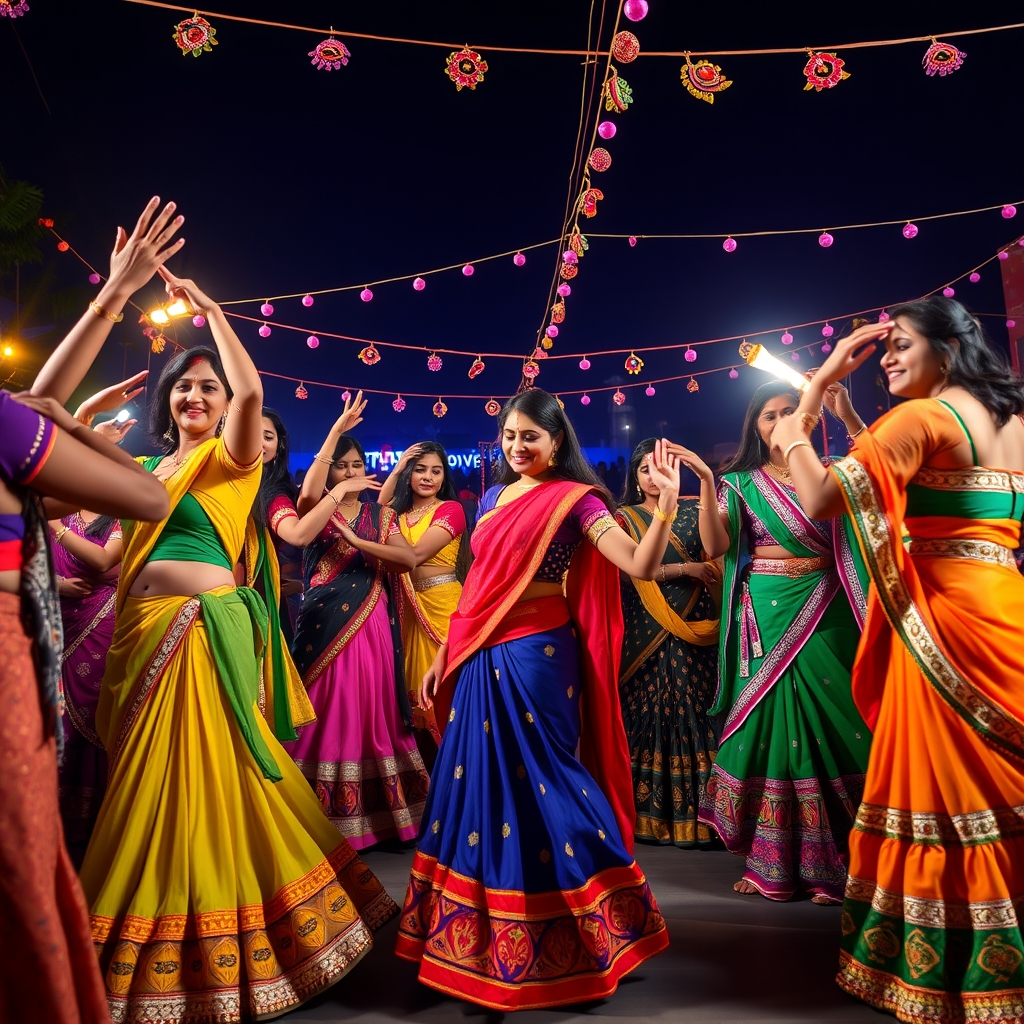
For nine nights every autumn, whole stretches of Mumbai’s suburbs turn into open-air dance floors. The dhol starts around eight, the circles form, and they do not really stop until the loudspeakers are switched off. Garba and dandiya are Gujarati traditions at heart, but Mumbai has made them the city’s own — and the good news for a first-timer is that nobody minds if you cannot do the steps yet. Turn up, watch a round, then step in. This is a guide to where to actually go, what it costs, what to wear, and how not to feel out of place.
Garba grounds in Mumbai: quick comparison
Performers and exact prices are confirmed closer to the dates on BookMyShow and District (formerly Paytm Insider), so treat these 2025 figures as a guide. Book the big names early — they sell out.
| Event | Area | Approx price (₹/night) | Nearest line | Best for |
|---|---|---|---|---|
| Radiance (Falguni Pathak) | BKC, Jio World | 1,700–1,800+ | Metro / Kurla | Star night, indoor AC |
| Rangilo Re | NESCO, Goregaon | from ~800 | Western Line | Largest indoor floor |
| Kora Kendra | Borivali West | 360–500+ | Western Line | Old-school serious garba |
| Dome Dandiya | SVP Stadium, Worli | from ~799 | Metro Line 3 | South/central Mumbai |
| Raas Rang | Raymond Ground, Thane | 570–590 | Central Line | Family, all-ages |
When it happens and how the nights work
In 2026, Sharad Navratri runs from 11 October to 19 October, with Dussehra on the 20th. The dancing builds over the nine nights: thin on the first day or two, packed by the weekend, and at full roar for Ashtami and Navami at the end.
Two dances share the ground. Garba comes first, usually before dinner — dancers move in concentric circles, anticlockwise, around a central earthen lamp-pot (the garbo) or an image of the goddess, clapping in a two- or three-beat rhythm. Dandiya raas comes later, faster, and needs a partner and a pair of decorated sticks; you strike your neighbour’s stick, spin, and move down the line. Most people do both across a night. A short aarti is usually held in the evening, and things wind down around midnight in line with the city’s noise rules.
The big ticketed grounds
These are the large, organised events with sound systems, live singers and food stalls.
Radiance Dandiya with Falguni Pathak — Jio World, BKC
Falguni Pathak is the reason a certain generation of Mumbai learned to play garba at all — the “Dandiya Queen”, and still the biggest draw in the city. In recent years her Radiance Dandiya has run indoors at the Jio World Convention Centre in Bandra Kurla Complex, which means air-conditioning, clean washrooms and none of the monsoon-tail mud you get on open grounds. Passes started around ₹1,700–1,800 a night in 2025, with season passes, VIP tiers and private pods on top. Practical tip: her nights sell out early and the crowd is enormous, so book the moment tickets open and reach by 8pm if you want room to dance rather than shuffle.
Rangilo Re — NESCO, Goregaon
Billed as Mumbai’s largest indoor Navratri, Rangilo Re fills one of the giant NESCO exhibition halls off the Western Express Highway, with live folk singers (Parthiv Gohil has headlined) and a serious vegetarian and Jain food spread. Polished, central-ish for the western suburbs, and the indoor floor is a blessing on a humid night. From roughly ₹800 a night in 2025. Practical tip: the hall is vast — pick a landmark near your entry gate so your group can regroup, because phone signal struggles once it is full.
Kora Kendra — Borivali West
If you want the old-school, sprawling Mumbai garba, Kora Kendra Ground in Borivali West is its spiritual home. Long-running organisers such as Naidu Club lay out an enormous wooden and open floor — well over a lakh square feet — with a proper Amba Mata shrine, daily prizes, and marked zones for senior citizens. Different promoters run nights here with names like Showglitz and Folktastic; singers such as Geeta Rabari have performed. Entry has started as low as ₹360–500. Practical tip: this is where dedicated players come to dance seriously for hours — go for the atmosphere and the standard of garba, not a quiet evening.
Dome Dandiya Nights — SVP Stadium, Worli
For south and central Mumbai, the Dome at NSCI/SVP Stadium in Worli saves you the long haul north. It draws a younger, dressed-up crowd and runs a tighter, more upscale night with live acts. From about ₹799 in 2025. Practical tip: it starts and finishes a touch later than the suburban grounds, which suits anyone coming straight from work in Lower Parel or Nariman Point.
Raas Rang — Raymond Ground, Thane
Thane runs its own big, family-friendly celebration, typically at Raymond Ground, with a strong line-up of Gujarati folk legends across all ten nights and thousands turning out nightly. From roughly ₹570–590. Practical tip: it is genuinely all-ages and less about the see-and-be-seen crowd — a good pick if you are bringing parents or children, and far easier to reach from the central suburbs and Navi Mumbai than trekking to Borivali.
Beyond these, watch for Royal Raas at the five-star Sahara Star near the domestic airport in Vile Parle East (from around ₹1,180, gourmet stalls, indoor comfort) and Vibrancce at Raghuleela Banquets in Kandivali (from around ₹650), both of which return most years.
Free and community garba
You do not have to pay to play. The most authentic garba in Mumbai is often the free society and community-ground events in Ghatkopar, Kandivali, Malad, Vile Parle and Dadar, where local mandals set up a garbo, a modest sound system and a circle anyone can join. The dancing here tends to be more traditional and less choreographed-for-a-stage, and the crowd is neighbourly rather than ticketed. Ghatkopar in particular has a deep Gujarati population and some of the liveliest street-and-ground garba in the city. Practical tip: ask at any Gujarati-run shop or a local temple near you — someone will point you to the nearest ground, and there is no booking to worry about.
What to wear to garba
Half the pleasure of Navratri is the dressing up. Women wear a chaniya choli — a flared, mirror-worked skirt with a fitted blouse and dupatta; men wear a kediyu (a short flared kurta) with a dhoti or churidar, often with a bandhani turban. You need not own one: shops in Dadar, Ghatkopar, Borivali and the markets around Crawford and Kalbadevi rent and sell them through September and October, and oxidised silver jewellery is sold on every corner.
Two comfort rules matter more than the outfit. First, footwear: you will be on your feet for hours, so wear cushioned juttis, mojris or block heels you have already broken in, not new party shoes. Second, fabric: cotton, georgette or chiffon breathe far better than heavy silk under crowd heat. Many players loosely follow the nine daily colours, but no organiser turns you away for the “wrong” one.
Etiquette for first-timers
None of this is gatekept — regulars are usually delighted to teach a newcomer. A few things smooth the evening:
- Move anticlockwise and go with the flow of the circle; do not cut across the centre where the garbo and goddess image sit.
- Start on the outer ring where the pace is gentler; the fast, skilled dancers hold the inner circles.
- In dandiya, tap sticks, do not swing hard — it is a greeting, not a duel — and mind the space around you.
- Stand still and quiet during the aarti if one is held; join in or simply wait it out respectfully.
- Many people are fasting (upvas), so eat before if you need to, and do not bring meat, alcohol or leather onto traditional or temple grounds.
- Keep valuables minimal — a small potli bag beats a phone loose in a churning crowd.
Food and fasting
The food is a proper part of the night. Big grounds run stalls heavy on Gujarati and Jain vegetarian fare — dhokla, fafda, khichu, pav bhaji, jalebi and cooling glasses of chaas — timed for the break between garba and dandiya. During Navratri many stalls also serve farali (fasting) food such as sabudana khichdi and vada, made without onion, garlic or regular grains, for those observing the vrat. Practical tip: eat lightly before you dance and save the fried plate for the mid-evening break, or you will regret it three circles in.
How do you get home late from garba?
Grounds cluster in Borivali, Goregaon, Kandivali, Andheri and Thane, all near the Western Line or the Metro, with the Dome and BKC events better for the central-south crowd via Metro Line 3. Trains thin out late and the last local leaves earlier than you think, so plan a return app-cab or check the last-train time before you commit to dancing until midnight. Expect surge pricing on cabs near the big grounds at close.
Why Mumbai plays garba at all
Garba and dandiya are Gujarati at root, danced for centuries in Gujarat and Kutch to honour the goddess Durga (Amba) across the nine nights of Navratri — nav (nine) ratri (nights). The circular garba, moving around a lamp or an image of the goddess, is itself a devotional form: the ring symbolises the cycle of time, with the divine at the still centre. Mumbai’s enormous Gujarati population — concentrated in Ghatkopar, Kandivali, Borivali, Malad and Vile Parle — brought the tradition with them and scaled it up, until what began as neighbourhood worship became one of the city’s biggest annual nights out. The devotional core survives at the community grounds and the temple aartis; the big ticketed events layer spectacle, star singers and a dress-to-impress crowd on top. Both are “real” Navratri — they just sit at different points on the same spectrum.
A first-timer’s checklist
Bring or arrange, in rough order of importance:
- Comfortable, broken-in footwear — you will be standing and turning for hours.
- A full water bottle and cash for stalls; big grounds get hot and dehydrating.
- A booked ticket for the marquee events (Falguni Pathak, Rangilo Re) — they sell out.
- A small potli or crossbody bag rather than loose valuables in a churning crowd.
- A return plan — app cab or last-train time — before you commit to dancing to the midnight cut-off.
- A borrowed or rented outfit if you want to look the part; no one minds if you don’t.
Plan your night
Navratri is the one time Mumbai dances in the open with strangers and calls it normal. If you want spectacle and a star, book Falguni Pathak at BKC or a big ground like Kora Kendra early. If you want the real, unhurried thing, find a free community circle in Ghatkopar or Vile Parle and just join. Either way: comfortable shoes, a full water bottle, dinner saved for the break, and a willingness to look slightly lost for the first ten minutes. After that, the circle carries you.
Frequently Asked Questions
When is Navratri in Mumbai in 2026?
Sharad Navratri falls on 11–19 October 2026, with Dussehra on 20 October. The dancing builds over the nine nights — thin at first, packed by the weekend, and at full roar on Ashtami and Navami at the end.
How much do garba nights cost in Mumbai?
Big ticketed events run roughly ₹500 to ₹2,000 a night, climbing on weekends and towards the end of the festival; premium and five-star venues go higher. Community and society garba in local grounds are typically free.
Do you need to know the steps to play garba?
No. Garba's basic clap-and-turn is easy to pick up by watching a round, and dandiya is simple once someone shows you the tap-and-move. Start on the outer circle where the pace is gentler and you will be fine within minutes.
Where can you play garba for free in Mumbai?
Free society and community-ground garba runs in Ghatkopar, Kandivali, Malad, Vile Parle and Dadar, where local mandals set up a garbo, a modest sound system and a circle anyone can join. Ghatkopar has some of the liveliest street-and-ground garba in the city.