
Monsoon Food in Mumbai: Where to Eat Bhajiya, Bhutta and Cutting Chai
A neighbourhood monsoon food crawl in Mumbai: kanda bhajiya, roasted bhutta, vada pav, misal and cutting chai, with real spots, stations and rough prices.
'%3E%3Crect%20width%3D'96'%20height%3D'96'%20fill%3D'%23E65100'%2F%3E%3Ccircle%20cx%3D'30'%20cy%3D'24'%20r%3D'44'%20fill%3D'%23fff'%20opacity%3D'.12'%2F%3E%3Ccircle%20cx%3D'60'%20cy%3D'74'%20r%3D'40'%20fill%3D'%23000'%20opacity%3D'.10'%2F%3E%3C%2Fg%3E%3Cg%3E%3Ccircle%20cx%3D'48'%20cy%3D'48'%20r%3D'15'%20fill%3D'none'%20stroke%3D'%23fff'%20stroke-width%3D'3'%2F%3E%3Cpath%20fill%3D'%23fff'%20d%3D'M48%2037%20l3.5%2011%20-3.5%2011%20-3.5%20-11%20z'%2F%3E%3Ccircle%20cx%3D'48'%20cy%3D'48'%20r%3D'2.2'%20fill%3D'%23fff'%2F%3E%3C%2Fg%3E%3C%2Fsvg%3E)
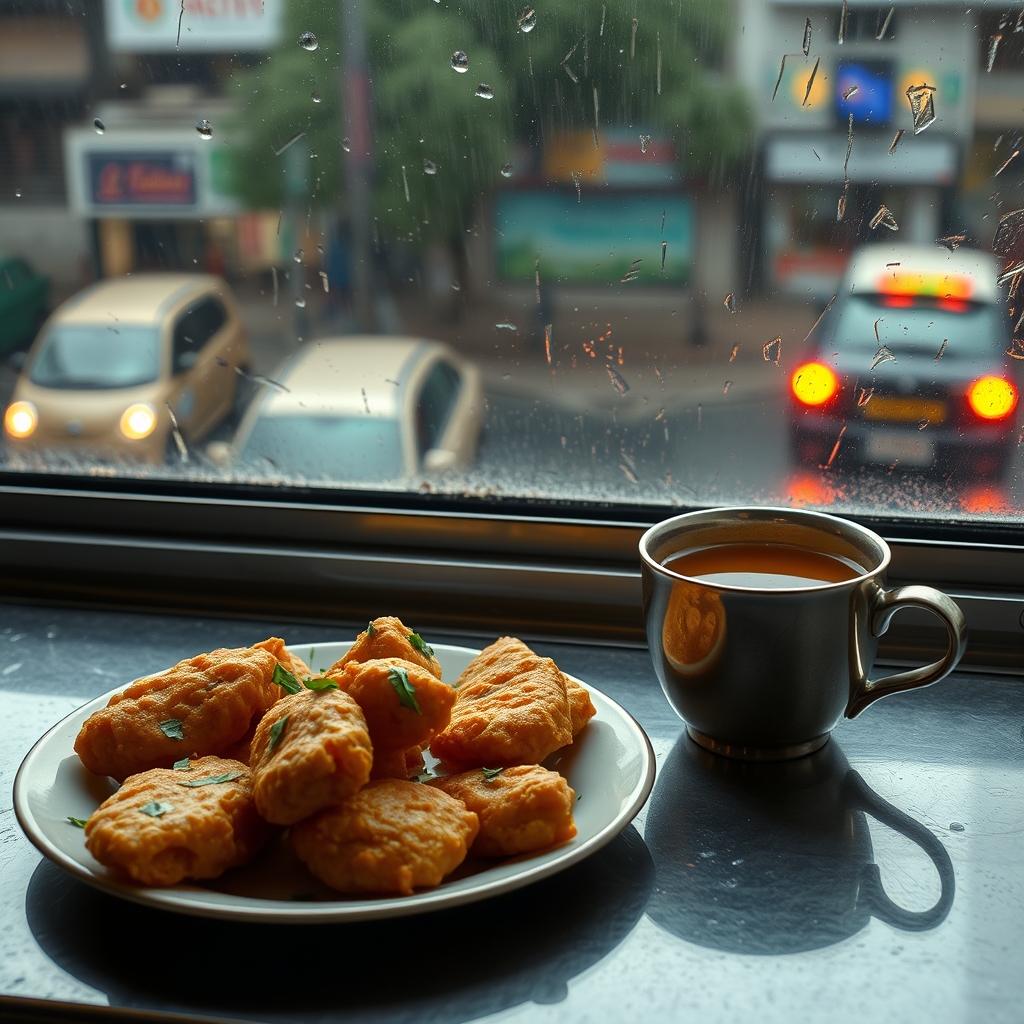
The first heavy shower of the season rearranges what Mumbai wants to eat. The moment the sky turns that flat pewter grey and the sea wind picks up, the city’s cravings narrow to a short, non-negotiable list: something fried and hot, something roasted over coals, and something to drink that scalds the roof of your mouth. Bhajiya, bhutta, vada pav and cutting chai are not fancy. They are the food of bus queues, station bridges and balconies, eaten standing up with wet trouser hems, and they taste better in the rain than they have any right to. This is a working guide to the good versions, sorted by neighbourhood, so you can plan a rainy-day crawl without ending up with a soggy, forgettable plate.
The monsoon snack map
| Spot | Area / line | What to order | Approx cost (₹) | Nearest station |
|---|---|---|---|---|
| Kyani & Co | Dhobi Talao (SoBo) | Bun maska, chai, mawa cake | 150–350 | Marine Lines (W) |
| Vinay Health Home | Charni Road | Kanda bhaji, sabudana vada, piyush | 150–300 | Charni Road (W) |
| Prakash | Dadar / Shivaji Park | Thalipeeth, sabudana vada | 200–400 | Dadar (W/C) |
| Aaswad | Dadar West | Misal pav, kothimbir vadi | 200–400 | Dadar (W/C) |
| Cafe Madras | Matunga East | Kela baaji, Mysore bonda, filter kaapi | 150–350 | Matunga (C) / King’s Circle (H) |
| Anand Stall | Vile Parle E / Juhu | Loaded vada pav, dosa | 60–200 | Vile Parle (W) |
| Gajanan Vada Pav | Thane (Naupada) | Vada pav, kanda bhaji | 20–80 | Thane (C) |
The monsoon snack canon
Four things carry a Mumbai monsoon. Bhajiya (bhaji, pakora) is a fritter, most often kanda bhaji: thinly sliced onion bound in spiced gram-flour batter and dropped into hot oil until the strands go lacy and crisp. Bhutta is a whole corn cob roasted on live coals, then rubbed with a cut lime dipped in salt and red chilli. Vada pav needs no introduction, a spiced potato dumpling in a soft bun with chutneys, the city’s true fast food. And cutting chai is a half-glass of strong, sweet, over-boiled tea, sold that way because half a glass is all a chai break allows. Below, the places worth getting wet for.
South Mumbai: Fort, Girgaon and the old cafes
The island city’s southern tip is where the Irani cafe still holds on, and there is no better monsoon shelter than a marble-topped table under a slow ceiling fan.
Kyani & Co — Dhobi Talao
Near Metro cinema, close to Marine Lines station, Kyani is among the oldest surviving Irani cafes in the city, and it wears its age comfortably: bentwood chairs, glass-fronted cabinets, old-timers with the morning paper. Come for bun maska and a glass of chai while the rain sheets down outside. Tip: keep it simple. The chai, the maska, maybe a mawa cake or an omelette. This is a place to sit, not to feast.
Yazdani Bakery — Fort
Tucked off Cawasji Patel Street in Fort, this Zoroastrian-run bakery is a scruffy, beloved institution for brun maska and ginger chai, the brun being a hard-crusted bread that softens under a thick smear of butter. Tip: mornings are best, before the bread runs out; the seating is cramped and the charm is entirely in that.
Vinay Health Home — Charni Road
A spotless Maharashtrian vegetarian institution near Girgaon, going since around 1940. This is the address for a proper plate of kanda bhaji, alongside sabudana vada and a glass of piyush, the thick saffron-and-cardamom yoghurt drink that is monsoon-adjacent comfort in itself. Tip: it has both AC and non-AC sections; either way, order the bhaji fresh and hot.
Aaram Vada Pav — opposite CST
Directly across from Chhatrapati Shivaji Maharaj Terminus, Aaram has fed commuters vada pav for over seven decades, with a garlicky dry chutney regulars swear by. Tip: it is a stand-and-eat counter opposite a very busy junction. Grab, eat under the awning, move on.
For roasted corn down here, the promenade at Girgaon Chowpatty and the stretch along Marine Drive are dotted with bhuttawallahs fanning their coals against the drizzle. A plain buttered-and-limed cob runs around Rs 40–60.
Dadar and Shivaji Park: the Maharashtrian heartland
If you want the real, unfussed Marathi monsoon table, this is the neighbourhood.
Prakash Shakahari Upahar Kendra — Ranade Road
A no-frills legend on Ranade Road near Shivaji Park, open here since 1971. Prakash makes enormous batata vadas, but in the rains the things to order are the thalipeeth with a knob of butter and dahi, the sabudana vada with groundnut chutney, and the piyush. Tip: it is cash only, tables are shared with strangers at busy hours, and that is part of the experience.
Aaswad — Dadar West
Near Shiv Sena Bhavan, Aaswad is a decades-old vegetarian favourite whose misal pav once took a “world’s tastiest vegetarian dish” title at a London food-awards ceremony, a spicy, tangy sprout curry you mop up with soft ladi pav. Their kothimbir vadi (crisp-fried coriander cakes) and sabudana vada are equally rain-appropriate. Tip: the misal heat is adjustable; ask for milder, because the default has genuine bite.
Ashok Vada Pav — Prabhadevi
On Kirti College Lane off Cadell Road, this stall has run for over three decades and does one clever thing: it packs crunchy fried chura (the spiced batter scraps) into the pav along with the vada, so every bite has extra crackle. Tip: the queue peaks at college-and-office hours; the fastest turnover is mid-afternoon.
Matunga and King’s Circle: south of the south
Matunga’s South Indian belt gives the monsoon a different, equally valid answer to “what shall we fry”.
Cafe Madras — Matunga East
Near King’s Circle, running since 1940, Cafe Madras is a filter-coffee-and-tiffin institution. In the rains, look past the dosas to the afternoon snacks board: kela baaji (banana fritters), potato bonda and Mysore bonda, all made to be dunked in coconut chutney and chased with a tumbler of strong filter kaapi. Tip: expect a wait at peak breakfast; the snacks are calmer in the late afternoon.
Koolar & Co — Matunga
An Irani cafe established in 1932, all vintage tiles and old mirrors, good for chai, bun maska and a big kheema pav when the weather wants something heartier. Tip: a fine dry-out stop between the Matunga tiffin houses.
The western suburbs: Bandra to Vile Parle
Anand Stall — Vile Parle East and Juhu
A student-and-office favourite for over four decades, Anand is the loaded-vada-pav headquarters: cheese, butter, schezwan, grilled variants, plus sandwiches and a long list of dosas. Its original counter opposite Mithibai College on Gulmohar Road in Vile Parle West was demolished by the civic authorities in 2026 to clear the lane; the brand now runs from an outlet on Hanuman Road in Vile Parle East and a newer counter in Juhu, opposite Options Mall. Tip: it keeps long hours and draws a late-night crowd, so it doubles as a rainy-night stop; the classic vada pav still beats the fancier ones.
Cafe Irani Chaii — Mahim
On the Mahim–Bandra edge, this newer-generation Irani cafe leans into the nostalgia: Irani chai, bun maska, akuri and a good mutton keema. Tip: breakfast is the strong suit and a fine way to start a wet Sunday in the western suburbs.
For bhutta with a view, the sea walls at Bandra Bandstand and Worli Seaface have corn-roasters set up through the season; standing at a coal fire while the spray comes off the sea is the whole point.
Beyond the island city
Gajanan Vada Pav — Thane
By Thane station in Naupada, Gajanan is famous well beyond Thane for its vada pav and, crucially, the bonus yellow besan chutney handed over with each order; it lifts an already good vada into something people cross the city for. Tip: also try the kanda bhaji here; it holds up to the reputation.
Cutting chai and the tapri
None of this works without tea, and the truest monsoon chai is not in a cafe at all but at a roadside tapri: a plywood stall by a station, an office lane or a bus stop, where the tea is boiled to within an inch of its life and poured into a cutting glass for Rs 10–20. There is one near almost every station and market. In the rain, the ritual is fixed: order, cup both hands around the hot glass, watch the water sluice down the gutter, and drink fast before it cools. No address required.
Planning a rainy-day crawl
- Carry cash. Many of the best counters, Prakash included, take nothing else, and UPI drops when networks strain in a downpour.
- Follow the turnover. A busy stall in the monsoon is a safer stall; fresh oil and fast-moving batter beat a quiet, sitting fryer.
- Wear the wrong shoes on purpose. Rubber slip-ons you don’t mind ruining beat anything you care about.
- Stick to made-to-order. Fritters, dosas and chai served scalding are the safe core; be cautious with cut fruit and standing chutneys.
- Time it mid-afternoon. You dodge both the breakfast rush and the after-office crush at most of these places.
- Have an indoor Plan B. On a genuine cloudburst day, the established cafes stay open while open-air stalls and bhuttawallahs fold; aim for Kyani, Cafe Madras or Koolar and sit it out.
Mumbai’s monsoon food is not about any one destination; it is a habit the whole city shares for three months of the year. Anchor a rainy afternoon around one neighbourhood — the Irani cafes of the south, the Maharashtrian counters of Dadar, the tiffin houses of Matunga, or a vada pav stall in the suburbs — and let the weather do the rest. Take cash, wear the wrong shoes on purpose, and don’t rush the chai.
Frequently Asked Questions
What is the single best monsoon snack in Mumbai?
Kanda bhaji with cutting chai is the classic pairing: hot onion fritters and strong, over-boiled tea, eaten while it pours. Vada pav is the close second and the more portable of the two.
Is Mumbai street food safe to eat during the monsoon?
Freshly fried, served-hot items at busy, high-turnover stalls are the safest bet. Be more careful with cut fruit, pre-made chutneys and anything left standing; stick to what is cooked in front of you.
Roughly what does a monsoon snacking crawl cost?
Cheap. Cutting chai is Rs 10–20, vada pav Rs 15–30, a bhajiya plate Rs 60–120, bhutta Rs 40–60, and a full Maharashtrian sit-down for two around Rs 300–500.
Where do I get bhutta (roasted corn) in Mumbai?
Along the sea: Girgaon Chowpatty and Marine Drive in the south, Bandra Bandstand and Worli Seaface in the middle, and Juhu and Versova further north. Corn is sweetest and the roasters busiest through the rains.