US Air Force Tests Autonomous Combat Drones Alongside Fighter Jets in Pacific
The US military is trialling unmanned aerial vehicles designed to work alongside manned fighter jets in coordinated combat scenarios. India is developing its own autonomous wingman system to strengthen future air defence capabilities.

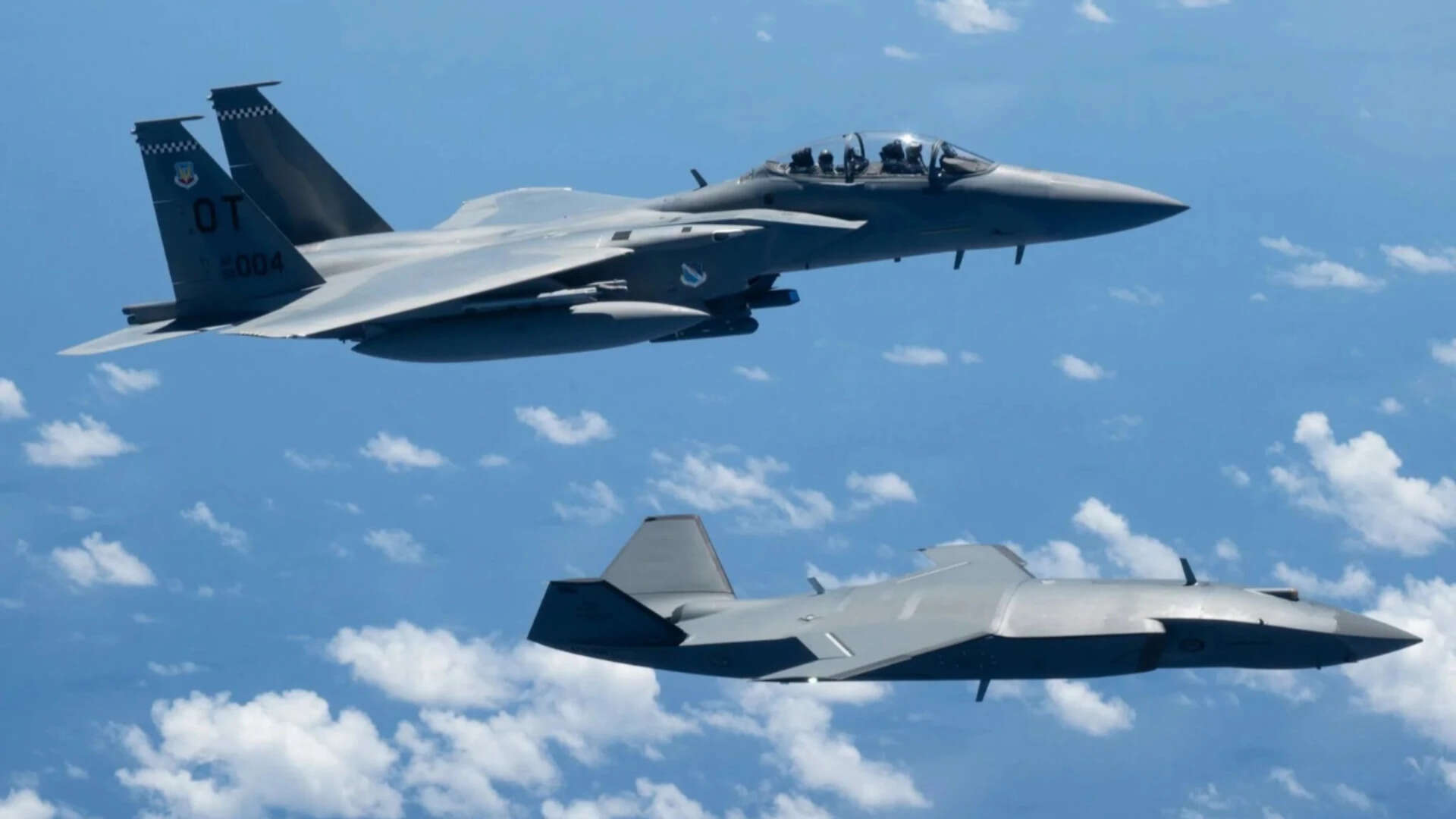
The United States Air Force has begun operational trials of next-generation autonomous combat drones designed to fly in coordination with manned fighter aircraft, marking a significant shift in aerial warfare strategy. The experimental programme, conducted over the Pacific Ocean, pairs advanced unmanned vehicles with traditional jets to test collaborative combat capabilities that are expected to define sixth-generation fighter operations.
The centrepiece of these trials is the MQ-28 Ghost Bat, an autonomous drone engineered to operate as a "loyal wingman" that can execute combat missions under the direction of a manned fighter pilot. During testing, the Ghost Bat flies alongside conventional fighter jets like the F-15EX, demonstrating how unmanned systems can enhance tactical effectiveness without requiring a pilot aboard the drone itself. The US Air Force has classified this initiative as part of its Collaborative Combat Aircraft (CCA) programme, which aims to integrate artificial intelligence and autonomous decision-making into future air combat systems.
The development of these loyal wingmen represents a fundamental change in how air forces conceptualise fighter squadrons. Rather than relying solely on traditional manned jets, the new model incorporates multiple unmanned assets that can be directed by a single pilot or command centre, potentially multiplying combat effectiveness while reducing pilot risk. The autonomous systems are equipped to perform reconnaissance, electronic warfare, and tactical support functions alongside their manned counterparts.
India has recognised the strategic importance of this technological shift and is actively developing its own autonomous combat system called the CATS Warrior. This indigenous loyal wingman project is designed to integrate with India's existing fighter fleet and provide enhanced capabilities in future air defence scenarios. Defence analysts suggest that as aerial combat becomes increasingly automated, nations without autonomous drone programmes risk falling behind in military capabilities.
The successful integration of unmanned and manned aircraft in coordinated missions could reshape global air force structures within the next decade. Military experts expect that future aerial combat will feature swarms of autonomous drones working in tandem with piloted jets, fundamentally altering tactical doctrine and force requirements. Both the US and India are investing significantly in this technology to maintain competitive advantages in potential future conflicts.
Source: TOI India