Typhoon Noul Kills 10 In China
Typhoon Noul hits China, killing 10. Widespread flooding and travel chaos reported.
'%3E%3Crect%20width%3D'96'%20height%3D'96'%20fill%3D'%234A235A'%2F%3E%3Ccircle%20cx%3D'30'%20cy%3D'24'%20r%3D'44'%20fill%3D'%23fff'%20opacity%3D'.12'%2F%3E%3Ccircle%20cx%3D'60'%20cy%3D'74'%20r%3D'40'%20fill%3D'%23000'%20opacity%3D'.10'%2F%3E%3C%2Fg%3E%3Cg%20fill%3D'none'%20stroke%3D'%23fff'%20stroke-width%3D'3'%3E%3Ccircle%20cx%3D'48'%20cy%3D'48'%20r%3D'16'%2F%3E%3Cellipse%20cx%3D'48'%20cy%3D'48'%20rx%3D'6.5'%20ry%3D'16'%2F%3E%3Cline%20x1%3D'32'%20y1%3D'42'%20x2%3D'64'%20y2%3D'42'%2F%3E%3Cline%20x1%3D'32'%20y1%3D'54'%20x2%3D'64'%20y2%3D'54'%2F%3E%3C%2Fg%3E%3C%2Fsvg%3E)
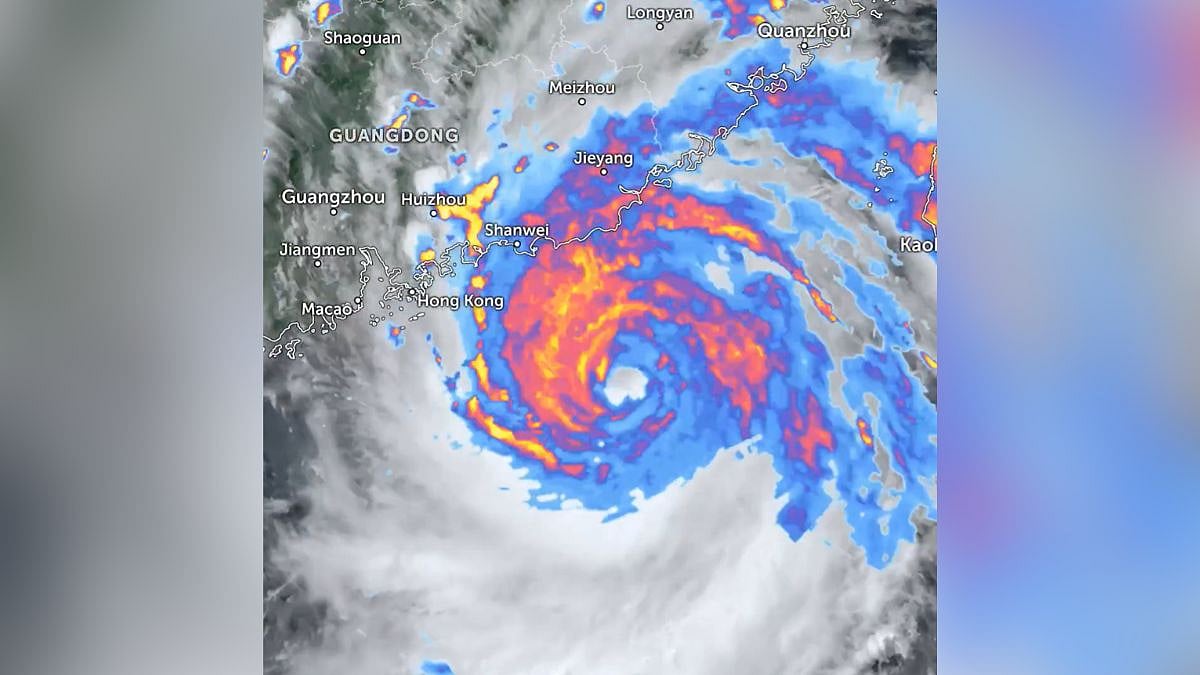
At least 10 people were killed in rain-triggered flash floods in China's Gansu scenic area as Typhoon Noul made landfall in the southern province of Guangdong early Sunday. The typhoon struck Huizhou city in Guangdong at around 3:50 am, packing winds of up to 162 kilometres per hour and bringing gale-force winds and heavy rainfall across large parts of the region.
The typhoon was the strongest to hit China this year, with wind speeds slightly stronger than those of Typhoon Bavi, which hit eastern and northeastern China about two weeks ago. China's National Commission for Disaster Prevention, Reduction and Relief activated a Level-IV national disaster relief emergency response for Guangdong, which is the lowest tier in China's four-level emergency response system.
Ahead of the typhoon's landfall, the National Meteorological Centre issued its first red alert for a typhoon this year on Saturday, the highest warning in China's four-tier colour-coded system. The alert was downgraded to orange and later to yellow on Sunday after Noul weakened.
High-speed rail services and flights across Guangdong were cancelled on Sunday as heavy rain lashed southern China. Emergency measures were also activated in Fujian, Jiangxi, Henan, Hubei, Hunan, Guangdong and Guangxi provinces.
A working team has been sent to the affected areas to assess the damage, assist local authorities in relocating and resettling residents, and ensure their basic living needs. The National Development and Reform Commission allocated 100 million yuan (about $14.7 million) from the central budget to support post-disaster recovery efforts in Guangdong.
The funds will be used to restore damaged infrastructure, including roads, water conservancy facilities, schools and hospitals, to help resume normal production and daily life. In Hong Kong, authorities implemented emergency measures on Saturday before the typhoon's arrival, with over 410 flights and 150 high-speed train services cancelled.
The typhoon's impact on China's southern provinces has been significant, with widespread flooding and travel chaos reported. The Chinese government has responded quickly to the disaster, with emergency measures in place to support affected residents and restore damaged infrastructure.
The typhoon's effects are also being felt in Hong Kong, where authorities have taken steps to prepare for the storm. The situation is being closely monitored, with further updates expected in the coming days.
In terms of the broader context, Typhoon Noul is the latest in a series of severe weather events to affect China in recent years. The country's southern provinces are particularly vulnerable to typhoons, which can bring heavy rainfall and strong winds.
The Chinese government has been working to improve its disaster response capabilities in recent years, with a focus on early warning systems and emergency preparedness. The response to Typhoon Noul will be closely watched, as it will provide an indication of the effectiveness of these efforts.
Overall, the situation in China's southern provinces remains serious, with further updates expected in the coming days. The Chinese government's response to the disaster will be critical in determining the extent of the damage and the speed of the recovery.
The impact of Typhoon Noul on China's economy and infrastructure is also likely to be significant, with the cost of the damage expected to run into millions of dollars. The Chinese government will need to work quickly to restore damaged infrastructure and support affected residents, in order to minimize the economic impact of the disaster.
In conclusion, Typhoon Noul has had a significant impact on China's southern provinces, with widespread flooding and travel chaos reported. The Chinese government has responded quickly to the disaster, with emergency measures in place to support affected residents and restore damaged infrastructure. The situation remains serious, with further updates expected in the coming days.
What it means: The typhoon's impact on China's southern provinces is a reminder of the importance of disaster preparedness and response. The Chinese government's efforts to improve its disaster response capabilities will be critical in determining the extent of the damage and the speed of the recovery. The economic impact of the disaster is also likely to be significant, with the cost of the damage expected to run into millions of dollars.
Frequently asked questions
What is the current situation in China after Typhoon Noul?
The situation remains serious, with widespread flooding and travel chaos reported. The Chinese government has responded quickly to the disaster, with emergency measures in place to support affected residents and restore damaged infrastructure.
How much has the Chinese government allocated for recovery efforts?
The National Development and Reform Commission has allocated 100 million yuan (about $14.7 million) from the central budget to support post-disaster recovery efforts in Guangdong.